

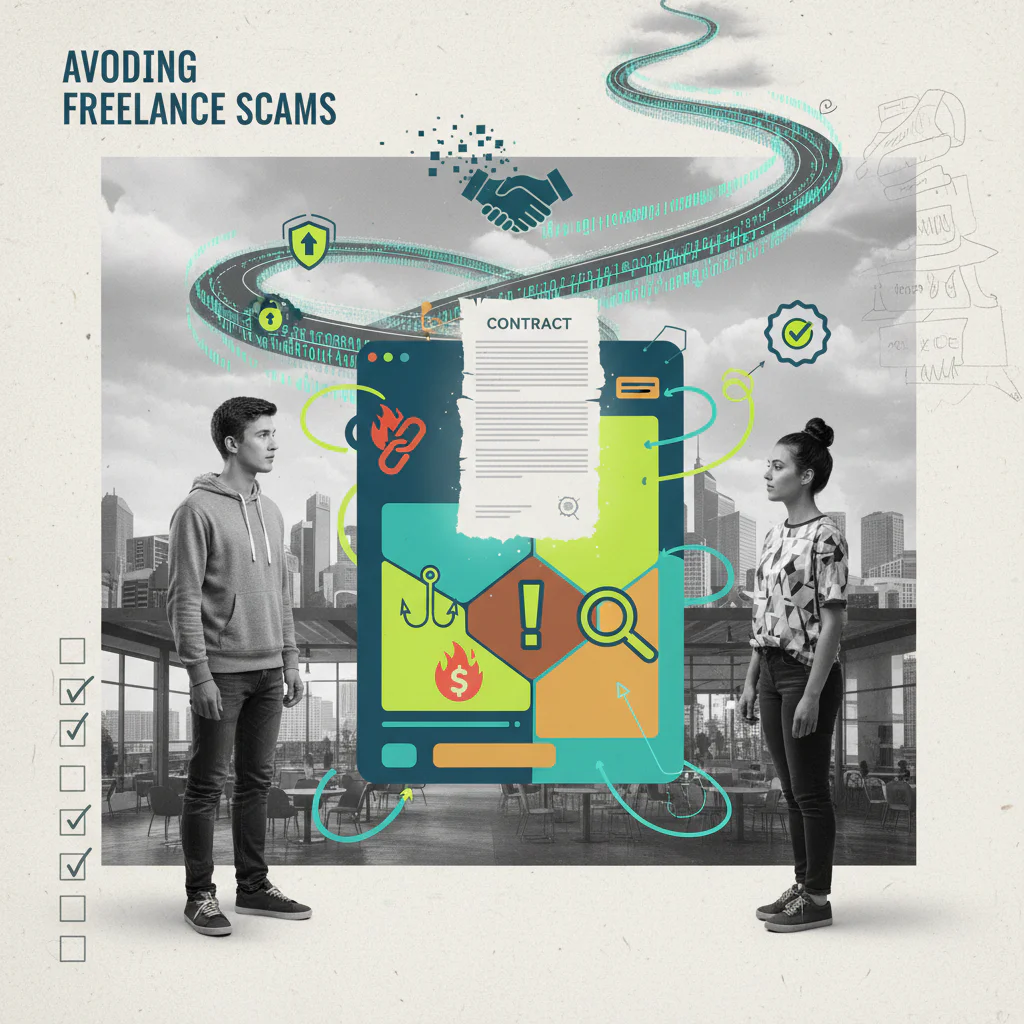
Tired of losing money to shady clients? Follow these proven steps to protect your income and work with confidence.
Quick answer
Freelancers can reduce scam risk by verifying the client, documenting scope and payment terms, using controlled payment methods, protecting accounts and files, and pausing when details conflict. No profile, review, or urgent message proves legitimacy by itself. Confirm who can authorize the work, when payment is due, how changes are approved, who owns deliverables, and how disputes will be handled.
How can freelancers avoid scams?
- Verify the client's identity, business details, authority, and communication channel.
- Put scope, milestones, revisions, payment, ownership, and changes in writing.
- Reject unusual transfers, overpayments, unverified links, and credential requests.
- Limit access, keep records, and stop work when material details conflict.
For teams coordinating many freelance engagements, Workhint can keep onboarding, agreements, approvals, assignments, and payment status in one auditable process. Review freelancer management software for that operating model.
You’ve probably felt that gut‑tightening moment when a client’s “quick payment” promise turns into a ghosted invoice, and the freelance life suddenly feels like a minefield. It’s not just bad luck; it’s a systemic blind spot that most of us accept as part of the gig economy. The real issue isn’t that every client is a scammer—it’s that the tools we use to protect ourselves are either missing or misunderstood, leaving us vulnerable to the same predictable traps over and over.
What’s broken is the invisible contract we assume exists between you and the client. We trade talent for trust, but we rarely write that trust down, test it, or back it up with simple safeguards. The result? Hours lost, revenue evaporated, and a growing skepticism that can cripple the creative spark you started freelancing for. I’ve spent years watching talented people—designers, writers, developers—watch their hard‑earned income slip away, not because they’re naïve, but because the ecosystem doesn’t teach them how to spot the red flags before they bite.
In this article we’ll peel back the myths that keep freelancers stuck in the “pay‑later” cycle and replace them with five concrete steps that turn uncertainty into confidence. No fluff, no empty promises—just the kind of practical insight that feels like a friend finally handing you the missing piece of the puzzle. Let’s unpack this.
Why clear boundaries stop scope creep
When a client asks for “just one more tweak” the line between agreed work and endless revision blurs. The moment you say yes without a written amendment, you hand over leverage. Setting explicit boundaries at the start forces both parties to articulate what belongs in the contract and what will cost extra. Think of it as drawing a map before a trek; you know where the trail ends and where you need to buy a new ticket. Freelancers Union stresses that renegotiating terms for additional work protects both sides from surprise bills. A simple clause that defines revision limits, hourly rates for out‑of‑scope tasks, and a sign‑off checkpoint can turn a vague promise into a measurable agreement. The psychological effect is powerful: clients respect a professional who knows the value of their time, and freelancers feel empowered to say no without guilt. By writing the boundary down you eliminate the mental gymnastics that lead to resentment and unpaid labor.
How to document requirements and avoid quality disputes
A vague brief is a recipe for disagreement. When expectations are not captured in concrete language, the client can later claim the work missed the mark. Easystaff.io recommends a three step habit: capture the goal, list deliverables, and define acceptance criteria. Write these points in a shared document, ask the client to confirm, and keep a dated version. This creates a reference point that both sides can return to when the first draft lands on the desk. Imagine a builder who receives a sketch of a house; without a blueprint, the homeowner will point out missing windows after the walls rise. By treating the brief as a blueprint, you reduce the chance that “I don’t like this” becomes a legal battle. The process also surfaces hidden assumptions early, allowing you to ask clarifying questions and adjust scope before any code or design is written.
What legal safeguards protect freelancers in the US
The United States does not treat freelancers the same as employees, which means you cannot rely on the same protections that a staff member enjoys. TPD | Workforce Solutions outlines three essential safeguards: a written contract, a clear invoice schedule, and a clause for dispute resolution. The contract should identify the parties, describe services, set payment terms, and include intellectual property ownership. An invoice schedule that ties milestones to payments creates cash flow predictability and gives you leverage to pause work if a payment is missed. Finally, a dispute resolution clause—whether arbitration or small claims court—sets the arena for any disagreement, preventing the client from disappearing into a legal gray area. By embedding these elements, you turn an informal handshake into a contract that can be enforced in court, reducing the risk of being left unpaid or sued.
Building a payment safety net before work begins
Even with contracts in place, cash flow interruptions happen. The smartest freelancers treat payment as a prerequisite, not a reward. Start by requesting a deposit that covers at least half of the estimated effort. This upfront sum signals commitment from the client and gives you resources to begin without financial strain. Pair the deposit with a milestone payment plan that aligns with deliverable checkpoints. If a client balks at a deposit, view it as a red flag and consider walking away. Additionally, use escrow services that hold funds until you meet the agreed milestones; this adds a layer of trust without sacrificing control. The practice mirrors how landlords require a security deposit before handing over keys. By securing a financial cushion early, you protect your livelihood and maintain the creative freedom that drew you to freelancing in the first place.
When you realize that the invisible contract is the only thing keeping your talent from slipping away, the problem stops being “bad luck” and becomes a choice you can rewrite. The five steps aren’t a checklist; they’re a habit of treating trust like any other tool—visible, testable, and replaceable when it fails. So before you sign, draw the map, write the blueprint, and lock the milestones in ink. The moment you do, the anxiety of a ghosted invoice fades, and the work you love becomes a partnership you control. Remember: the safest way to protect your income is not to avoid risk, but to make the risk visible and manageable. Take one step today—add a single line to your next proposal that defines payment on delivery—and watch the whole landscape shift.
FAQ
What are common signs of a freelance scam?
Warning signs include pressure to act immediately, inconsistent identities, vague scope, unusual payment requests, overpayments, unverified links, and requests for unnecessary account access.
Does a written contract eliminate scam risk?
No. A contract clarifies obligations and evidence, but parties still need identity checks, secure payment practices, controlled access, and a documented communication trail.
Leave a Reply