
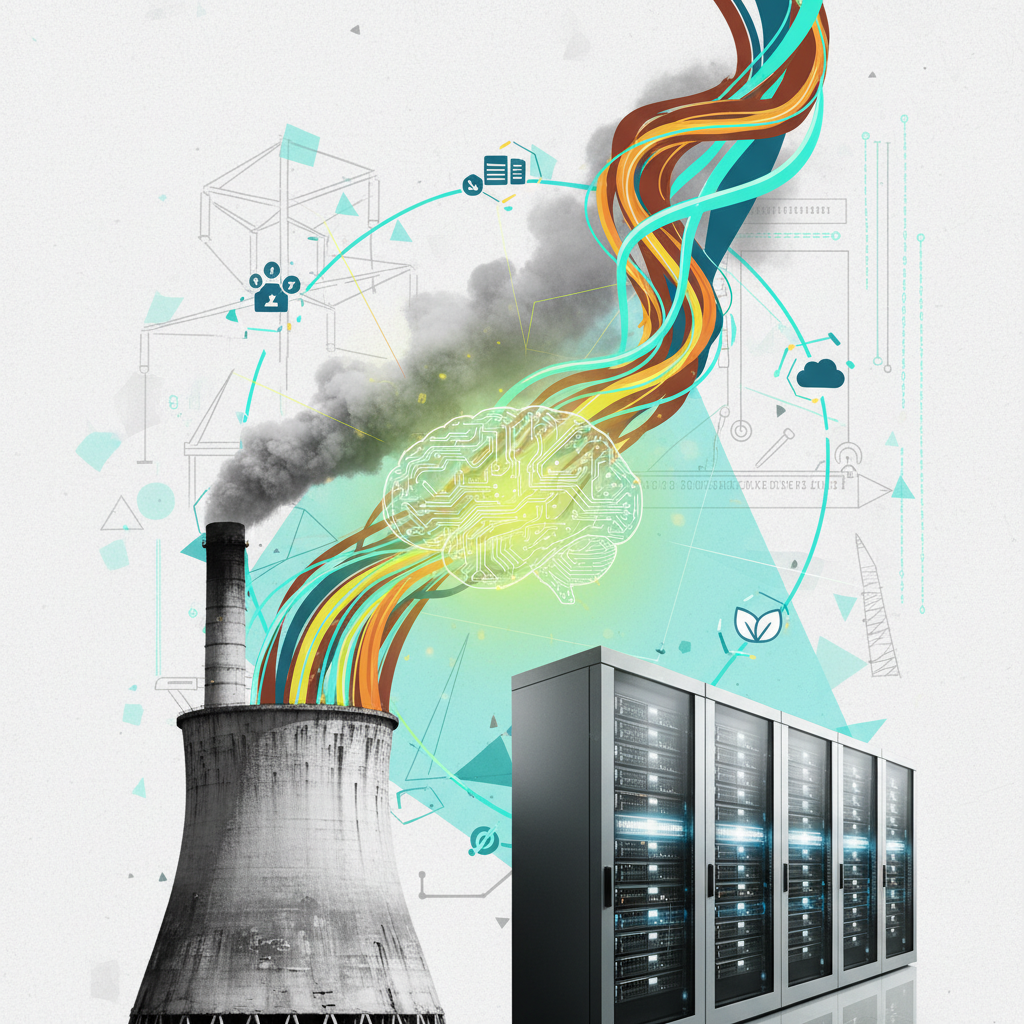
Discover how the surge in AI workloads is pulling fossil-fuel peaker plants back online and what it means for the climate and your data costs.
When you hear the hum of a data center, you imagine rows of sleek servers sipping electricity like polite guests at a dinner party. Yet, behind that quiet efficiency, a less flattering reality is waking up: the same peaker plants that once flickered on only during heat‑waves or unexpected outages are being coaxed back into service, their smokestacks breathing fossil‑fuel‑laden air to keep AI models humming.
It’s a paradox that feels almost intentional. The rush to train ever‑larger language models at companies like OpenAI and the relentless demand for real‑time inference from giants such as Google have turned computational power into a commodity that can’t wait for the sun or wind. The result? Power grids that were supposed to be moving toward cleaner, more flexible sources are now leaning on the very “dirty” backup they promised to retire. The tension isn’t just about carbon footprints; it’s about the hidden cost that shows up on your cloud bill and the moral calculus of every line of code you push into production.
What most people overlook is that this isn’t a simple case of “more AI = more emissions.” It’s a systemic blind spot: the industry’s focus on scaling speed and performance has eclipsed the reality that the underlying energy infrastructure is still, in many places, a patchwork of aging coal and natural‑gas peakers. The narrative that AI will automatically drive sustainability is seductive, but without a clear view of where the electricity actually comes from, we risk applauding progress while the planet pays the price.
I’ve watched this unfold from the sidelines—talking to engineers who scramble to meet latency SLAs, to policy folks who draft carbon‑offset schemes, and to finance teams that wrestle with volatile power pricing. The picture that emerges is a story we’ve been missing, and it’s one that reshapes how we think about the true cost of intelligence.
Let’s unpack this.
Why the surge in AI workloads revives peaker plants
The first clue is the sheer speed at which model training consumes electricity. When a team at OpenAI spins up a new language model, the power draw can rival a small town for hours. Grid operators, accustomed to smoothing demand with wind and solar, find themselves short on flexible supply. The quick answer is to fire up natural gas or coal peaker plants that can start within minutes. These facilities were meant to be a safety net for extreme weather, yet they are now the default for AI spikes. The paradox is that the promise of smarter software is being powered by older, dirtier technology. This reality matters because each extra megawatt of peaker output adds carbon to the atmosphere and pushes up wholesale electricity prices, a cost that eventually appears on cloud invoices. Understanding this link helps readers see that the excitement around AI must be balanced with a clear view of the power source behind the compute.
How cloud pricing reflects hidden energy costs
When a developer looks at a cloud bill, the line items read like storage gigabytes, network traffic, and CPU seconds. The energy surcharge is buried beneath those numbers, often labeled as a usage premium or a volatility adjustment. In regions where peaker plants are called upon, the spot price for electricity can swing dramatically, and cloud providers pass that volatility to customers. This means that a workload that seems cheap during a sunny week can become expensive when a heat wave forces the grid to rely on fossil fuel backups. The hidden cost is not just a financial surprise; it also signals a misalignment between business incentives and environmental goals. Companies that ignore the energy mix may inadvertently reward the very sources they claim to avoid. By reading the fine print and monitoring regional grid emissions data, leaders can make smarter choices about where and when to run intensive AI jobs.
What steps can engineers and leaders take to decouple growth from dirty power
The most effective lever is timing. Scheduling large training runs for off‑peak hours, when renewable generation is abundant, can lower both carbon impact and price. Some teams use workload orchestration tools that query real‑time grid emissions data and automatically shift jobs to cleaner windows. Another approach is to negotiate contracts that include a renewable energy guarantee, ensuring that the electricity used for compute is matched by new wind or solar projects. Engineers can also redesign models to be more compute efficient, reducing the overall power demand. For leaders, the answer lies in setting clear metrics that go beyond latency and throughput. By adding carbon intensity as a key performance indicator, organizations create accountability that ripples through budgeting, product roadmaps, and hiring. When every stakeholder sees the trade‑off between speed and emissions, the conversation moves from reactive cost management to proactive sustainability planning.
When the hum of a data center drags a peaker plant back into life, the paradox is no longer a curiosity—it’s a compass pointing to the choices we make about intelligence itself. The story began with a question: can the promise of ever‑bigger AI coexist with a cleaner grid? The answer lies not in more hardware or faster chips, but in the timing of the work we ask those machines to do. By aligning heavy training runs with periods when wind and solar dominate, or by letting real‑time emissions data dictate where a job lives, we turn a hidden cost into a visible lever. That single shift—making the clock a sustainability tool—reframes the conversation from “how fast can we go?” to “how responsibly can we arrive.”
So the next time you schedule a model, ask yourself: am I powering progress with clean minutes, or with the last gasp of a dirty hour?
Leave a Reply