
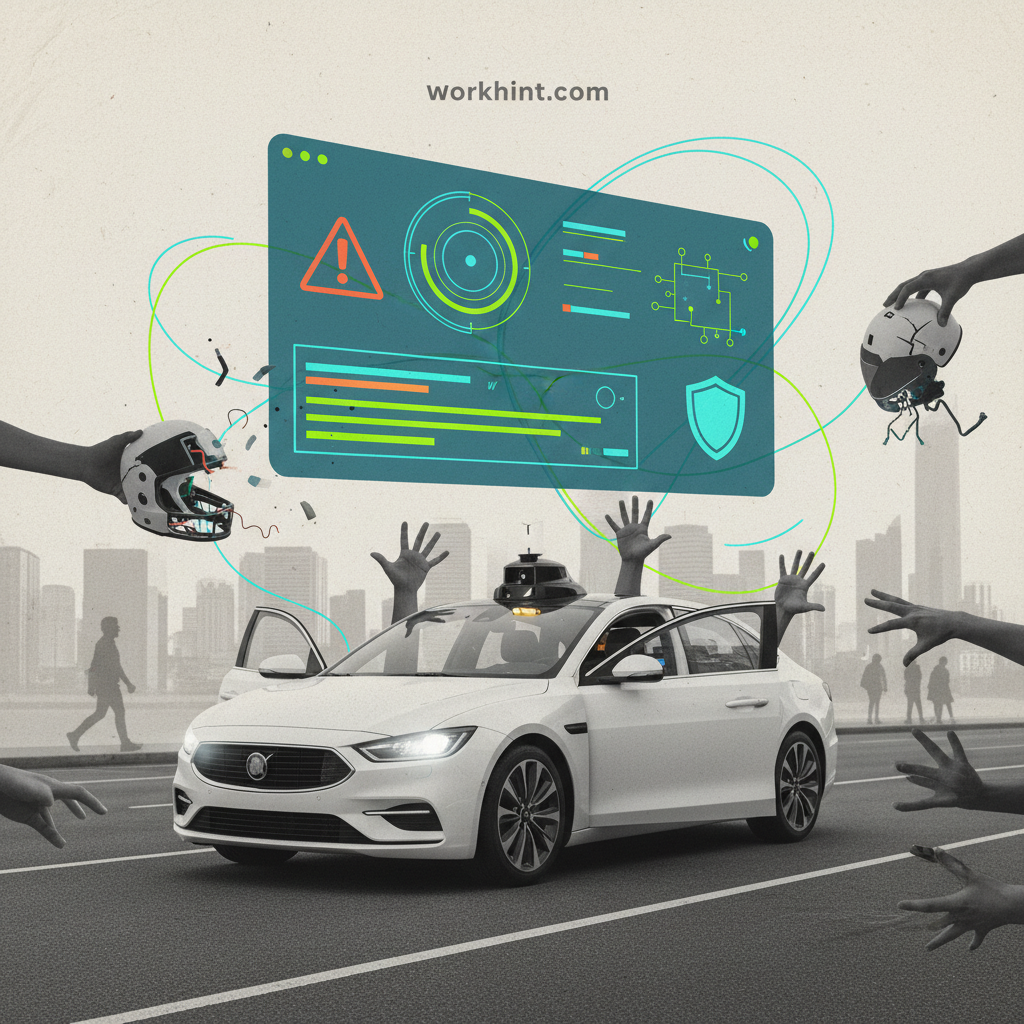
When Waymo’s fleet went dark in San Francisco, commuters saw the fragility of autonomous rides – here’s why that matters now
When the lights went out on Waymo’s robotaxi fleet in San Francisco, the city’s streets turned into a quiet experiment in what happens when the promise of autonomous travel meets a very human reality. It’s easy to celebrate the sleek promise of driverless cars, but that night reminded us that even the most advanced code can stumble in the messy world of traffic, weather, and unexpected glitches. The tension isn’t just about a few stranded passengers; it’s about the confidence we place in machines to keep us safe, and what it means when that confidence is suddenly shaken.
What most people overlook is that safety isn’t a checkbox you tick before you launch a fleet—it’s a living conversation between technology, infrastructure, and the people who rely on it. The outage exposed a blind spot: the assumption that once a vehicle can navigate on its own, the job is done. In reality, the ecosystem around autonomous rides—regulators, city planners, and everyday commuters—needs to be part of that safety loop, too.
I’m not here as a technologist with a Ph.D. in robotics, but as someone who has watched the hype and the setbacks of emerging tech for years, I’ve learned that the most valuable insights often come from the moments when things break. Those moments force us to ask the hard questions that marketing never does.
So, what does this blackout really tell us about the future of autonomous mobility, and how should we rethink safety in a world where cars drive themselves? Let’s unpack this.
Why a blackout matters for trust in autonomous rides
When the lights went out on Waymo robotaxis in San Francisco, the incident became a mirror for public confidence. People imagined a future where cars glide without a driver, but the outage reminded them that technology still answers to the unpredictable rhythm of city streets. The moment passengers waited on sidewalks sparked a collective question: can we rely on machines when the unexpected strikes? That question is not abstract; it shapes how regulators write rules, how investors allocate capital, and how everyday commuters decide whether to step into a driverless vehicle. Trust is built not only on flawless performance but on transparent communication about what can go wrong and how it is handled. By examining the outage as a data point, we see that confidence grows when companies share failure stories, outline recovery steps, and involve the community in the safety conversation.
How the ecosystem can close the safety gap
Safety for autonomous rides is a conversation that extends beyond the code inside a car. It includes city planners who design road markings, utilities that keep sensors powered, and policy makers who draft liability frameworks. When the Waymo fleet paused, it highlighted a missing link: the coordination between the vehicle and the surrounding infrastructure. A resilient system requires real time data sharing between traffic signals, weather services, and the robotaxis themselves. It also calls for a clear protocol that tells a stranded passenger what to expect next, turning a moment of inconvenience into a managed experience. By mapping out these interdependencies, cities can create safety nets that catch a glitch before it becomes a public spectacle. The result is a network where every stakeholder has a role in keeping passengers safe, turning isolated technology into a collaborative public service.
What a resilient rollout looks like in practice
A resilient rollout treats each vehicle as a node in a living network rather than a lone explorer. Imagine a dashboard that alerts operators to a sensor drift, automatically reroutes nearby cars, and sends a text to the affected rider with a clear timeline. That approach was hinted at in the Waymo episode, where a quick software patch could have restored service within minutes. Companies that embed such feedback loops reduce downtime and demonstrate accountability. They also invest in redundant systems—multiple perception layers, backup communication channels, and offline maps that keep the car moving when a single sensor fails. The payoff is not just smoother rides; it is a narrative that tells the public the system learns from each stumble, reinforcing the belief that autonomous mobility can scale safely. By designing for recovery as well as performance, the industry turns a single outage into a stepping stone toward broader adoption.
The Waymo blackout reminded us that autonomy is not a finished product, but a conversation that never stops. When a fleet goes dark, the question isn’t just “what broke?” but “how quickly do we turn that silence into a signal for improvement?” The answer lies in building a safety net that stretches beyond the car – a shared language between sensors, streets, and the people who ride them. If every glitch triggers an automatic alert, a transparent rider message, and a coordinated response from city and company, the outage becomes a proof point, not a failure. In practice, that means designing for recovery as fiercely as we design for performance. The real test of driverless travel will be how gracefully we handle the moments when the lights go out, and whether we let those moments teach us to make the whole system brighter.
Leave a Reply