

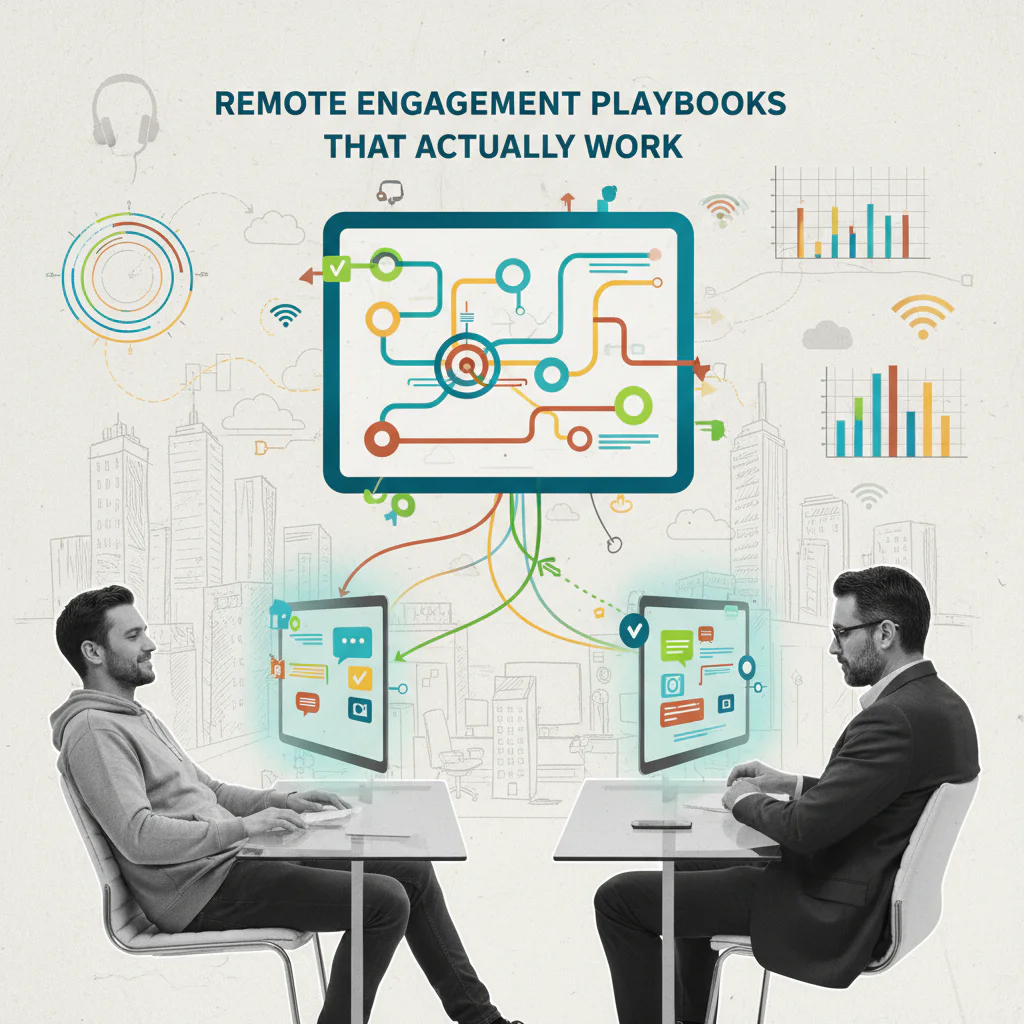
Feel the gap closing as you unlock proven playbooks that turn distant teams into a thriving, connected force
You’ve probably felt it – that subtle, persistent hum of mis‑connection when a video call drops, when a teammate’s joke lands flat across time zones, when the pulse of your team seems to beat in a different rhythm than the work you’re trying to accomplish. It’s not just a nuisance; it’s a symptom of a deeper blind spot: we’ve built the tools for remote work, but we haven’t built the playbooks for remote engagement.
In the rush to adopt Zoom, Slack, and Asana, many leaders assume that simply scattering people across the same digital platform will magically knit them together. The reality is far messier. Teams often end up with a checklist of meetings that feel like chores, a chat stream that reads like static, and a culture that drifts into a gray area where people show up, but they don’t truly connect.
I’ve spent years watching remote groups stumble, then stumble forward, and I’ve seen the same patterns repeat: a lack of intentional rituals, an overreliance on “just keep the communication flowing,” and a missing narrative that tells each person why they matter in the larger story. The good news? Those patterns are not immutable. They’re clues, pointing us toward the playbooks that actually move the needle.
What follows isn’t a list of generic best practices. It’s a set of proven, human‑first frameworks that turn distant collaborators into a thriving, connected force. By the end, you’ll recognize the small, often‑overlooked levers that, when pulled, close the engagement gap and give your team the sense of belonging that fuels both creativity and performance.
Let’s unpack this.
The hidden cost of assuming tools are enough
Most leaders believe that installing a video platform, a chat hub and a task board automatically creates a cohesive remote team. The reality is that tools are only the stage, not the script. When a call drops or a joke lands flat across time zones, the problem is not the bandwidth, it is the missing narrative that ties each person to the collective purpose. Consider how many times you have watched a Zoom meeting turn into a series of status updates that feel like chores. Without intentional design, the technology becomes a background noise rather than a catalyst for connection. The hidden cost is a slow erosion of trust, a dip in morale and a subtle drift in performance that is hard to attribute directly to any single metric. Recognizing that tools need a playbook is the first step toward reclaiming the human element of remote work.
Rituals that turn meetings into moments
Rituals are the glue that turns a routine check‑in into a shared experience. When Zapier introduced a daily virtual coffee, the habit created a space for informal chatter that sparked unexpected collaborations. GitLab took a different route, using asynchronous standups that let engineers share progress without the pressure of a live call. Atlassian built a monthly storytelling hour where teams recount a win or a lesson learned, reinforcing a sense of belonging. The key is to design rituals that are low friction, repeatable and aligned with the team’s rhythm. A simple three‑question pulse at the start of each week can surface blockers before they snowball. Pair that with a quarterly celebration of milestones, and you have a cadence that reminds people they are part of a larger story, not isolated islands.
Recognition as a measurable engine
Recognition is often treated as a nice‑to‑have, but data shows it can move the profit needle. A recent remote employee recognition playbook reported a twenty one percent lift in profit and an eighteen percent drop in turnover when systematic praise was woven into daily workflows. The secret is to make recognition visible, timely and tied to outcomes. Start by creating a shared board where anyone can spotlight a peer’s contribution, similar to the approach used by Favro. Pair each shout‑out with a brief note on the impact it had on the project or customer. Over time, the board becomes a living map of value creation, reinforcing behaviours that drive results. The measurable side appears when you track the frequency of recognitions and correlate spikes with project milestones, revealing a direct link between appreciation and performance.
Avoiding the common traps that stall engagement
Even the best‑intentioned playbooks stumble when they fall into familiar traps. One pitfall is treating meetings as a checklist rather than a conversation, which turns collaboration into a task to be completed. Another is overloading channels with notifications, creating a static that drowns out meaningful dialogue. A third error is neglecting the narrative that explains why each role matters, leaving team members to wonder about their place in the larger picture. To sidestep these issues, audit your current rhythms: ask whether each meeting has a clear outcome, whether chat threads are organized by topic, and whether every person can articulate how their work advances the team’s mission. Replace endless status updates with purpose‑driven dialogues, curate communication channels to surface only the most relevant information, and weave a story that highlights each individual’s contribution. By consciously eliminating these obstacles, the engagement playbook moves from theory to lasting impact.
We began with the uneasy feeling that a drop‑out call or a flat joke signals a deeper fracture, not a glitch. The journey through rituals, recognition, and the hidden cost of relying on tools alone shows that the missing piece isn’t technology—it’s a deliberate script that tells every remote worker why they matter. The simplest, most powerful move you can make today is to choose one human‑first ritual—whether a five‑minute “coffee‑chat” start to the week or a public shout‑out board—and embed it consistently for a month. Watch the subtle shift from background noise to shared rhythm, and let the data of gratitude and engagement speak for themselves. When the ritual becomes habit, the gap closes on its own. So, ask yourself: which small, intentional act will you turn into a daily promise to your team?
Leave a Reply