

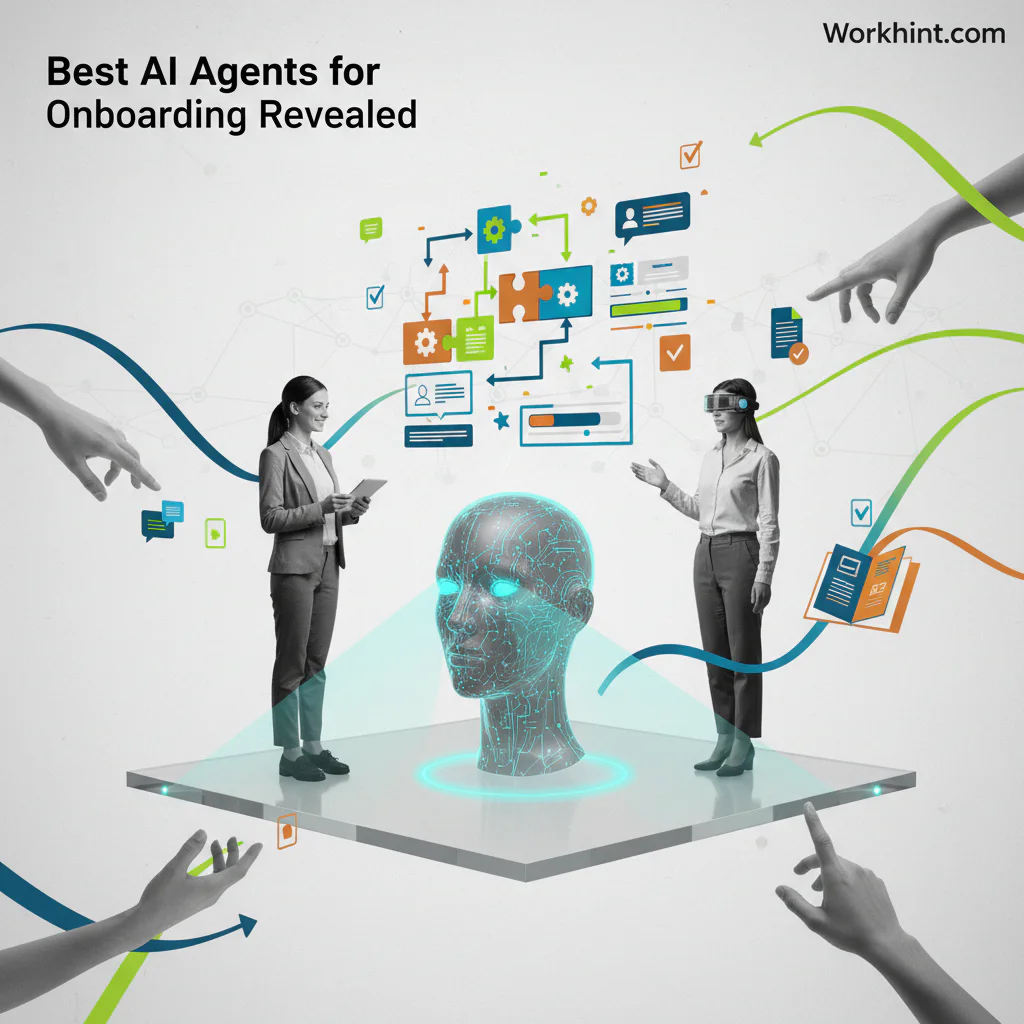
Discover the AI agents that turn onboarding chaos into a smooth, fast experience and finally give you the confidence to hire smarter.
You’ve probably felt it: the first week of a new hire feels like a frantic juggling act, a scramble of paperwork, passwords, and endless “where‑do‑I‑find‑the‑right‑file?” questions. The tension isn’t just about logistics; it’s a deeper signal that the onboarding machine is broken, or at least, misunderstood. When the process drags, talent gets restless, confidence erodes, and the promise of a “smart hire” fizzles before it even begins.
What if the missing piece isn’t more human effort but a smarter partner—an AI agent that anticipates the newcomer’s needs, delivers the right resources at the right moment, and frees your team to focus on genuine connection? This isn’t about replacing people; it’s about giving them the confidence that the system behind them works, that the chaos you’ve learned to tolerate can actually be tamed.
I’ve spent years watching teams wrestle with onboarding, listening to the same frustrations echo across industries. The insight that emerged is simple yet often overlooked: the tools we rely on are either too generic or too rigid, leaving a gap where a nuanced, conversational AI could thrive. In the pages ahead we’ll explore the agents that have begun to fill that gap, why they matter, and how they can transform a chaotic first week into a smooth, fast experience.
Let’s unpack this.
The hidden cost of a broken onboarding
When a new hire walks through the door the experience feels like a juggling act. Forms pile up, passwords are missing, and the simple question where can I find the file? becomes a daily mantra. That chaos is not just an inconvenience; it erodes confidence, slows productivity and quietly signals that the organization does not value the newcomer. Research from Forbes shows that early friction can increase turnover risk by a significant margin. The hidden cost is therefore measured not only in hours but in lost talent and brand reputation. An AI partner can act as a silent guide, delivering the right resource at the right moment, turning uncertainty into clarity. By reducing the mental load, the team can focus on genuine connection rather than administrative firefighting. The result is a first week that feels purposeful, not punitive, and a foundation for long term engagement.
How to choose the right AI partner
Not every conversational assistant fits every culture. Start with the question what problem are you trying to solve. If the goal is to streamline paperwork, look for an agent that integrates with your HRIS. If you need a mentor like presence, seek a platform that can deliver personalized learning paths. Companies such as DianaHR excel at human led automation, while Leena AI shines in enterprise ticket resolution. For teams that need multi agent orchestration, Juicebox.ai offers a flexible workflow engine. Evaluate three dimensions: integration depth, conversational fidelity and data privacy. A quick matrix can reveal gaps – for example a tool that talks well but cannot pull from your internal knowledge base will create more handoffs. Remember that the best fit is not the flashiest UI but the one that respects your existing processes and scales with your growth.
Common pitfalls and how to avoid them
Even the smartest AI can stumble if it is deployed without a clear plan. The first mistake is treating the agent as a one size fits all solution. A generic script will answer simple queries but will fail when a new hire asks a nuanced question about team culture. The second error is neglecting the human handoff. When the AI cannot resolve an issue, a smooth escalation path must exist; otherwise frustration builds. Third, data silos cripple the experience. If the assistant cannot access up to date policy documents, it will repeat outdated information. To sidestep these traps, start with a pilot that covers a limited set of tasks, monitor interaction logs, and refine the conversation flow weekly. Include a feedback button so employees can flag incorrect answers, turning mistakes into learning opportunities for the system.
Putting an AI partner to work in the first week
Implementation should feel like adding a teammate, not a bolt on. Begin by mapping the first week journey: welcome email, equipment request, compliance training, team introductions. Assign the AI to deliver each touchpoint at the moment it is needed. For example, the assistant can send a personalized video from the manager on day two, then guide the new hire through the compliance module on day three. Tools such as eesel AI specialize in customer onboarding and translate well to employee contexts. Collaboration platforms like Moxo and Rocketlane provide shared workspaces that the AI can populate with relevant documents. Interactive guides from Userpilot and Dock can surface step by step instructions without a hyphen in the description. Finally, Chameleon enables in‑product tours that the AI can trigger based on user behavior. Within a week the new hire experiences a guided, confident start, and the team sees a measurable lift in engagement metrics.
The first week of a new hire doesn’t have to be a juggling act; it can be a quiet handoff to a partner that knows the right answer before the question is asked. By treating AI not as a replacement but as the backstage crew that clears the clutter, you give people the space to focus on the real work of connection. The decisive step is simple: map one friction point, pair it with an agent that can pull the exact data you need, and build a feedback loop that turns every misstep into a learning moment. When the system quietly solves the paperwork, passwords and “where‑is‑the‑file?” puzzles, confidence rises and the promise of a smart hire becomes real. Let the AI handle the routine, and let your team handle the relationship. — Start with one small win, and watch the onboarding chaos dissolve into confidence.
Leave a Reply