

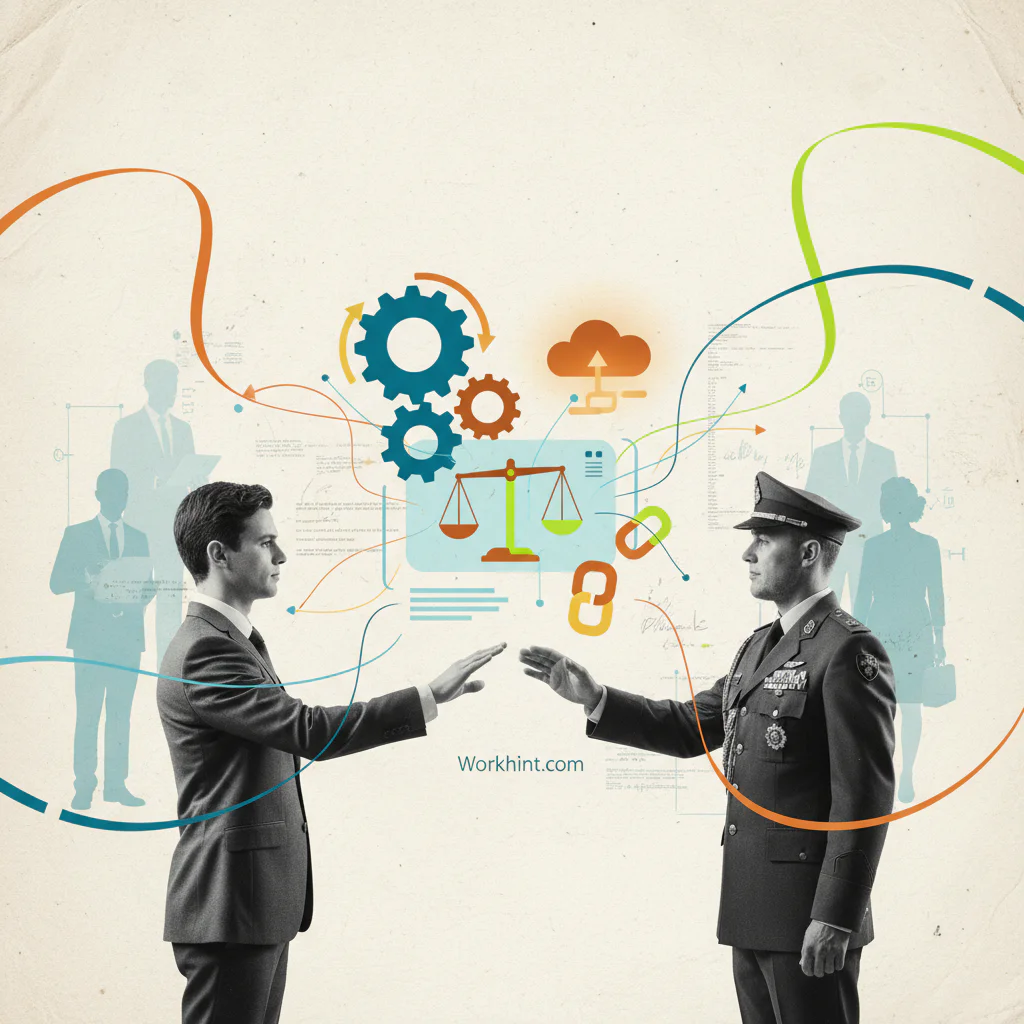
Stuck between rigid rules and chaotic freedom? Find clarity on how a hybrid governance model can make work flow.
When a team spreads across time zones and contracts, the rhythm of work often feels like a conversation with a missing ear. You see a request land in an inbox, a teammate picks it up, and somewhere in the middle the promise of ownership evaporates. The result is a loop of “who is doing what” that never quite resolves, and the cost is not just delayed delivery but a quiet erosion of trust. I have watched founders scramble to assign a single owner for a client onboarding while the same client waits for a status update that never arrives. The pattern repeats in every organization that tries to balance strict process with the need for flexibility. The invisible friction is not a lack of tools but a mismatch between how work is handed off and how people see their role in the outcome. In the next section we will unpack the hidden assumptions that keep this loop turning and see how a different governance mindset can break it.
What makes hybrid governance a game changer for global teams?
When work spans continents the old single rulebook feels like trying to steer a ship with a broken compass. A hybrid governance model blends the certainty of structure with the fluidity of local decision making, giving teams the confidence to act without waiting for a central sign off. The Project Management Institute notes that organizations adopting hybrid approaches see faster response times and higher stakeholder satisfaction because the right people can intervene at the right moment. Imagine a product launch where the design crew in Berlin can approve a visual tweak while the marketing team in Singapore updates the campaign calendar, all without a bottleneck. The result is a rhythm that feels natural rather than forced, and the hidden cost of delayed trust begins to disappear.
Which assumptions are silently breaking your handoffs?
Most teams assume that a written process automatically creates clarity. In reality the belief that everyone interprets a task description the same way is a myth that fuels missed deadlines. When a request lands in an inbox, the sender often expects the receiver to understand the broader context, but the receiver sees only the checklist. This mismatch creates a loop where ownership evaporates and accountability slips. A simple experiment can expose the flaw: ask two teammates to describe the same request in their own words. The differences will reveal hidden expectations. By surfacing these assumptions you can redesign the handoff to include a brief alignment step, turning a silent gap into a purposeful conversation.
How can you build clear ownership without stifling agility?
Ownership does not have to be a rigid label that locks a person into a single path. Instead, think of it as a shared promise that moves with the work. The first person to act becomes the steward for that moment, then passes the baton when the next expertise is needed. Planview illustrates this with a dynamic role board that shows who is responsible, accountable, consulted and informed for each stage. The board updates in real time, so the team sees at a glance where the work lives. This visual cue replaces endless email chains and lets people step in when their skill set matches the need, preserving speed while maintaining clear lines of responsibility.
What metrics tell you the hybrid model is really working?
A hybrid system is only as good as the signals it provides. Look beyond traditional velocity numbers and add measures of handoff time, decision latency and trust scores from short pulse surveys. When the average time between request and acknowledgment drops, you know the new governance is cutting friction. If team members report higher confidence in who will act next, the cultural shift is taking hold. Combine these quantitative signs with qualitative stories – for example a client onboarding that moved from a week of back‑and‑forth to a single coordinated effort. Together they create a dashboard that tells you whether the hybrid model is delivering the promised balance of control and freedom.
The hidden loop of ownership and visibility
When work is passed through email threads, shared folders, or ad-hoc messages, the moment a task changes hands often leaves no single record of who is responsible. That lack of a shared ledger means questions about status linger, delays accumulate, and accountability fades. Informal coordination relies on memory and personal initiative, which can vary across time zones, contracts, and skill sets, so the same gap reappears in many projects. A centralized work system replaces scattered signals with a single source of truth that records assignments, progress, and handoffs as they occur. By anchoring each piece of work in one place, the system makes ownership visible, synchronizes updates, and prevents the silent drift that stalls execution. One example of such a system is Workhint, which provides the infrastructure that lets organizations keep the flow of work observable without needing separate tools.
Remember the question that opened this piece: how do we stop the endless loop of unclear handoffs and rebuild trust in a distributed team? The journey through assumptions, ownership and the promise of a blended governance model shows that the answer is not a new tool but a tiny change in how we treat the moment a task lands. When the first person to see a request makes a brief pause to surface intent, the rest of the chain inherits a clear signal instead of a vacuum. That single pause is the lever that turns chaos into rhythm. Carry that pause into your next handoff and watch the invisible friction dissolve. The work will still be complex but the path through it will feel steadier, inviting you to explore what else becomes possible when clarity is chosen over speed.
Leave a Reply