

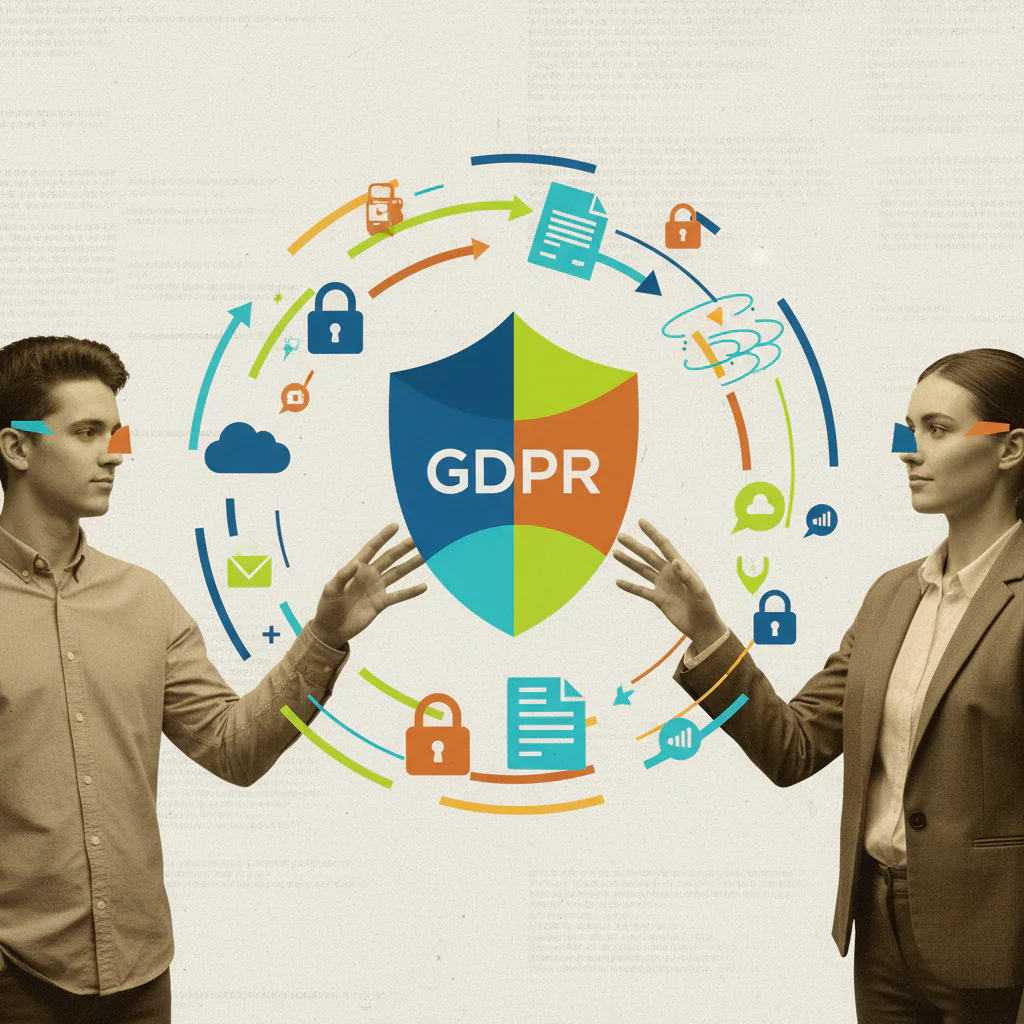
Stop guessing and protect your startup. Learn the exact steps that turn GDPR from a nightmare into a competitive advantage.
You’ve built a product that solves a real problem, attracted the first handful of users, and now the regulatory alarm bells start ringing. The moment you hear “GDPR” you might picture endless legal jargon, costly consultants, and a looming threat to your runway. Yet the same rulebook that feels like a nightmare can become a hidden lever for trust, differentiation, and even growth.
The real tension isn’t whether you can afford compliance—it’s whether you’ll let the fear of it dictate how you engage with your customers. Most startups treat GDPR as a checklist to clear before launch, missing the deeper insight that data protection is a conversation about respect. When that conversation is genuine, it builds a brand narrative that competitors can’t copy.
What’s broken isn’t the regulation; it’s the myth that compliance is a one‑time hurdle. It’s misunderstood that GDPR can be woven into product design, marketing, and customer service from day one. And it’s overlooked that the very act of being transparent can turn a legal requirement into a competitive advantage.
I’ve spent years watching founders scramble at the last minute, then watching the same founders who embed privacy into their DNA move from “I’m scared” to “We’re a trusted partner.” The shift isn’t about legal expertise—it’s about a mindset that sees data protection as a relationship, not a roadblock.
If you’ve ever felt the weight of uncertainty around data privacy, you’re not alone. This article will walk you through the exact steps that transform that weight into a clear, actionable roadmap—so you can stop guessing and start protecting, with confidence that it’s also boosting your brand.
Let’s unpack this.
Why privacy can become your growth engine
When a founder hears the term privacy they often picture a wall of legalese and a drain on cash. Yet the real power of the regulation lies in the story it lets you tell. A user who knows you are careful with their data feels a quiet confidence that no competitor can copy. That confidence translates into higher conversion, lower churn and a willingness to share more information. Think of it as a quiet badge of trust that sits beside your product features. Companies such as Vanta have turned compliance dashboards into marketing assets, showing prospects that security is baked in, not bolted on. The shift from fear to advantage begins the moment you frame privacy as a relationship rather than a hurdle. By positioning your startup as a guardian of personal information you invite customers into a partnership, and that partnership fuels growth.
How to map the data you actually hold
Most startups start with a vague notion of data collection and end up surprised by hidden repositories. The first concrete step is to create a visual map of every data touch point, from sign up forms to analytics pipelines. List each system, note the type of personal information it stores, and record why you need it. This exercise uncovers unnecessary duplication and reveals where consent is missing. A simple spreadsheet can become a living document that guides every product decision. When you see the flow of data, you can ask whether each piece serves a clear purpose or merely adds risk. The map also becomes the foundation for a data protection impact assessment, a requirement that regulators look for. By turning an abstract obligation into a concrete diagram you gain clarity, reduce waste and build a roadmap for future enhancements.
What consent management really looks like in practice
Consent is not a checkbox at the bottom of a form; it is an ongoing conversation. Start by offering clear, plain language explanations of why you need each category of data. Provide users with granular controls that let them opt in or out without breaking core functionality. Tools such as Scrut.io demonstrate how a consent layer can be woven into the user journey, presenting choices at moments of relevance rather than as a one‑off hurdle. Keep a log of each user’s preferences and honor them automatically. When a user updates their settings, propagate the change across all systems in real time. This disciplined approach not only satisfies regulators but also builds a reputation for respect. Users who feel heard are more likely to stay, refer friends and even share richer data because they trust the process.
Common traps that turn compliance into a cost centre
The easiest mistake is to treat GDPR as a checklist to be completed once and forgotten. This mindset leads to patchwork solutions that crumble under audit. Another trap is to outsource every decision to a lawyer and then assume the work is done. While legal advice is essential, the day‑to‑day responsibility rests with product and engineering teams. A third error is to hide privacy policies behind tiny links, assuming no one will read them. Communities such as Reddit often share stories of startups that faced fines because users could not locate their consent records. Avoid these pitfalls by embedding privacy responsibilities into every role, revisiting your data map quarterly, and making policies visible and understandable. When compliance becomes a shared habit rather than a one‑off expense, it transforms into a sustainable advantage.
When the alarm bells of GDPR first rang, the question was whether fear would dictate your next move. By treating data protection as a conversation rather than a checklist, you’ve turned that question into a choice: let compliance be a silent partner that amplifies trust, or let it remain a hidden cost. The real breakthrough comes the moment you map every data touch‑point and give users a clear, ongoing voice over their information—those simple, concrete actions become the scaffolding for a brand narrative no competitor can replicate. So, instead of scrambling for a legal fix, embed privacy into the DNA of your product and watch it become a quiet badge of reliability that fuels growth.
Make privacy the language you speak with every user, and the market will hear you louder than any feature.
Leave a Reply