


Event planning is attractive because customers pay for calm execution when the stakes are visible: weddings, corporate events, fundraisers, launches, retreats, and private celebrations. This guide shows how to start an event planning business in the United States with a focused offer, realistic startup budget, practical pricing, and an operating process that can handle vendors, timelines, clients, and payments without chaos.
If you want a service business that depends more on coordination than inventory, event planning can be a strong first business to launch.
Introduction
An event planning business helps clients design, coordinate, and manage events. The work can include venue research, vendor coordination, budget tracking, guest logistics, timelines, day-of management, and post-event wrap-up. The smartest way to start is not to offer every type of event. Choose a narrow lane first, such as weddings, corporate meetings, nonprofit fundraisers, birthday parties, brand activations, or small business events.
In the United States, requirements vary by state, city, event type, and venue. You may need a local business license, registration, insurance, vendor agreements, and sales tax guidance. Certification is not usually mandatory, but experience, vendor relationships, and a clear process matter.
What’s in this article?
- Why an event planning business works
- What you need to launch
- How to price event planning services
- How to get first clients
- How Workhint helps run an event planning business
- A first 7-day launch plan
- A final launch checklist
- Frequently asked questions
Why this business works
Event planning works because most clients do not want to manage dozens of moving parts themselves. A single event can involve budgets, timelines, venues, caterers, rentals, speakers, entertainment, guest lists, contracts, deposits, approvals, and last-minute changes. Clients pay planners to reduce risk and protect the experience.
The business is also flexible. You can start from home, work solo, and rent or subcontract specialized services instead of buying expensive inventory. As you grow, you can add assistants, day-of coordinators, vendor partners, and repeat corporate accounts.
What you need to launch
Start with the essentials: business structure, local license check, insurance quote, planning tools, sample packages, a vendor list, and a way to manage client requests. Do not buy decor, furniture, or event inventory until your niche proves demand.
| Startup item | Typical starting range | Purpose |
|---|---|---|
| Business registration and local license | $50-$500 | Creates the legal foundation for paid work. |
| Insurance | $500-$2,500/year | Helps protect against liability, property, or professional mistakes. |
| Website, domain, and email | $100-$800 | Gives clients a place to review services and inquire. |
| Planning software and templates | $0-$200/month | Manages timelines, budgets, checklists, vendors, and approvals. |
| Branding and marketing materials | $250-$2,000 | Supports credibility, outreach, and referrals. |
| Training or certification | $0-$2,000 | Optional, but useful if you lack event experience. |
A lean solo event planning business can often start for a few thousand dollars. Office space, staff, paid ads, and inventory can raise the budget quickly.
How to price it
Pricing depends on event type, scope, timeline, guest count, vendor complexity, and whether you handle full planning or day-of coordination. Keep pricing simple at first. Clients should understand what is included, what is excluded, and when additional fees apply.
| Pricing model | Best for | Example structure |
|---|---|---|
| Flat fee | Defined events with clear scope | $1,500-$7,500+ depending on event size and complexity. |
| Hourly rate | Consulting or unclear scope | $50-$150+ per hour based on experience and market. |
| Percentage of event budget | Larger events with many vendors | Commonly 10%-20% of managed event budget. |
| Day-of coordination package | Clients who planned the event but need execution help | Fixed package for final timeline, vendor confirmation, and event-day management. |
Do not underprice the invisible work: meetings, calls, revisions, vendor follow-up, contingency planning, and day-of pressure. Your price should cover preparation, communication, execution, and margin.
How to get first customers
The first clients usually come from local trust. Start with venues, photographers, caterers, florists, real estate offices, nonprofit directors, HR teams, coworking spaces, and local business groups. These people either host events or know clients who do.
Create one clear starter offer. For example: “day-of wedding coordination for couples who already booked vendors” or “small business event planning for launches, workshops, and client dinners.” Then build proof quickly: photos, timelines, testimonials, vendor references, and a simple portfolio.
How Workhint helps run it
Workhint can be configured as the operating system for an event planning business. A client can submit an event request through a branded portal with date, location, budget, guest count, event type, must-have vendors, and approval contacts. From there, Workhint can turn the request into a planning workspace with milestones, vendor tasks, budget approvals, and a live event timeline.
For weddings, corporate events, or fundraisers, Workhint can assign planners, assistants, day-of coordinators, venue contacts, and outside vendors to the right parts of the event. It can track vendor proposals, contract status, deposits, client approvals, guest-list updates, floor-plan tasks, catering deadlines, run-of-show changes, and final payment steps. Managers can monitor multiple events at once while clients see a dashboard for approvals, open decisions, invoices, and key dates.
That specificity matters. Event planning businesses fail when details live across texts, spreadsheets, email threads, and memory. Workhint helps make every event a controlled workflow: request, scope, proposal, vendor coordination, approvals, schedule, event-day execution, invoice, payment, and post-event review.
First 7-day launch plan
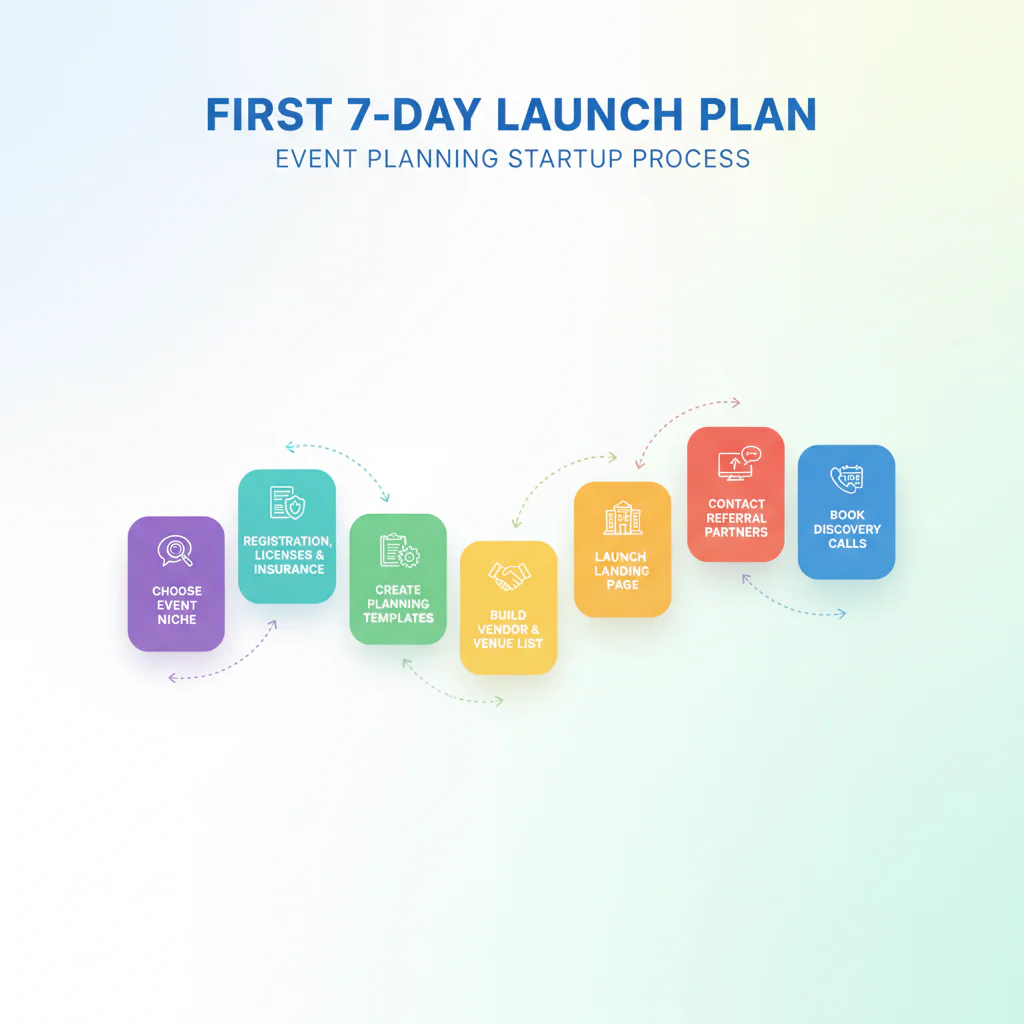
- Day 1: Choose one event niche and one starter package.
- Day 2: Check local registration, licensing, tax, and insurance requirements.
- Day 3: Create your planning checklist, sample timeline, client intake form, and proposal template.
- Day 4: Build a list of 20 local vendors and venues you can contact.
- Day 5: Create a simple website or landing page with your offer, service area, and inquiry form.
- Day 6: Reach out to venues, vendors, and warm contacts with a specific launch offer.
- Day 7: Follow up, book discovery calls, and refine your package based on real questions.
Final launch checklist
- Choose your event niche and target client.
- Register the business and check local license requirements.
- Get insurance quotes before handling paid events.
- Create service packages with clear scope boundaries.
- Build intake, proposal, timeline, vendor, and approval templates.
- Create a vendor and venue referral list.
- Set up a client portal or workflow system for requests and approvals.
- Launch a simple website and Google Business Profile.
- Contact first referral partners and prospects.
- Collect testimonials and portfolio assets after each event.
FAQ
How much does it cost to start an event planning business?
A lean solo launch can start with a few thousand dollars for registration, insurance, a website, planning tools, and marketing. A larger launch with office space, staff, paid ads, or event inventory can cost much more.
Do you need a license to start an event planning business?
There is usually no national event-planner license in the United States, but you may need a local business license, business registration, sales tax setup, or permits depending on your city, state, and services.
What insurance does an event planner need?
Many planners consider general liability, professional liability, business property, and event-specific coverage. If you hire employees, workers’ compensation may also apply depending on your state.
How do event planners get first clients?
Start with referrals, venues, vendors, local business groups, nonprofits, HR teams, and personal networks. A focused starter package is easier to sell than a broad “I plan events” offer.
Is event planning profitable?
It can be profitable when you price for the full workload, avoid unlimited revisions, control vendor scope, and build repeatable processes. Recurring corporate or nonprofit events can create more predictable revenue than one-off private events.
Should I specialize in weddings, corporate events, or private parties?
Specialize first. Weddings, corporate events, fundraisers, and private parties all have different buyers, timelines, vendors, and risk. A focused niche makes your marketing and operations sharper.
What equipment do I need to start?
You usually need a laptop, phone, planning templates, scheduling tools, proposal documents, and reliable transportation. Rent or subcontract event equipment until you know which services are profitable.
Conclusion
An event planning business is not just a creative business. It is an operations business built around trust, deadlines, vendors, approvals, and calm execution. Start narrow, price for the real work, build a dependable planning process, and use each successful event to create proof for the next client.
Leave a Reply