


A landscaping business is easiest to start when you sell one clear service, then build the operating system around repeat work.
Learning how to start a landscaping business is not just about buying a mower and finding lawns. In the United States, the practical path is to choose a narrow first offer, handle local licensing and insurance, price jobs carefully, and build a repeatable way to quote, schedule, dispatch, complete, and collect payment for each job.
Landscaping is attractive because demand is local, visible, and recurring. Homeowners need lawns maintained. Property managers need reliable crews. HOAs, small offices, rental operators, and commercial properties need grounds that look cared for without managing the work themselves.
This guide gives you the immediate version: what to offer first, what to buy, what to check legally, how to price, how to find the first customers, and how to run the business before the calendar gets messy.
What’s in this article?
- Why a landscaping business works
- What you need to launch
- How to price landscaping services
- How to get first customers
- How Workhint helps run a landscaping business
- A first 7-day launch plan
- A final launch checklist
- Frequently asked questions
Why a landscaping business works
A landscaping business works because the customer problem repeats. Grass grows, leaves fall, weeds return, beds need care, irrigation needs attention, and properties need seasonal cleanup. That makes recurring lawn maintenance one of the best first offers because it creates predictable routes and repeat revenue.
The mistake is starting too broad. Do not begin by selling every possible outdoor service. Start with a simple package you can deliver reliably: weekly or biweekly mowing, edging, trimming, blowing, and basic yard cleanup within a specific service area.
Once you have route density and reviews, you can add higher-value work such as mulch installation, bed cleanup, hedge trimming, planting, aeration, seeding, leaf removal, snow removal in some markets, or small hardscape projects. The business grows when the first service creates trust and every completed job opens the door to the next service.
What you need to launch
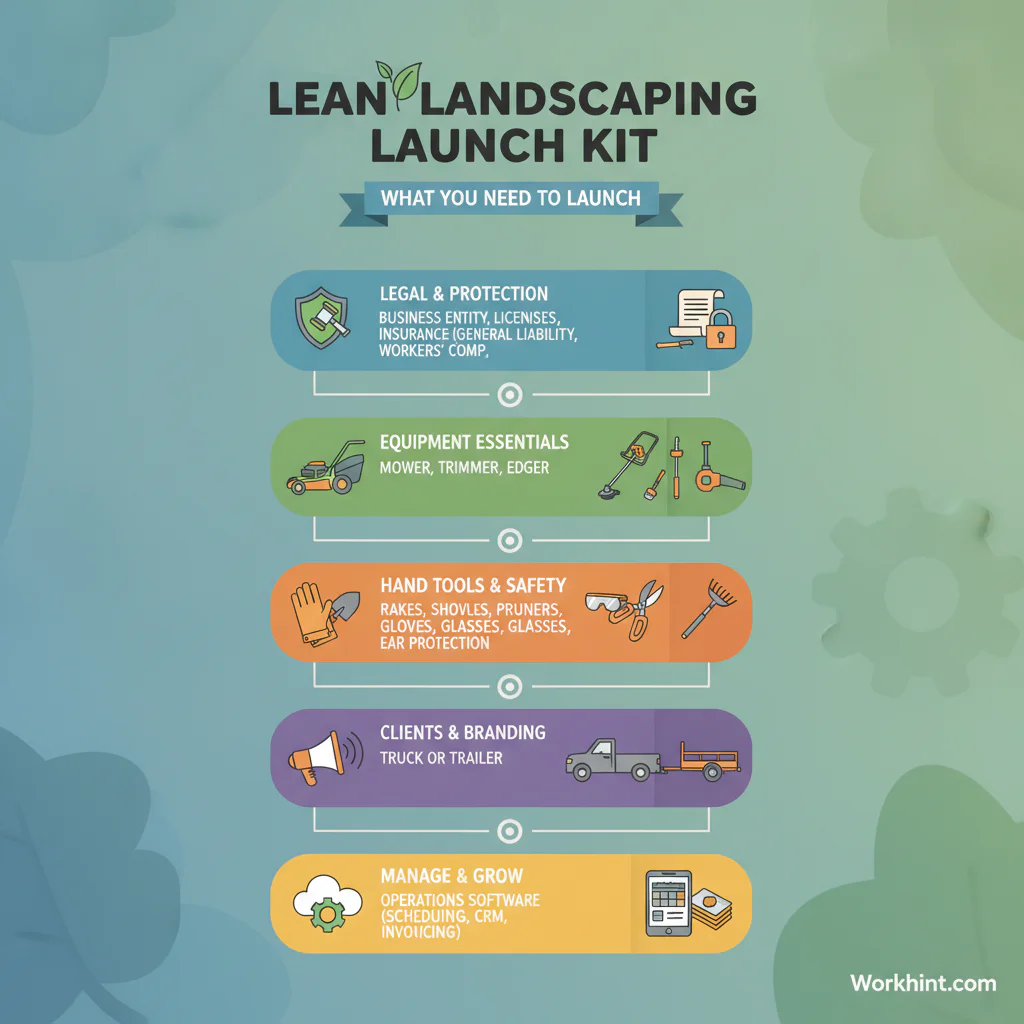
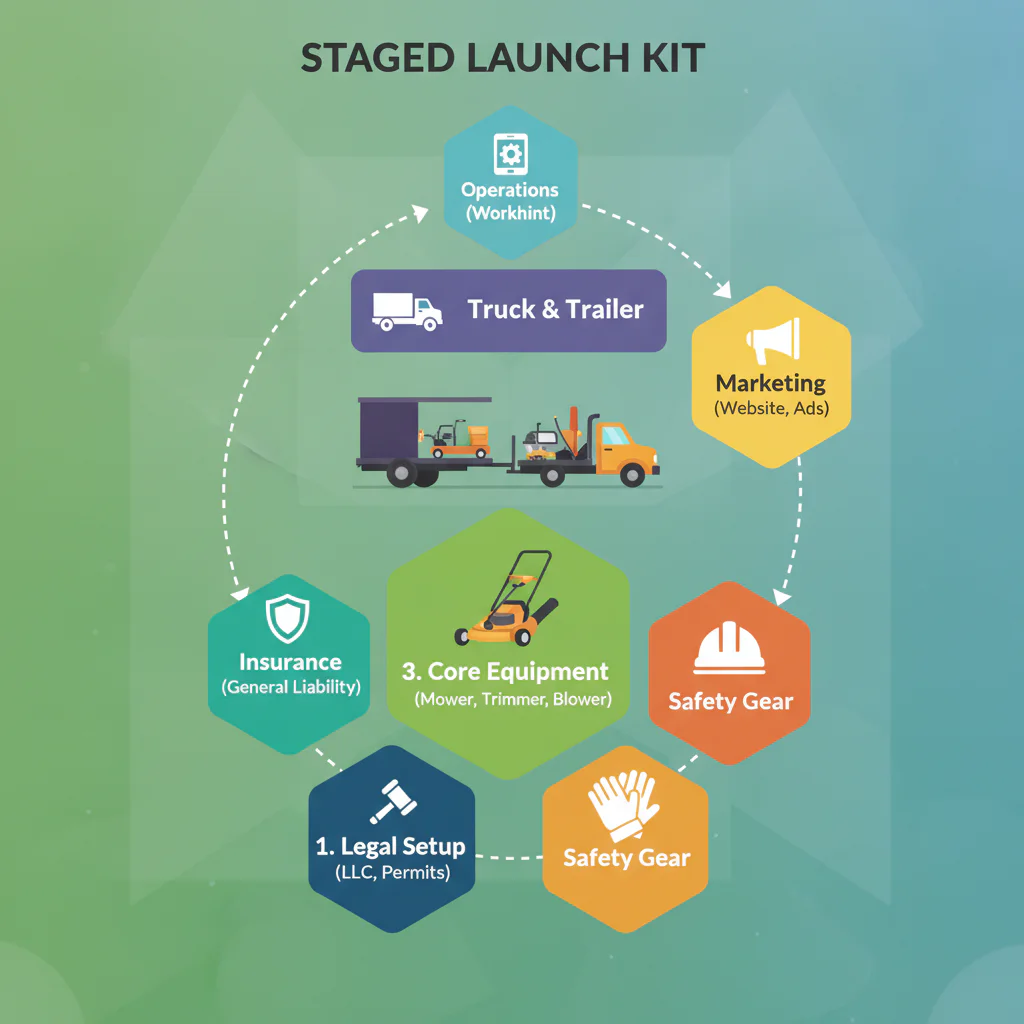
Your launch requirements depend on your state, city, services, and whether you use employees or contractors. At minimum, check business registration, local business licenses, sales tax rules, insurance, vehicle requirements, pesticide or fertilizer licensing if you apply chemicals, and any contractor licensing rules for larger landscape construction work.
Keep the first version lean. A solo lawn maintenance business can start with basic equipment and a personal vehicle if the work is small. A full-service landscaping company with a truck, trailer, commercial mower, crew, and specialty tools needs a larger budget.
| Startup item | Lean starting range | Why it matters |
|---|---|---|
| Business registration, local license, and EIN | $50-$500 | Creates the legal foundation for operating, banking, and taxes. |
| General liability insurance | $400-$1,500 per year | Protects against property damage, injury claims, and customer requirements. |
| Mower, trimmer, edger, blower, and hand tools | $1,000-$7,500 | Gets the first lawn maintenance jobs done without overbuying. |
| Truck, trailer, ramps, storage, and fuel setup | $0-$15,000+ | Moves equipment efficiently and affects how many jobs you can serve per day. |
| Safety gear and uniforms | $100-$500 | Improves professionalism and reduces job-site risk. |
| Website, Google Business Profile, flyers, and signs | $100-$1,000 | Helps local customers find and trust the business. |
| Operations, scheduling, quoting, payments, and accounting | $0-$300/month | Keeps leads, jobs, invoices, crew assignments, and recurring visits organized. |
The simplest first offer is recurring lawn maintenance. Define service area, yard size limits, included tasks, add-on pricing, and what requires a custom quote. This prevents underpriced jobs and keeps early delivery consistent.
How to price landscaping services
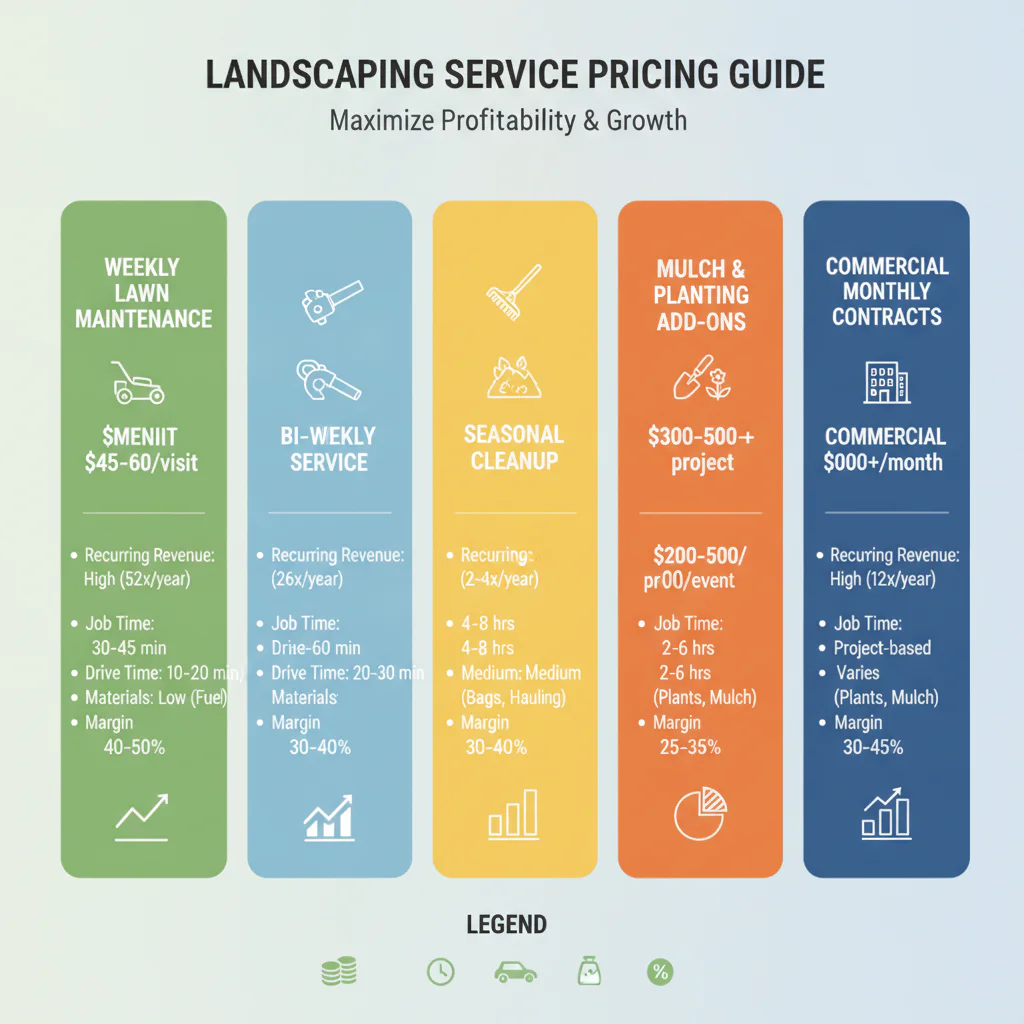
Pricing should cover labor, drive time, fuel, equipment wear, materials, insurance, admin time, taxes, and profit. Beginners often price only the mowing time and forget the time spent loading, driving, quoting, messaging, invoicing, and maintaining equipment.
Use flat-rate packages for predictable recurring maintenance and custom quotes for larger landscaping work. Track actual job time from the beginning. If a $55 mowing job takes 80 minutes after travel and cleanup, it is not really a $55 job.
| Service | Common pricing approach | Best use |
|---|---|---|
| Weekly lawn maintenance | Flat rate per visit or monthly recurring plan | Predictable residential routes and repeat revenue. |
| Biweekly lawn maintenance | Higher per-visit rate than weekly service | Customers who want less frequent maintenance but still need reliability. |
| Spring or fall cleanup | Project quote based on labor, debris, and property condition | Seasonal cash flow and first-time customer acquisition. |
| Mulch, bed cleanup, and planting | Materials plus labor and delivery margin | Higher-ticket add-ons for existing maintenance customers. |
| Commercial property maintenance | Monthly or seasonal contract | Recurring revenue with stricter service expectations. |
A simple starting rule: quote the job, estimate the total labor and drive time, add direct costs, then check whether the job still meets your target hourly profit. If not, raise the price or narrow the scope.
How to get first customers
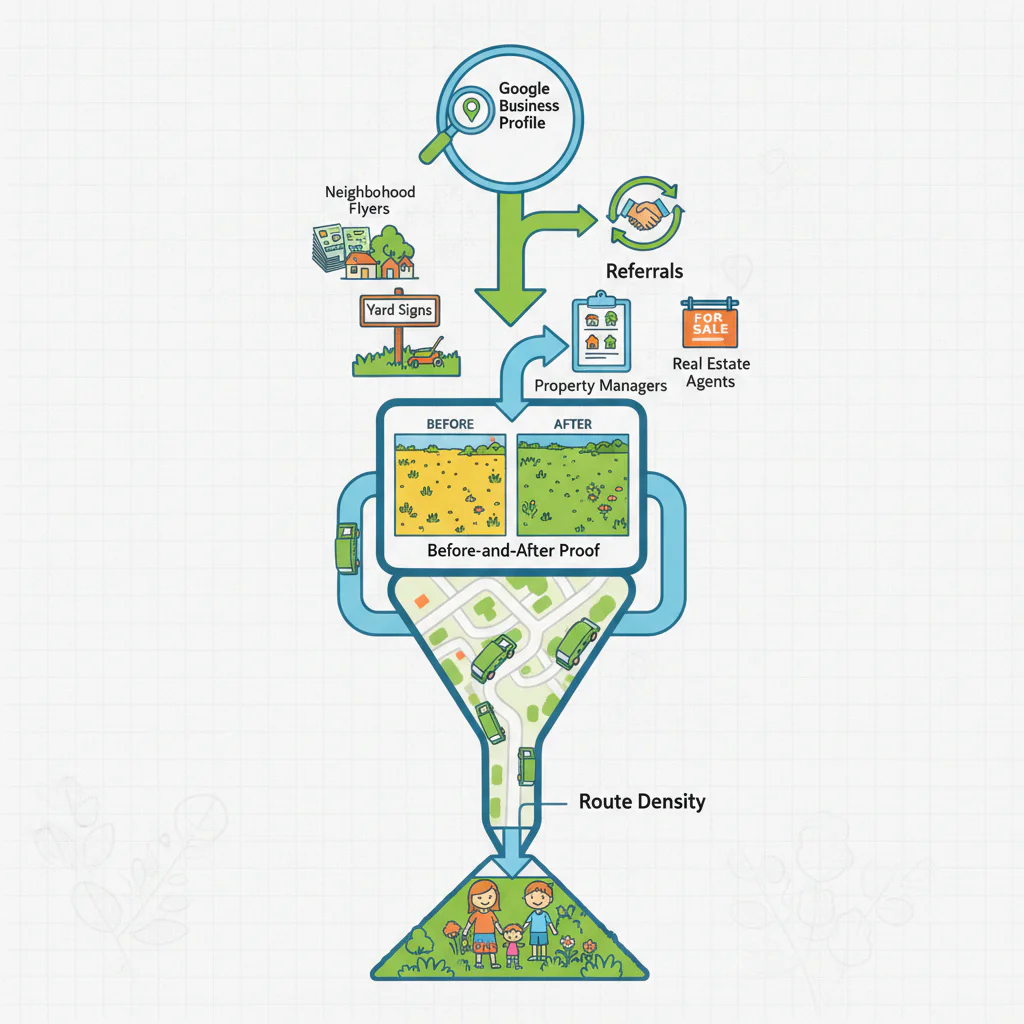
Start within a tight local radius. Landscaping businesses improve as route density improves. Ten customers in one neighborhood are better than ten customers spread across a county.
Set up a Google Business Profile, a simple one-page site, before-and-after photos, neighborhood flyers, yard signs when allowed, and referral offers for early customers. Contact property managers, real estate agents, HOAs, local offices, small retail centers, and rental owners with a clear maintenance package.
Your first outreach should be specific: the service area, the maintenance package, the frequency, what is included, how quotes work, and how quickly you can start. Do not sell vague landscaping help. Sell a clean first outcome.
How Workhint helps run a landscaping business
Workhint can generate a fully branded operating platform for a landscaping company, with the company’s own logo, service area, customer portal, internal dashboard, crew workflows, payments, and reporting. The point is not to add another task tool. The point is to run the landscaping operation from first request to final payout in one connected system.
A homeowner, property manager, or commercial client can submit a customer request through the branded portal, choose services, upload photos, enter address details, request recurring lawn maintenance, and pick preferred visit windows. The owner or estimator sees the request, creates a quote, adds line items for mowing, edging, cleanup, mulch, planting, or seasonal work, and sends it back for quote approval.
Once approved, Workhint can turn the quote into scheduled work. Recurring lawn maintenance can be placed on weekly or biweekly calendars. One-time cleanups can be assigned to available crews. Dispatch and route planning can group jobs by location, crew capacity, equipment needs, and service window so the day is not built manually from texts and spreadsheets.
For field execution, each crew can open mobile job checklists for the property: mow front and back lawn, edge sidewalks, trim fence lines, blow hard surfaces, photograph completed areas, flag property issues, and mark materials used. Before-and-after photos can attach to the job record so customers can see proof of work and owners can verify quality without driving to every site.
Equipment tracking can connect trucks, trailers, mowers, trimmers, blowers, sprayers, and specialty tools to crews and jobs. If a job requires a commercial mower, aerator, hedge trimmer, or mulch delivery, the assignment can show what must be loaded before dispatch. Maintenance notes can show which mower needs service before it fails during the week.
Customer communication can stay tied to the job. Clients can receive quote updates, schedule confirmations, arrival notifications, completion photos, invoice links, and follow-up messages from the same branded portal. Invoicing, online payments, and recurring billing can connect directly to completed jobs, while contractor payouts or crew pay calculations can be tracked from approved work.
As the company grows, the owner can manage multiple crews, service areas, and active job locations from an owner dashboard. The dashboard can show today’s jobs, late crews, open quotes, recurring maintenance routes, unpaid invoices, equipment conflicts, customer issues, contractor payouts, and revenue by service type. That gives the owner a live operating view instead of a scattered mix of forms, calendar events, route notes, texts, photo albums, invoices, and payment apps.
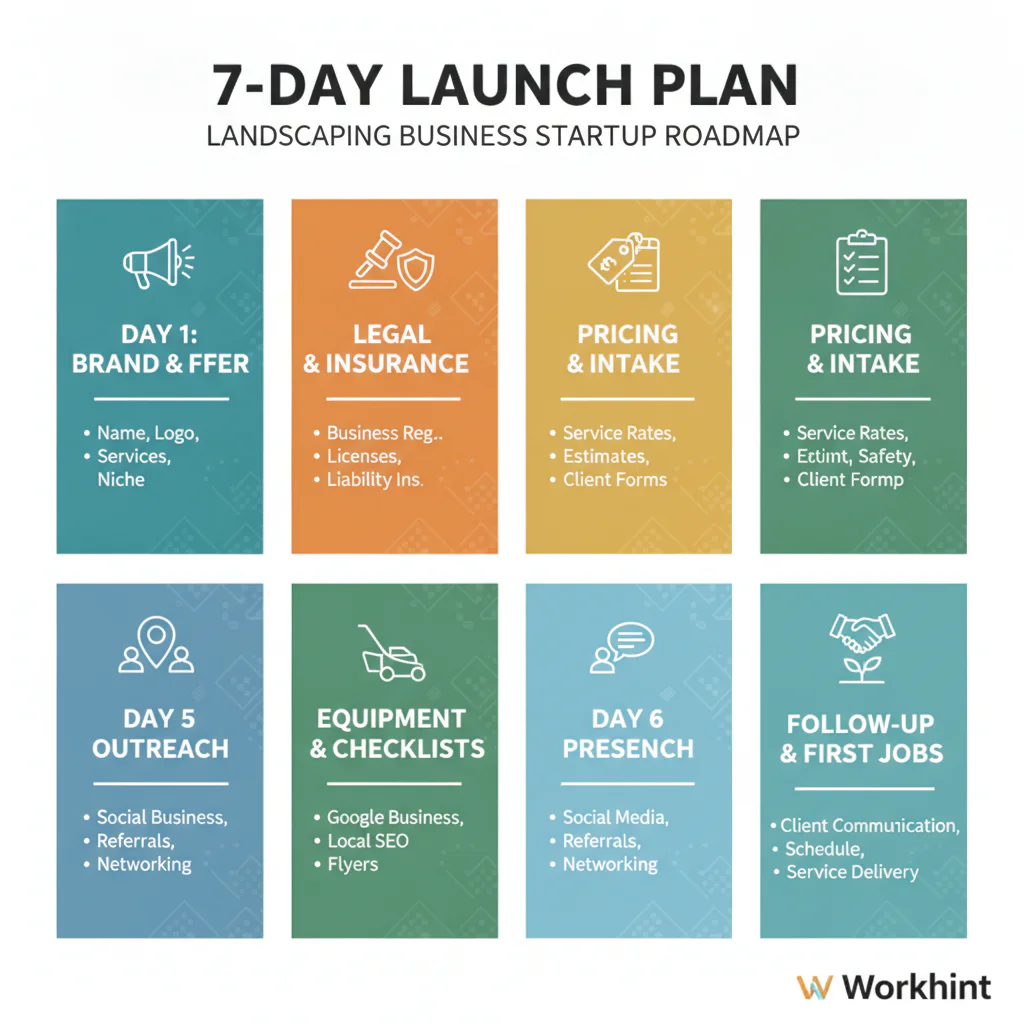
First 7-day launch plan
Use the first week to build a sellable offer, not a complicated company. The goal is to book conversations, quote small jobs, and prove you can deliver reliably.
- Day 1: Choose the first offer, service area, customer type, and yard size limits.
- Day 2: Register the business, check local licenses, request insurance quotes, and open a business bank account.
- Day 3: Price weekly, biweekly, cleanup, and add-on packages. Build a quote template and intake form.
- Day 4: Buy or rent only the equipment needed for the first offer. Create job checklists and photo standards.
- Day 5: Set up Google Business Profile, a simple site, yard signs or flyers, and neighborhood outreach.
- Day 6: Contact 30-50 local prospects, including homeowners, landlords, property managers, and small commercial properties.
- Day 7: Follow up, book estimates, review pricing, tighten the route, and prepare to complete the first jobs.
Final launch checklist
- Choose a specific first offer, such as recurring lawn maintenance.
- Define your service area and property size limits.
- Register the business and check local license requirements.
- Get insurance quotes before taking paid jobs.
- Buy or rent the minimum equipment needed to deliver the first service.
- Create quote, scheduling, crew checklist, photo, invoice, and payment processes.
- Set up a Google Business Profile and simple landing page.
- Collect before-and-after photos and reviews from early customers.
- Build routes around neighborhood density, not random jobs.
- Track job time, drive time, materials, fuel, and profit from day one.
FAQ
How much does it cost to start a landscaping business?
A lean lawn maintenance business can often start with a few thousand dollars if you already have transportation and buy basic equipment carefully. A full-service landscaping business with truck, trailer, commercial mower, storage, insurance, and crew setup can require much more.
Do I need a license to start a landscaping business?
Usually you need at least local business registration or a business license. Some states or cities require additional licenses for pesticide application, fertilizer services, irrigation, tree work, or larger contractor-style landscaping projects. Check your state and local rules before selling services.
What insurance does a landscaping business need?
Most operators start by looking at general liability insurance. Depending on your structure, vehicles, employees, and state rules, you may also need commercial auto, workers’ compensation, equipment coverage, or bonding for certain clients.
What is the best first landscaping service to offer?
Recurring lawn maintenance is usually the cleanest first offer because it is simple to explain, easy to schedule, and creates repeat revenue. You can add seasonal cleanup, mulch, planting, and commercial maintenance after the first route is working.
How should I price lawn maintenance?
Price based on total job time, drive time, equipment costs, fuel, admin work, taxes, and profit. Flat-rate recurring packages are easier for customers, but you should still track actual hours so you know whether each job is profitable.
How do I get my first landscaping customers?
Start local. Use neighborhood outreach, Google Business Profile, flyers, yard signs, referrals, property managers, real estate agents, landlords, and small commercial properties. A tight route with repeat customers is more valuable than scattered one-off jobs.
Can I start a landscaping business alone?
Yes, if you keep the first offer narrow and avoid jobs that require more labor or equipment than you can handle. Solo operators should focus on smaller recurring accounts, clean scheduling, and profitable routes before hiring.
Conclusion
The fastest way to start a landscaping business is to sell a focused service, price it with real job costs, build a local route, and make every job repeatable. The equipment matters, but the operating system matters just as much. If you can quote clearly, schedule reliably, dispatch work, prove completion, collect payment, and learn from every job, you can turn a few lawns into a real landscaping company.
Leave a Reply