

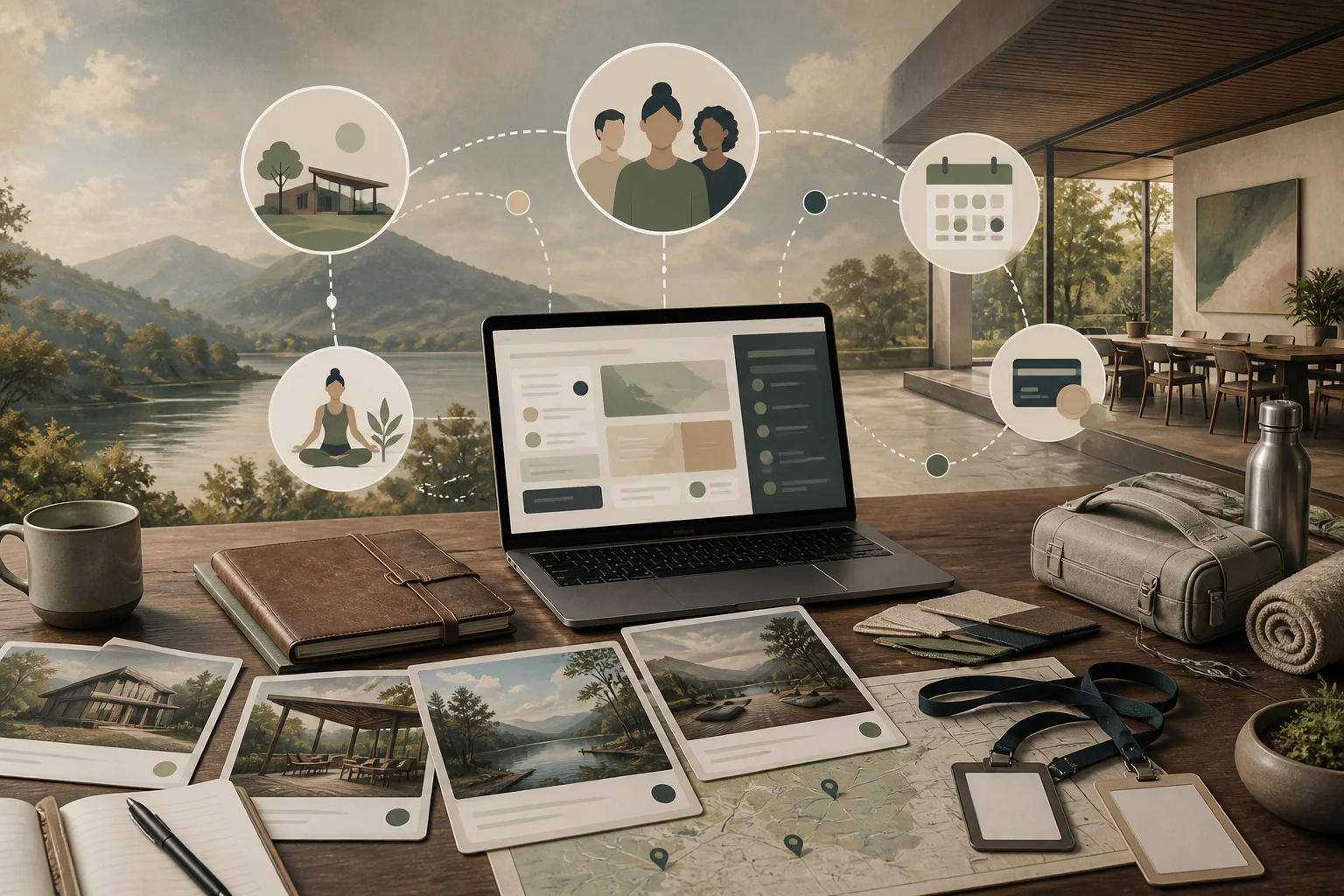
Companies want better offsites, but most founders can validate this business before hiring a planning team.
If you are researching how to start a corporate retreat business, the opportunity is practical: teams still need focused time away from normal work, but planning venues, agendas, facilitators, transportation, meals, and follow-up is painful.
The lean path is not to hire event staff, lease an office, or build a full agency before the first client. Start with one retreat offer, a branded intake platform, a trusted partner network, and a process that turns a company request into a clear plan, quote, schedule, and delivery workflow.
What’s in this article?
- Why a corporate retreat business works
- What you need before launch
- How to price retreat planning services
- How to get first corporate clients
- How Workhint helps launch it
- A 7-day launch plan, checklist, and FAQ
Why this business works
A corporate retreat business works because companies buy outcomes, not just events. They want leadership alignment, team connection, planning time, onboarding, culture reset, customer strategy, sales kickoff energy, or space to make decisions away from daily interruptions.
The first version should be narrow. Instead of offering every kind of offsite, choose one lane: leadership retreats for 10 to 25 people, remote-team planning days, founder offsites, sales kickoff support, wellness-focused company retreats, or local one-day retreats for growing teams.
This business is also partner-friendly. You do not need to own venues, employ facilitators, hire transportation staff, or build a catering team. You need relationships with reliable independent providers and a clear operating system for quoting, booking, approvals, delivery, payment, and follow-up.
What you need to launch
Start with the smallest professional version that can win a paid pilot. That usually means a clear package, legal setup, insurance review, partner list, branded request flow, and a simple way to manage quotes and approvals.
| Startup item | Lean launch approach | Estimated early budget |
|---|---|---|
| Business setup | Register the business, open a bank account, and prepare basic terms | $200-$1,000 |
| Insurance and contracts | Review general liability, professional liability, cancellation terms, and partner agreements | $500-$2,000 |
| Branded platform | Create intake, proposal, approval, schedule, payment, and partner workflows | Start lean |
| Partner network | Recruit venues, facilitators, coaches, caterers, transport partners, and photographers as needed | $0-$500 |
| Marketing | Build a simple page, outreach list, referral offer, and examples of retreat packages | $300-$1,500 |
| Tools and templates | Create agenda templates, budget sheets, intake forms, and post-retreat feedback forms | $100-$500 |
Avoid buying retreat inventory, reserving venues speculatively, or hiring employees before demand is visible. Your first investment should make it easier for a company to request a retreat and for you to coordinate the right partners.
How to price it
Pricing should separate your planning fee from pass-through vendor costs. That keeps margins visible and prevents the business from looking profitable while vendor payments consume the deal.
| Offer | What it includes | Example pricing |
|---|---|---|
| Retreat design sprint | Goal session, agenda, budget, venue shortlist, and vendor plan | $1,500-$3,500 |
| One-day local retreat | Planning, partner coordination, schedule, onsite support, and feedback | $4,000-$9,000 plus vendor costs |
| Two-day leadership retreat | Planning, facilitation partner, venue coordination, meals, logistics, and follow-up pack | $8,000-$20,000 plus vendor costs |
| Monthly retreat program | Quarterly or monthly offsites for distributed teams | $3,000-$8,000 monthly retainer |
The first goal is not to maximize complexity. Sell one clean package that a buyer can approve quickly. Once customers repeat the request, add premium facilitation, multi-city delivery, executive coaching partners, or employee wellness modules.
How to get first customers
Start where retreat urgency already exists: remote-first companies, agencies, startups after fundraising, executive teams entering annual planning, HR leaders running engagement initiatives, and founders whose teams have grown faster than their operating rhythm.
Use a simple demand test. Offer a fixed-price retreat design sprint for companies that know they need an offsite but have not chosen a venue, agenda, or facilitator. The sprint gives them clarity, and it gives you a paid path into the larger retreat project.
Good first channels include LinkedIn outreach to founders and people leaders, referrals from executive coaches, coworking spaces, boutique hotels, fractional HR consultants, local venue partners, and founder communities. Do not pitch \”event planning.\” Pitch a clearer outcome: a focused leadership retreat planned without internal coordination drag.
How Workhint helps launch it
Workhint can help you launch the corporate retreat business as a branded operating platform before you build custom software or hire coordinators. A company visits your branded portal, explains the retreat goal, team size, dates, budget, location preferences, accessibility needs, dietary requirements, and desired outcomes.
That request flows into an operations dashboard where you can review the opportunity, generate a proposed package, request approvals, and match the work with the right independent partners. A leadership retreat might need a facilitator, venue contact, catering partner, transport provider, photographer, and post-retreat survey support. Workhint keeps those roles, documents, messages, tasks, calendars, quotes, approvals, invoices, payments, and partner payouts connected.
The customer sees a professional branded experience instead of a chain of emails. Partners see only the assignments, forms, schedules, and requirements relevant to their role. You can start with a small network, learn what clients buy, and expand city by city once the workflow repeats.
First 7-day launch plan
- Day 1: Choose one customer and retreat type, such as founder offsites or one-day leadership retreats.
- Day 2: Create the branded Workhint platform basics: intake, package options, approval flow, payment rules, and partner roles.
- Day 3: Build the retreat design sprint offer, pricing, agenda template, quote template, and cancellation terms.
- Day 4: Recruit five to ten independent partners, including venues, facilitators, wellness coaches, caterers, and local logistics providers.
- Day 5: Contact first prospects and referral sources with one specific retreat outcome.
- Day 6: Route any interested buyer through the intake flow and build the first sample proposal.
- Day 7: Review demand, partner readiness, pricing, and delivery risk before investing in ads or staff.
Final launch checklist
- Choose one retreat niche and one launch market.
- Register the business and review insurance needs.
- Create a branded intake and proposal process.
- Define one fixed-price retreat design sprint.
- Recruit independent venues, facilitators, coaches, caterers, and logistics partners.
- Create partner onboarding, scope, quality, and payout rules.
- Build quote, approval, schedule, invoice, and payment flows in Workhint.
- Sell the first paid pilot before hiring employees or reserving inventory.
FAQ
How much does it cost to start a corporate retreat business?
A lean launch can often start with business setup, insurance review, a branded platform, templates, partner outreach, and basic marketing. Costs rise when you pre-book venues, hire staff, or take on large events before demand is proven.
Can I start a corporate retreat business with no employees?
Yes. You can coordinate independent facilitators, venues, wellness providers, caterers, transportation partners, and onsite support. Use clear agreements, defined scopes, insurance review, and documented delivery standards.
Do I need event planning experience?
Experience helps, but the first offer can be narrower than full event production. Start with retreat design, agenda planning, partner coordination, and small local retreats before managing complex multi-day programs.
What should I sell first?
Sell a retreat design sprint or a one-day local leadership retreat. These offers are easier to scope, price, approve, and fulfill than a broad custom retreat service.
How do corporate retreat businesses get clients?
Start with founders, HR leaders, executive coaches, fractional people leaders, boutique venues, coworking spaces, and agency owners. Focus the outreach on business outcomes, not generic event planning.
What insurance should I consider?
Review general liability, professional liability, event cancellation, vendor requirements, and any coverage tied to transportation, alcohol, physical activities, or onsite risk. Requirements vary by location and retreat format.
Is a corporate retreat business profitable?
It can be profitable when you price planning separately, manage vendor costs carefully, use repeatable packages, and avoid fixed costs before revenue repeats. Margins improve when retreat formats become standardized.
Conclusion
A corporate retreat business is worth starting when you treat it as an operating platform, not just an event-planning side hustle. Choose one retreat outcome, validate demand with a paid sprint, build a small provider network, and keep every request, quote, approval, payment, and payout visible.
Workhint makes that lean launch possible before heavy investment. Start narrow, prove the workflow, and scale only after companies show you which retreat model they are willing to buy again.
Leave a Reply