

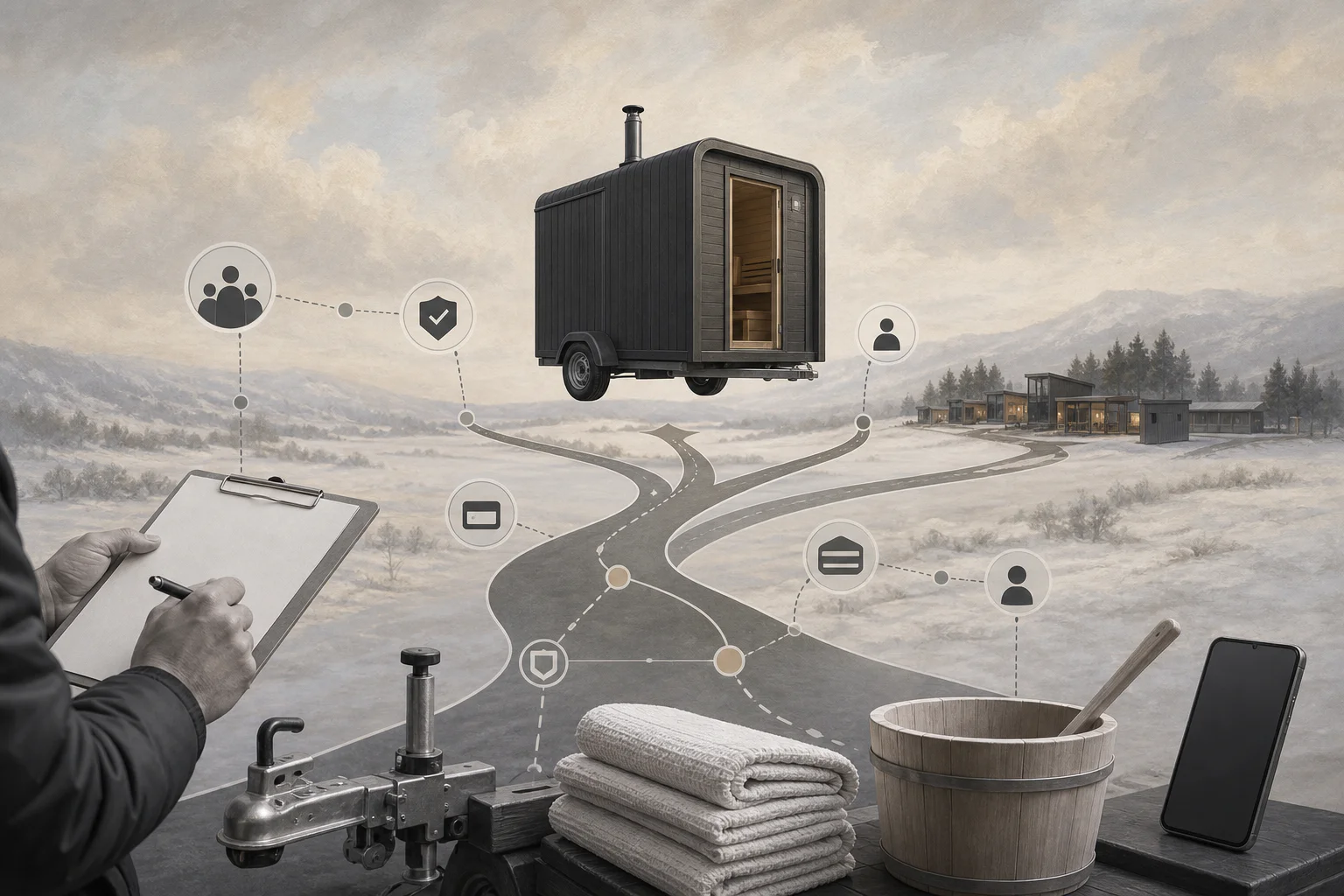
A mobile sauna business can start with bookings, partners, and proof of demand before you buy a fleet.
If you want to start a mobile sauna business, the tempting move is to shop for trailers first. That is usually backwards.
The smarter launch path is to validate demand, build a branded booking platform, test a narrow service area, and use one unit, leased access, or partner operators before you commit to a full fleet. Mobile wellness is attractive, but the unit is not the business. The business is reliable booking, safe setup, clean handoff, great customer experience, and repeat demand.
This guide shows how to launch with less risk, price the offer, find early customers, and use Workhint as the operating foundation from the first reservation through provider payout.
What’s in this article?
- Why a mobile sauna business works
- What you need to launch
- How to price mobile sauna rentals
- How to get the first customers
- How Workhint helps launch it
- A 7-day launch plan
- Final checklist and FAQ
Why this business works
Mobile sauna sits at the intersection of wellness, convenience, events, and hospitality. Customers want recovery experiences at homes, short-term rentals, gyms, retreats, breweries, races, team events, and private gatherings. They are not only buying heat. They are buying a hosted experience that feels premium without visiting a spa.
The model can work because the offer is easy to understand: reserve a sauna, choose the time window, complete the waiver, get delivery and setup, enjoy the session, and have everything removed or reset afterward.
The risk is capital. A full mobile sauna trailer, cold plunge setup, storage, towing equipment, insurance, maintenance, and permits can become expensive fast. That is why a fleet-first launch is dangerous. Start with one narrow offer and prove that people in your market will book before you buy multiple units.
What you need to launch
You need a business that can accept reservations before you need a warehouse of sauna units. The first version should include a branded customer platform, a service area, pricing rules, waiver flow, delivery checklist, cleaning checklist, and a small group of reliable setup operators or equipment partners.
Check local requirements before selling. Mobile sauna rules can touch business licensing, health department expectations, fire safety, towing, parking, water access, electrical setup, wood-burning rules, commercial auto coverage, and liability waivers. Requirements vary by city and state.
| Launch item | Lean starting range | Why it matters |
|---|---|---|
| Business registration and basic legal setup | $200-$800 | Creates the entity, agreements, waiver language, and tax setup. |
| Insurance and local compliance review | $500-$2,500 | Protects against customer injury, property issues, towing risk, and event requirements. |
| Branded platform and booking workflow | $300-$1,500 | Handles reservations, waivers, scheduling, payment, checklists, and follow-up. |
| One sauna unit, lease, or partner access | $1,000-$40,000+ | Lets you test demand before buying multiple trailers or storage capacity. |
| Cleaning, setup, and safety supplies | $300-$1,500 | Supports safe delivery, hygienic turnover, towels, signage, and session prep. |
| Launch marketing | $300-$2,000 | Gets the first bookings through local outreach, partners, and events. |
The leanest version is not always asset-free, but it can be fleet-free. You can start by partnering with an existing sauna owner, renting a unit for pop-up weekends, or buying one unit only after preorders, event partners, or membership deposits show demand.
How to price it
Pricing should reflect convenience, delivery complexity, setup time, cleaning, fuel, operator labor, insurance, and utilization. Do not copy a spa day pass. A mobile sauna is a delivered experience, so the price needs to cover logistics.
| Offer | Example price | Best fit |
|---|---|---|
| Private half-day rental | $250-$450 | Homes, small gatherings, birthday weekends, and recovery days. |
| Full-day rental | $400-$750 | Retreats, short-term rentals, and premium private events. |
| Pop-up session block | $25-$60 per guest | Gyms, breweries, markets, races, and wellness events. |
| Corporate or team event | $750-$2,000+ | Company wellness days, retreats, and hospitality programs. |
| Membership route | $99-$250 monthly | Recurring neighborhood, gym, or community sessions. |
Begin with two packages: a private rental and a pop-up event block. Add cold plunge, towels, attendants, extra hours, or recurring memberships only after the basic offer sells.
How to get first customers
Start where wellness demand already gathers. Good first channels include gyms, yoga studios, recovery clinics, run clubs, pickleball clubs, cold plunge groups, short-term rental hosts, boutique hotels, breweries, outdoor markets, and corporate retreat planners.
Your first goal is not brand awareness. It is proof that people will reserve specific time slots at a price that covers setup and operating cost. Offer a launch weekend, collect deposits, and track which audiences convert.
Partnerships matter because mobile sauna is visual and local. A gym can host Sunday recovery sessions. A short-term rental owner can offer the sauna as a premium add-on. A brewery can host winter pop-ups. Each partner gives you a real demand test before you buy another unit.
How Workhint helps launch it
Workhint can become the branded operating platform for the mobile sauna business before you invest in custom software, a dispatch team, or multiple trailers. For this kind of mobile-service model, service marketplace software can connect customer intake, operator onboarding, scheduling, dispatch, payments, and service recovery as demand grows.
A customer can request a sauna through your branded portal, choose a rental window, enter the address, confirm access requirements, sign the waiver, add cold plunge or attendant service, approve the quote, and pay online. The operations view can route the booking to the right operator, check service-area rules, schedule delivery, assign setup tasks, and trigger cleaning and pickup checklists.
For independent operators or equipment partners, Workhint can manage invitations, onboarding, availability, equipment records, job assignments, safety forms, photo proof, customer notes, payout records, and reviews. For customers, it can handle confirmations, reminders, waiver collection, payment status, service updates, and post-session feedback.
This is what lets the business launch as a platform and network, not just one person with a trailer. You can validate one city, add trusted operators, test partner locations, and expand only when the booking data justifies more equipment.
First 7-day launch plan
- Day 1: Choose one market, one service area, and one offer: private rentals, pop-up sessions, or event bookings.
- Day 2: Confirm local licensing, insurance, waiver, towing, parking, heat source, and health department questions.
- Day 3: Set up the branded Workhint portal for requests, quotes, waivers, scheduling, payments, checklists, and operator payouts.
- Day 4: Find one unit path: lease, partner with an owner, rent for a test weekend, or reserve one unit after deposits.
- Day 5: Contact gyms, rental hosts, wellness studios, breweries, and event organizers with one launch package.
- Day 6: Collect deposits or waitlist signups and route each request through the platform.
- Day 7: Review demand, pricing, delivery time, setup risk, and partner readiness before buying more equipment.
Final launch checklist
- Pick the first city, neighborhood, or partner venue type.
- Define one simple mobile sauna offer.
- Register the business and check permits, insurance, waivers, towing, and safety rules.
- Build the branded Workhint booking platform.
- Create intake, quote, waiver, payment, scheduling, setup, cleaning, and payout flows.
- Secure one unit, lease option, or equipment partner for the first demand test.
- Recruit independent setup operators or partner hosts only where needed.
- Sell a launch weekend before investing in a fleet.
- Use booking data to decide whether to buy, lease, or partner for the next unit.
FAQ
How much does it cost to start a mobile sauna business?
A fleet-first launch can cost tens of thousands because the sauna unit, trailer, transport, insurance, storage, and setup gear add up quickly. A lean launch can reduce risk by validating demand through preorders, partner access, leased units, or one unit before buying more.
Can I start a mobile sauna business without buying a fleet?
Yes. Start with one unit, a rental arrangement, a partner operator, or pop-up events. The goal is to prove bookings, pricing, and fulfillment before committing to multiple units.
Do I need a license to run a mobile sauna?
You will usually need a business license, and you may need local permits related to health, fire safety, parking, towing, events, or wood-burning equipment. Check your city, county, state, and insurance requirements before taking paid bookings.
How should I price mobile sauna rentals?
Use rental windows, event packages, or per-guest pop-up sessions. Price for delivery, setup, cleaning, operator labor, fuel, insurance, wear, and downtime between bookings.
Who are the best first customers?
Start with people and venues already buying wellness experiences: gyms, yoga studios, recovery clinics, run clubs, boutique hotels, Airbnb hosts, breweries, race organizers, and retreat planners.
What mistakes should beginners avoid?
The biggest mistake is buying too much equipment before proving demand. Other mistakes include weak waivers, unclear cleaning standards, underpriced delivery, unreliable setup help, and no system for scheduling or payment.
Can independent contractors help run the business?
They can, depending on local labor rules and how the work is controlled. Use written agreements, safety standards, onboarding, and payout records, and get legal guidance before relying on contractors.
Conclusion
A mobile sauna business is attractive when you treat it as a booking, logistics, and customer experience business first. Do not let the equipment decision swallow the launch.
Start with demand validation, one clear offer, a branded platform, and a small operator or partner network. Workhint gives you the operating foundation to manage requests, waivers, scheduling, service delivery, payments, and payouts while you decide whether the market deserves a fleet.
Leave a Reply