

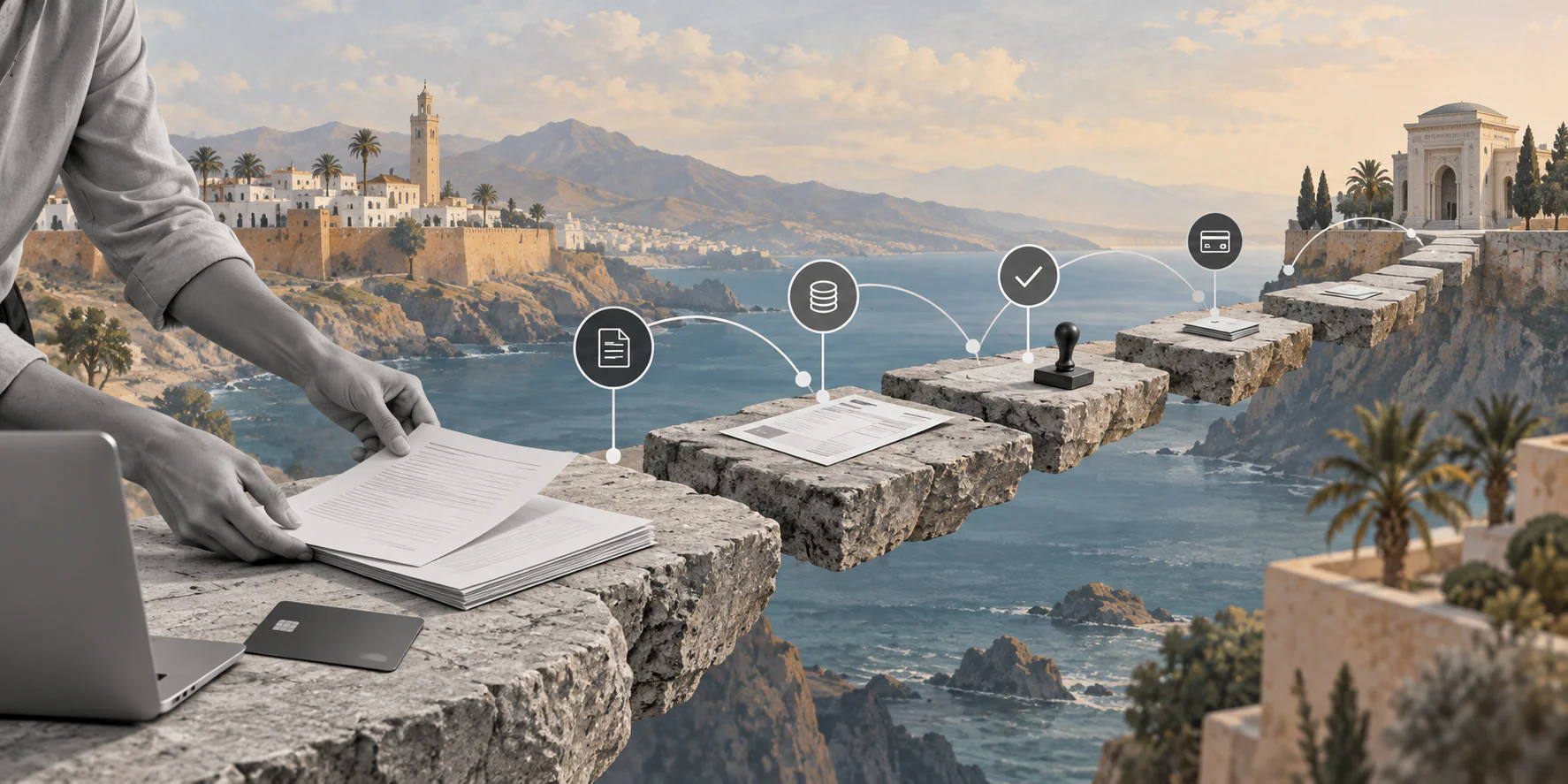
Paying Moroccan contractors is mostly a documentation, currency, and approval-control problem, not just a transfer problem.
Quick answer
Learn how to pay independent contractors in Morocco from abroad, including payment methods, currency choices, tax documentation, approvals, and reconciliation.
Companies searching for how to pay independent contractors in Morocco from abroad need more than a payment rail. They need a repeatable process for collecting contractor details, agreeing on currency, approving invoices, handling foreign exchange, and keeping enough documentation for tax, finance, and audit review.
Morocco is reachable through international banking and global payment providers, but the workflow can break down when finance treats each contractor payment as a one-off exception. The better approach is to define the payment method, contractor status, invoice requirements, approval path, and recordkeeping standard before the first invoice is due.
What’s in this article?
- The main ways foreign companies pay contractors in Morocco
- What information to collect before payment
- How to choose between bank wires, payment platforms, and local-currency payouts
- Tax and compliance points finance teams should review
- A practical workflow for contractor payments in Morocco
Why contractor payments in Morocco need structure
Morocco maintains a foreign-exchange control framework administered by the Office des Changes. Its 2026 materials note publication of the Instruction Generale des Operations de Change 2026, and the U.S. International Trade Administration explains that Moroccan foreign-exchange transactions are handled through the banking system with documentation requirements for business transactions. For a company paying into Morocco from abroad, this means payment data, invoices, contracts, and bank details need to be clean enough for both the payer and the recipient’s bank.
The operational issue is simple: if finance approves work, contractor operations collects documents, procurement owns the contract, and accounting owns the payment, small gaps become payment delays. Missing IBAN details, unclear invoice currency, unapproved scope changes, or expired contractor documents can all hold up payment even when the work is complete.
How to pay independent contractors in Morocco
Most companies use one of four payment routes: international wire transfer, a global contractor payment platform, a multi-currency business account, or a marketplace-style payout system. The right choice depends on volume, timing, currency exposure, contractor preference, and the amount of control the business needs.
| Payment method | Best fit | Main control issue |
|---|---|---|
| International wire | Higher-value invoices or infrequent payments | Bank details, fees, FX spread, and payment tracing |
| Global contractor payment platform | Recurring payments to multiple Moroccan contractors | Contractor onboarding, tax forms, invoice matching, and approval routing |
| Multi-currency account | Teams managing several currencies and payment batches | Currency choice, balance management, and reconciliation |
| Marketplace payout flow | Platforms paying many providers after completed work | Split payments, commission logic, payout holds, and dispute handling |
Bank wires are familiar, but they can be slow, expensive, and hard to reconcile when payment references are inconsistent. Global payment platforms create a cleaner operating layer because they connect contractor profiles, documents, invoices, approvals, payment status, and reporting. Finance should still verify fees, supported currencies, local payout availability, and who is responsible for tax documentation.
Information to collect before the first payment
Before paying a Moroccan contractor, collect the contractor’s legal name, address, tax or business registration details when applicable, bank account information, preferred currency, invoice template, signed contract, scope of work, payment terms, and contact information for payment questions. If the contractor is an individual, confirm whether the engagement is truly independent contractor work rather than employment in substance.
For U.S. payers, the IRS states that Form W-8BEN is used by foreign individuals to certify foreign status to the withholding agent or payer. The correct U.S. reporting and withholding treatment depends on facts such as where services are performed, the contractor’s status, and whether U.S.-source income exists, so finance teams should involve tax counsel for uncertain cases. Do not treat a Moroccan contractor like a domestic 1099 worker by default.
Payment currency and exchange-rate decisions
Agree on the invoice currency before work starts. Some contractors may prefer Moroccan dirham settlement through their local bank, while others may invoice in USD or EUR if they work with international clients. Currency choice affects who carries foreign-exchange risk, how fees are handled, and how the payment is reconciled.
A practical policy should answer four questions: who chooses the payment currency, which exchange rate source is used, whether transfer fees are paid by the company or deducted from the contractor’s receipt, and how finance handles short payments caused by intermediary bank fees. Without that policy, every disputed amount becomes a manual exception.
A practical contractor payment workflow
- Approve the engagement. Confirm the contractor is approved to work, the scope is defined, and the contract names the payment terms.
- Collect documents once. Store tax forms, bank details, invoice rules, and identity or registration information in a controlled contractor profile.
- Set payment terms. Define invoice frequency, currency, due date, required references, and fee treatment.
- Validate each invoice. Match the invoice to approved work, milestone evidence, project owner approval, and budget owner approval.
- Release payment in batches. Group approved invoices by date, entity, currency, and payment rail so finance can review exceptions before money moves.
- Track status. Record submitted, processing, paid, failed, returned, and contractor-confirmed states.
- Reconcile and retain records. Tie the payment confirmation back to the invoice, contractor profile, contract, and accounting entry.
This workflow matters most when a company has more than a few Moroccan contractors or pays contractors across several countries. The goal is not to slow payments down. It is to remove rework so approved contractors are paid consistently.
Common mistakes to avoid
- Starting work before the payment currency and invoice requirements are agreed.
- Saving contractor bank details only in email threads or spreadsheets.
- Approving invoices without confirming the work, milestone, or project owner.
- Ignoring intermediary bank fees until the contractor reports a short payment.
- Using the same tax process for domestic contractors and foreign contractors.
- Failing to record failed, returned, or partially received payments.
Where Workhint fits
Workhint’s contractor payment platform helps teams turn contractor payments into a controlled operating workflow. Instead of separating onboarding, contract records, invoice approvals, payment status, and reporting across disconnected tools, Workhint can connect the contractor profile, required documents, approval rules, project context, and payment tracking in one system.
For Morocco specifically, that means the finance team can define the onboarding checklist, capture payment preferences, route invoices to the right approvers, flag missing documentation, track payout status, and keep payment records attached to the contractor and project. The payment rail still matters, but the operating system around the payment is what keeps the process reliable.
FAQ
Can a foreign company pay contractors in Morocco?
Yes, foreign companies commonly pay Moroccan contractors through bank wires, global payment platforms, and other international payout methods. The company should confirm contractor status, payment details, documentation, and any tax or reporting obligations before paying.
What currency should Moroccan contractors be paid in?
It depends on the contract, contractor preference, bank capabilities, and FX policy. Agree on currency, exchange-rate source, and fee treatment before the first invoice to avoid disputes.
Do U.S. companies need a W-8BEN from Moroccan contractors?
Often, U.S. payers request Form W-8BEN from foreign individual contractors to document foreign status. The correct withholding and reporting treatment depends on the facts, so finance teams should confirm with a qualified tax adviser.
What is the safest way to pay multiple contractors in Morocco?
The safest approach is a controlled workflow: approved contractor profile, clear contract terms, validated invoice, payment approval, payout tracking, and reconciliation. The actual payment method should fit invoice size, frequency, currency, and compliance needs.
Conclusion
Paying independent contractors in Morocco from abroad is manageable when the process is designed before invoices arrive. Choose the right payment method, agree on currency and fees, collect tax and contractor documents, route approvals clearly, and reconcile each payment back to the invoice and contract. That structure gives contractors a better payment experience and gives finance the control it needs to scale global work without turning every payment into an exception.
Leave a Reply