

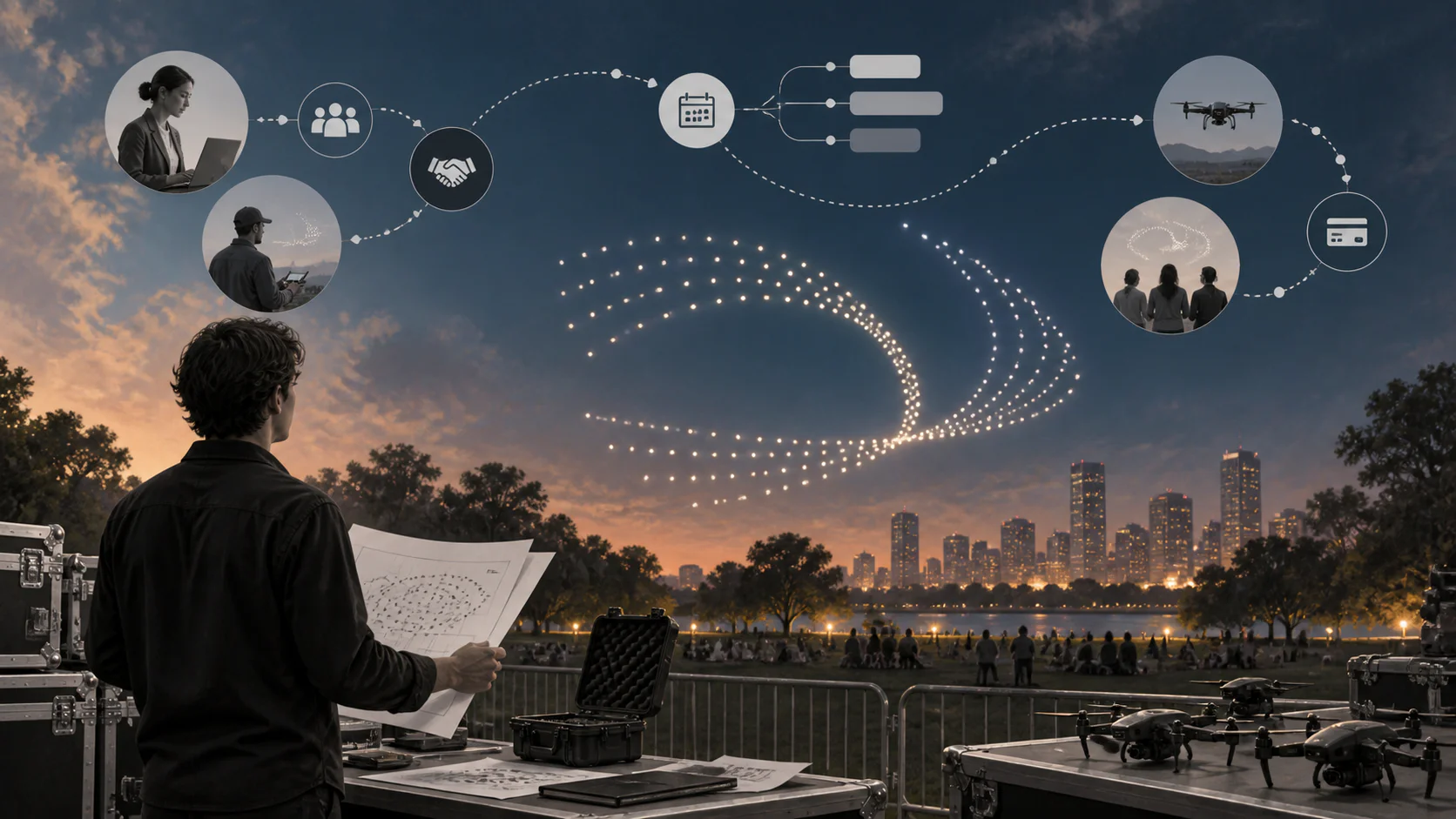
You can validate drone show demand before buying a fleet by selling the event, then coordinating certified operators.
Learning how to start a drone light show business no longer has to mean buying hundreds of drones on day one. The smarter model is to build a branded platform, recruit qualified partners, and prove that venues, cities, brands, schools, and event planners will pay.
Drone light shows are becoming a visible alternative to fireworks for public events, corporate activations, weddings, festivals, sports nights, and tourism campaigns. Customers buy a finished moment, not the drones themselves. That creates room for a founder who can sell, scope, coordinate, and manage providers.
What’s in this article?
- Why the business can work
- What you need before launch
- How to price early projects
- How to find first customers
- How Workhint helps launch operations
Why a Drone Light Show Business Works
Drone light shows sit at the intersection of events, advertising, tourism, and public entertainment. Customers use them when they want a high-impact visual moment without smoke, debris, or another standard fireworks show.
The business is operationally complex, which is good for a founder who can organize moving parts. A show may involve venue rules, certified operators, permits, insurance, creative concepts, weather windows, approvals, timing, safety zones, and backup plans.
Most beginner guides focus on owning drones and show software. That is one path, but it is capital-heavy. A leaner path is to become the branded sales and coordination layer: sell the customer relationship, scope the show, qualify the site, collect deposits, coordinate a certified partner, and manage the project.
This model works best with customers who already spend on live experiences: municipalities, hotels, resorts, sports venues, shopping centers, colleges, corporate event teams, wedding planners, tourism boards, and festival organizers.
What You Need to Launch
You do not need to own a drone fleet to test the business. You do need a credible offer, a provider network, strong project intake, insurance guidance, and a feasibility process.
The most important early asset is your operating system. Before you sell, set up a branded request form that captures event date, city, venue, audience, budget range, creative goal, show length, launch area, nearby airports, and approval deadline. That intake helps you qualify leads before involving an operator.
| Launch item | Lean budget range | Why it matters |
|---|---|---|
| Business registration and basic legal setup | $100 to $800 | Creates a legitimate contracting entity |
| Brand, domain, and landing page | $100 to $600 | Gives planners a place to request quotes |
| Workhint platform setup | Platform-dependent | Runs intake, approvals, scheduling, provider coordination, payments, and project tracking |
| Insurance consultation | $250 to $1,500+ | Clarifies general liability, event coverage, and operator requirements |
| Provider recruiting and vetting | $0 to $500 | Builds relationships with licensed operators before the first sale |
| Local sales materials | $100 to $750 | Supports outreach to venues, cities, hotels, and event planners |
| Owned drone fleet | $0 at launch | Delay this until demand and margins justify it |
Understand the regulatory side before quoting. Drone shows require certified operators, airspace checks, site planning, safety procedures, and often local permissions. Do not guarantee a show until a qualified partner reviews the site.
How to Price a Drone Light Show Business
Drone light shows are usually priced by show size, creative complexity, location, approvals, timeline, and whether the customer needs custom animation or a simpler package.
Public pricing varies widely. Current market examples commonly place small professional shows in the low five figures, while larger productions can move into six figures. Your job is not to underprice operators. It is to package the client experience, add coordination value, and protect margin.
| Offer | Customer type | Example price range | Best use |
|---|---|---|---|
| Intro local show | Small venue, school, private event | $12,000 to $25,000 | Simple designs, limited customization, qualified site |
| Community event show | City, festival, resort, campus | $25,000 to $75,000 | Larger audience, more planning, custom story |
| Brand activation show | Corporate event, launch, sponsor | $50,000 to $150,000+ | Custom creative, tight approvals, marketing impact |
| Recurring seasonal package | Venue, attraction, tourism board | Monthly or seasonal retainer | Multiple shows with repeatable production process |
Your margin can come from project management fees, creative coordination, local sales, customer support, permit coordination, and partner pricing. Keep first offers simple. Do not promise difficult airspace or complex choreography until you have partner capacity.
How to Get First Customers
Start with customers who already buy event production. Build a list of city event managers, convention centers, sports teams, colleges, hotels, resorts, malls, wedding venues, tourism boards, and event agencies in one region.
Your outreach should sell a specific use case: a fireworks alternative, shopping center finale, homecoming show, hotel opening, sponsor-backed festival moment, or wedding sendoff.
Use discovery calls to validate budget, venue feasibility, and decision timeline. If the customer has all three, route the opportunity to your provider network for feasibility review and quote support.
How Workhint Helps Launch It
Workhint can become the branded operating platform before you buy drones, hire production staff, or build custom software.
A customer can request a show through your branded portal, answer site questions, upload venue maps, share budget, and choose a date. Workhint can route that request into qualification and trigger provider review.
Once a qualified partner accepts, Workhint can manage quotes, approval, deposits, insurance documents, permit checklists, creative approval, event schedules, completion confirmation, invoices, and contractor payout. Customers see a professional platform. Providers see jobs, documents, schedules, and payout status. You see the business from one dashboard.
This is where the launch model gets practical. Instead of stitching together forms, spreadsheets, email threads, calendars, payment links, and project tools, you can build the first version around one AI-powered operating system. Workhint’s workflow automation software can connect intake, approvals, scheduling, payments, and provider handoffs into one repeatable process.
First 7-Day Launch Plan
- Day 1: Pick one market and one buyer group, such as hotels, city event teams, or wedding venues.
- Day 2: Create the branded Workhint portal, intake form, lead status pipeline, and provider review workflow.
- Day 3: Define three packages, quote rules, deposit requirements, approval steps, and payout process.
- Day 4: Recruit five to ten qualified drone show operators or production partners that serve your target region.
- Day 5: Build a list of 50 local prospects with visible event calendars and likely budgets.
- Day 6: Send targeted outreach and route serious inquiries through the platform.
- Day 7: Review demand, partner responsiveness, pricing, and site feasibility before spending on assets.
Final Launch Checklist
- Choose a specific event buyer and launch region.
- Register the business and confirm local insurance needs.
- Create a branded request portal and qualification workflow.
- Recruit qualified drone show providers before selling complex projects.
- Build clear packages with realistic budget ranges.
- Document site feasibility, weather, approvals, and safety review steps.
- Collect deposits before committing provider time.
- Validate demand before buying drones or hiring employees.
FAQ
Can you start a drone light show business without owning drones?
Yes, if you start as the branded sales and coordination layer. You still need qualified operating partners who can legally and safely perform the shows.
How much does it cost to start a drone light show business?
A fleet-owning company may need tens or hundreds of thousands of dollars. A platform-first model can start much leaner because early spending goes toward brand, intake, provider recruiting, insurance guidance, and customer acquisition.
Do drone light shows require permits?
Often, yes. Requirements depend on location, airspace, venue, audience, authorities, and show design. A qualified operator should review feasibility before confirmation.
Who buys drone light shows?
Common buyers include cities, resorts, schools, sports teams, corporate event teams, festivals, tourism boards, wedding planners, venues, and brands planning public activations.
How do you find drone show operators?
Search for regional drone show companies, FAA-certified operators, event production firms, and specialty drone display providers. Vet insurance, safety process, airspace knowledge, and references.
Should you buy drones first?
Usually no. Sell and coordinate early projects first, then consider owning equipment only when repeat demand, trained operators, maintenance capacity, and margins justify it.
Conclusion
A drone light show business can look expensive because the final product is dramatic. The practical launch path is simpler: validate demand, build a branded platform, recruit qualified operators, and run every request through a clean workflow.
Start by proving that customers in one market want the service and that providers can fulfill it reliably. Once the sales motion works, decide whether owning drones, hiring staff, or expanding into more cities is worth the investment.
Leave a Reply