

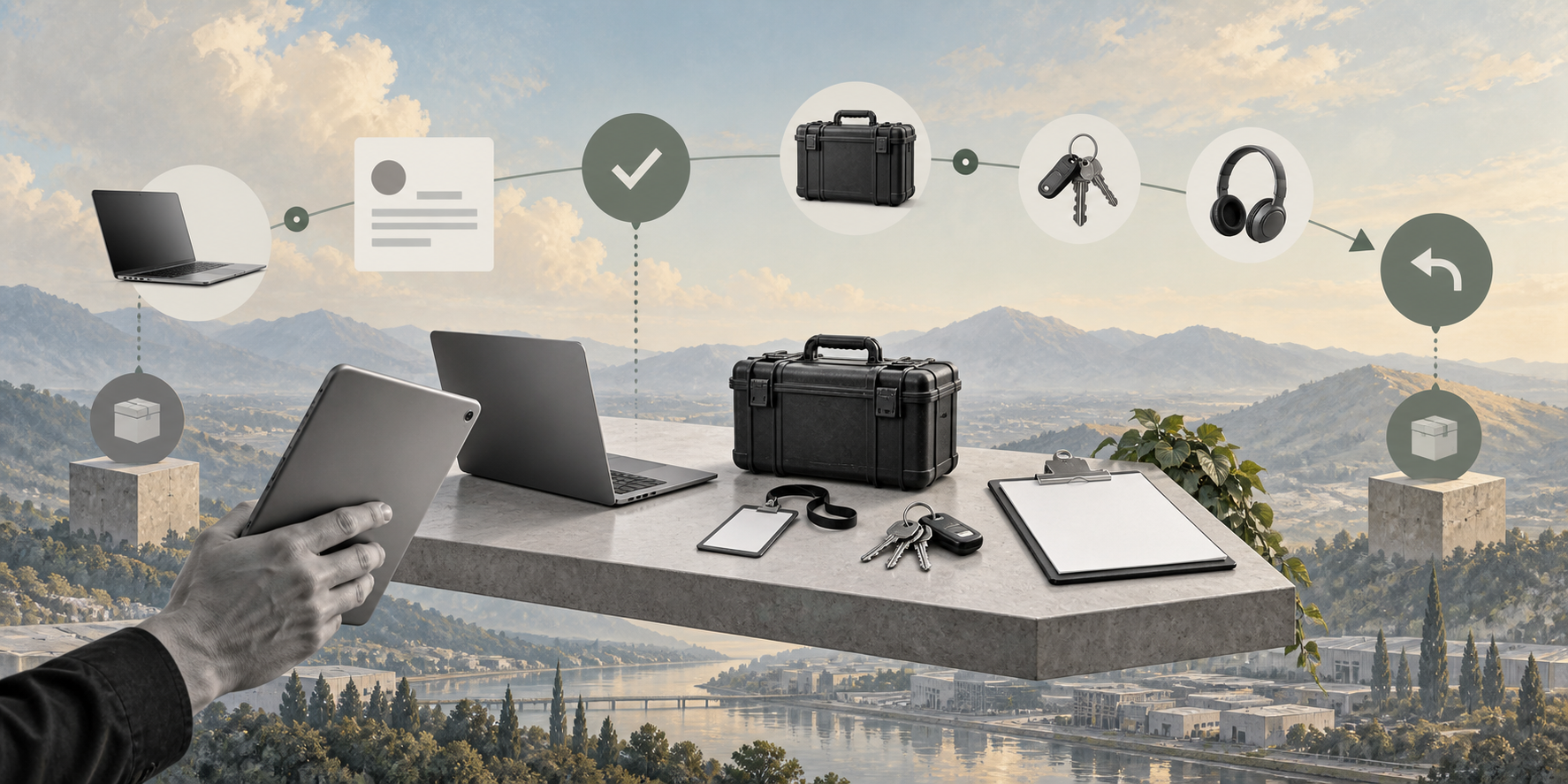
Use this equipment checkout form template to track company assets, borrower responsibility, approvals, condition, due dates, and returns.
An equipment checkout form template gives a business one consistent record whenever laptops, tablets, phones, tools, vehicles, keys, badges, cameras, or other company assets are issued to an employee, contractor, vendor, or field worker. The form should answer a simple operational question: who has the item, why do they have it, when is it due back, and what condition was it in before and after use?
This template is for teams that need more than a casual sign-out sheet but do not want a heavy asset-management process for every small request. It can be used in HR, IT, facilities, operations, field service, events, education, nonprofits, agencies, and any team that lends equipment across people or locations.
What’s included
- A copy-ready equipment checkout form template.
- A simple approval and return workflow for company assets.
- A field-by-field table showing what to capture and why it matters.
- Practical rules for due dates, condition checks, lost equipment, and returned items.
- Common mistakes that make equipment records unreliable.
How to use this equipment checkout form template
Use the form before equipment leaves company control. The borrower should confirm the item, purpose, expected return date, and responsibility terms. The issuing owner should confirm the asset ID, condition, accessories, approval, and usage restrictions. When the item comes back, the return owner should inspect it, mark the condition, record missing accessories, and close the record.
For IT and security-sensitive assets, this form should connect to your access process. The NIST Cybersecurity Framework treats asset management as part of identifying and managing the data, personnel, devices, systems, and facilities that support business purposes. A laptop checkout is not just a handoff. It is also a record of device custody, access exposure, and return accountability.
Equipment checkout form template
Copy this structure into a form, spreadsheet, HR system, help desk, asset-management tool, or workflow platform.
| Section | Fields to include | Owner |
|---|---|---|
| Borrower details | Name, role, department, location, email, phone, manager, worker type | Borrower |
| Equipment details | Asset name, asset ID, serial number, category, make, model, accessories, estimated value | Issuing owner |
| Checkout purpose | Business reason, project, client, location, event, work order, expected use | Borrower |
| Checkout timing | Issue date, issue time, expected return date, return location, renewal rules | Issuing owner |
| Condition record | Condition at checkout, photos if needed, known defects, missing parts, accessories included | Issuing owner |
| Responsibility acknowledgement | Care expectations, approved users, prohibited uses, loss or damage process, return obligation | Borrower |
| Approval | Approver name, approval date, cost center, risk notes, special conditions | Manager or asset owner |
| Return closeout | Actual return date, returned condition, missing items, repair needs, closeout owner, final status | Return owner |
Copy-ready equipment checkout form
Borrower: Name, role, department, manager, email, phone, and work location.
Equipment: Asset name, asset ID, serial number, make, model, category, accessories, and estimated replacement value.
Purpose: Business reason for checkout, project or work order, work location, and whether the item will leave company premises.
Checkout details: Issue date, expected return date, issuing owner, pickup location, return location, and any renewal process.
Condition at checkout: Working condition, visible damage, battery or calibration status, included accessories, and optional photo evidence.
Borrower acknowledgement: The borrower agrees to use the equipment for approved business purposes, protect it, avoid unauthorized users, report issues promptly, and return it by the due date.
Approval: Manager, IT, facilities, operations, or asset owner approval depending on the asset type and risk.
Return record: Actual return date, returned condition, missing items, repair needs, restocking owner, and final status: returned, extended, damaged, lost, or retired.
Approval workflow for equipment checkout
A simple checkout workflow should be fast for low-risk items and stricter for expensive or sensitive assets. Use risk tiers:
- Low risk: General tools, event supplies, training materials, or reusable office equipment. Require borrower details, asset ID, due date, and return check.
- Medium risk: Phones, tablets, cameras, specialized tools, safety equipment, or equipment used offsite. Add manager approval, condition photos, and replacement-value acknowledgement.
- High risk: Laptops, medical devices, regulated equipment, vehicles, security badges, keys, or assets with customer data access. Add IT or compliance approval, access review, and return-based deactivation.
If an employee uses personal funds to buy accessories, repairs, or replacement parts, keep reimbursement separate from the checkout form. The IRS fringe benefit guide explains accountable-plan concepts such as adequate accounting and returning excess reimbursements within a reasonable period. Custody records and reimbursement records should connect, but they should not be mixed into one vague note.
Example equipment checkout workflow
| Step | Action | Evidence |
|---|---|---|
| 1 | Borrower requests equipment for a business purpose | Request form with purpose and dates |
| 2 | Asset owner confirms availability and risk tier | Asset ID, category, condition |
| 3 | Manager or asset owner approves checkout | Approval timestamp and conditions |
| 4 | Equipment is issued and borrower acknowledges responsibility | Signed or submitted checkout record |
| 5 | System sends return reminders before due date | Reminder log or task |
| 6 | Equipment is returned, inspected, and closed | Return status and condition notes |
Common mistakes
- Skipping asset IDs. Descriptions like “Dell laptop” or “camera kit” are not enough when a team owns several similar items.
- Missing return dates. Without a due date, equipment checkout becomes equipment disappearance.
- Not recording condition. A return dispute is much harder when nobody documented scratches, missing parts, battery health, or existing defects at checkout.
- Using one process for every asset. Over-controlling low-risk items slows work, while under-controlling high-risk assets creates operational and security exposure.
- Failing to close the loop. The form is only useful if returned, extended, damaged, lost, and retired statuses are kept current.
Where Workhint fits
Workhint helps teams turn an equipment checkout form into a live operating workflow. A team can define the requester, asset owner, manager, IT reviewer, return owner, approval rules, reminders, condition checks, and closeout steps in one system. That matters when equipment checkout touches multiple teams: HR may own employee context, IT may own devices, operations may own tools, finance may care about replacement cost, and managers may need visibility into overdue returns.
Instead of leaving checkout records in scattered spreadsheets, Workhint can help route the request, collect required fields, trigger approvals by risk tier, assign return tasks, store evidence, and keep reporting visible.
FAQ
What is an equipment checkout form?
An equipment checkout form is a business record used when company equipment is issued to a person for temporary use. It records the borrower, asset details, business purpose, issue date, expected return date, condition, approval, and final return status.
Is an equipment checkout form the same as an equipment agreement?
No. An equipment agreement usually defines responsibility, ownership, acceptable use, damage, loss, and return obligations. A checkout form records a specific transaction: which item was issued, to whom, when, why, and whether it came back.
Who should approve equipment checkout?
Approval depends on risk. Low-risk supplies may only need the asset owner. Laptops, phones, vehicles, keys, badges, or regulated equipment may need manager, IT, security, compliance, or operations approval before issue.
What should happen when equipment is overdue?
The owner should send a reminder, confirm whether the checkout needs an approved extension, and escalate if the borrower does not respond. Overdue equipment should stay visible until it is returned, extended, replaced, written off, or converted into another approved status.
Should contractors use the same equipment checkout form?
Contractors can use the same operational form, but the terms should match the contractor agreement and access policy. Classification-sensitive or legal terms should be reviewed by qualified advisors before use.
Conclusion
A good equipment checkout form template protects company assets without slowing work. Capture the borrower, asset ID, purpose, due date, condition, approval, acknowledgement, and return status. Then make the process stronger with risk tiers, reminders, inspections, and clean closeout. The goal is simple custody, fewer lost assets, faster returns, and better operational control.
Leave a Reply