

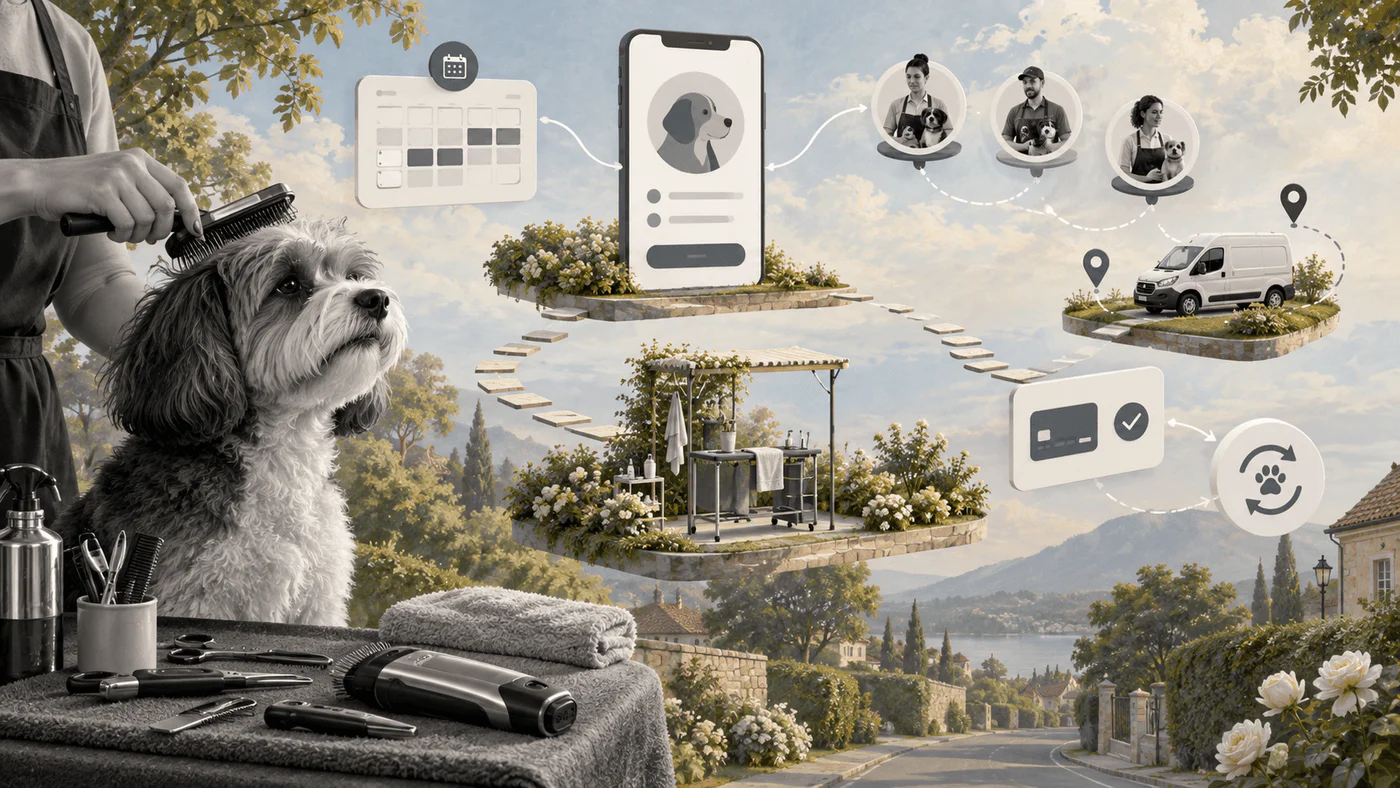
A pet grooming business can start as a trusted booking platform before you lease a salon or buy a grooming van.
If you are researching how to start a pet grooming business, the usual path can look expensive: rent a salon, build washing stations, buy dryers, hire groomers, and hope enough pet owners show up. A leaner path is to validate demand first with a branded platform, a clear grooming offer, and a small network of independent groomers or grooming partners.
Pet grooming works because demand is recurring. Dogs need baths, nail trims, coat care, deshedding, and breed-specific grooming every few weeks. Many owners also want convenience, calmer service, and easier scheduling than a busy salon can provide. This guide shows how to start with no salon, no employees, and no heavy upfront investment.
Quick answer
You can start a pet grooming business without a salon by choosing one local grooming niche, checking license and zoning rules, recruiting qualified independent groomers, setting up a branded booking and payment platform, and validating paid appointments before buying equipment, leasing space, or hiring staff.
What’s in this article?
- Why a pet grooming business works
- What you need to launch without a salon
- How to price pet grooming services
- How to get first customers
- How Workhint helps launch the branded grooming platform
- A first 7-day launch plan, checklist, and FAQ
Why this business works
Pet grooming is attractive because the customer need repeats. A satisfied customer may rebook every four to eight weeks, refer neighbors, and add services such as nail grinding, ear cleaning, teeth brushing, deshedding, or puppy grooming.
The first version does not need to look like a traditional salon. You can start as the brand and coordinator while independent groomers, mobile groomers, home-based grooming partners, or salon partners deliver the work within your standards. That gives you a way to test demand before committing to a lease, van, buildout, or full-time payroll.
The business also fits a provider-network model. Groomers often want more bookings, better scheduling, and less admin. Customers want availability, clear pricing, safe handling, and easy rebooking. Your job is to connect those pieces through a reliable operating process.
What you need to launch
Start with the operating model, not the bathtub. Before you accept appointments, check local business licensing, zoning, animal handling, sales tax, insurance, and grooming rules in your market. Some places have no grooming-specific state license, while cities may regulate home businesses, mobile grooming, animal services, or commercial activity.
Your first offer should stay narrow. For example, you might launch with small-dog grooming in one area, recurring bath-and-brush packages, puppy first-groom appointments, or mobile grooming coordination for apartment communities. A narrow offer is easier to price, assign, review, and improve.
| Launch item | Lean starting range | Why it matters |
|---|---|---|
| Business setup and local rule check | $100 to $700 | Creates the legal foundation and confirms what services you can sell. |
| Insurance review | $400 to $1,500 per year | Pet services can involve bites, injuries, property damage, and handling mistakes. |
| Branded booking platform | Start lean | Handles service requests, pet profiles, scheduling, payments, and rebooking. |
| Provider onboarding | $100 to $500 | Collects groomer experience, service areas, standards, availability, and payout terms. |
| Essential supplies | $100 to $800 | Keep supplies light if independent groomers use their own approved tools. |
| Local marketing tests | $200 to $1,000 | Validates paid demand before you lease a salon or buy a grooming van. |
Avoid the expensive commitments at the beginning. Do not lease a storefront, buy a custom grooming van, stock retail inventory, or hire employees until appointments, provider capacity, customer reviews, and margins prove the model.
How to price pet grooming services
Pet grooming pricing should reflect pet size, coat condition, service time, travel, provider payout, supplies, customer support, rebooking, payment fees, and owner margin. If you use independent groomers, the price must cover both delivery and coordination.
| Offer | Example price | Best use |
|---|---|---|
| Bath and brush | $45 to $90 | Entry service for short coats, maintenance care, and repeat bookings. |
| Full groom | $75 to $150+ | Haircut, bath, brush, nails, ears, and coat-specific service. |
| Puppy first groom | $50 to $100 | Lower-stress introduction for young dogs and new customers. |
| Deshedding package | $85 to $180+ | Double-coated breeds and seasonal shedding demand. |
| Apartment grooming day | Per-pet fee or host package | Clustered appointments that reduce travel and improve route density. |
Keep the first menu simple. A long menu creates quoting confusion and makes provider assignment harder. Start with three to five services, define what is included, and quote difficult coats or behavior concerns after intake.
How to get first customers
Start where pet owners already ask for referrals. Apartment communities, veterinarians, dog daycares, pet stores, dog walkers, trainers, shelters, breeders, and neighborhood groups can all create early demand.
The fastest message is specific: you help local pet owners book reliable grooming without waiting weeks for a salon appointment. If your model coordinates independent groomers, emphasize safety standards, pet profiles, clear pricing, appointment reminders, and easy rebooking.
Use one small service area first. Build local pages around searches such as pet grooming in your city, mobile pet grooming, puppy grooming, apartment pet grooming, and dog nail trim near me. Ask every early customer for a review and permission to send a rebooking reminder.
How Workhint helps launch it
Workhint can help you launch the pet grooming business as a branded service marketplace before you build custom software, lease a salon, or hire a coordination team.
A pet owner can request grooming through your branded portal, create a pet profile, enter breed, weight, coat condition, temperament notes, vaccination details, service preferences, address or appointment location, and preferred time windows. The customer can approve the quote, pay online, receive reminders, and rebook from the same dashboard.
Behind the scenes, Workhint gives you an operations dashboard for groomer onboarding, service areas, availability, assignment rules, grooming checklists, photo notes, customer approvals, reviews, invoices, payments, and contractor payouts. Independent groomers can receive assignments, view pet notes, confirm appointments, mark services complete, submit exceptions, and receive payouts without becoming employees.
That matters because pet grooming is not just a calendar. The business depends on trust, pet safety, clear service scope, route density, customer communication, provider reliability, and repeat booking. Workhint lets you operate the business like a real branded platform while keeping the first version lean enough to validate demand.
First 7-day launch plan
| Day | Focus | Outcome |
|---|---|---|
| 1 | Choose one niche, one service area, and one simple menu. | A focused offer that customers can understand quickly. |
| 2 | Check local business, animal service, zoning, tax, and insurance requirements. | A launch path that avoids avoidable compliance surprises. |
| 3 | Set up the branded Workhint request flow, pet profile, quote approval, payment, and rebooking basics. | Customers can submit real grooming requests. |
| 4 | Recruit three to five independent groomers or grooming partners. | You know who can fulfill the first appointments. |
| 5 | Contact apartments, vets, daycares, dog walkers, pet stores, and local groups. | First demand conversations begin. |
| 6 | Route every inquiry through the platform and test pricing, scheduling, and provider assignment. | The workflow is tested before volume grows. |
| 7 | Review booking demand, provider readiness, margins, and customer objections. | You decide what to improve before spending more. |
Final launch checklist
- Choose the pet grooming niche, launch city, and first service area.
- Check local business license, zoning, animal service, tax, and insurance requirements.
- Create a simple grooming menu with clear inclusions and exclusions.
- Configure a branded Workhint portal for pet profiles, booking, quote approval, payment, rebooking, and updates.
- Recruit qualified independent groomers or grooming partners with clear standards and payout terms.
- Create intake questions for breed, size, coat condition, behavior, health notes, and vaccination status.
- Set pricing that covers provider payout, scheduling, customer support, payment fees, and owner margin.
- Build referral relationships with apartments, vets, pet stores, dog walkers, trainers, and local pet groups.
- Book the first paid appointments before leasing a salon, buying a van, or hiring employees.
FAQ
How much does it cost to start a pet grooming business?
A lean platform-first launch can often start with business registration, insurance review, a branded booking platform, provider onboarding, and local marketing tests. Costs rise when you buy grooming equipment, convert a van, lease a salon, or hire employees before demand is proven.
Can I start a pet grooming business with no salon?
Yes. You can start by coordinating qualified independent groomers, mobile groomers, home-based partners, or salon partners through a branded booking platform. Check local rules first because zoning, mobile service, and animal-service regulations can vary.
Do pet groomers need a license?
Requirements depend on location. Some states do not require a grooming-specific license, but cities may require business licenses, home occupation permits, sales tax registration, mobile permits, or animal-service rules. Verify local requirements before taking paid bookings.
How should I price pet grooming?
Price by pet size, coat condition, service type, time required, travel, add-ons, provider payout, and operational margin. Keep early pricing simple, then adjust after you know appointment length, route density, and provider costs.
Can I use independent groomers instead of employees?
You may be able to use independent groomers if the relationship is structured correctly, but worker classification rules matter. Use proper agreements, avoid treating contractors like employees, and get legal guidance before scaling the provider network.
How do pet grooming businesses get first customers?
Strong early channels include apartment communities, veterinarians, dog walkers, pet stores, dog daycares, trainers, shelters, breeders, neighborhood groups, and local search pages for one launch market.
What should I avoid buying at the beginning?
Avoid salon leases, custom vans, large equipment purchases, retail inventory, and employee payroll until you have validated demand, repeat bookings, provider reliability, and profitable pricing.
Conclusion
A pet grooming business is easier to start when you treat it as a trusted booking and provider network first. Choose one market, recruit qualified groomers, validate paid demand, and use a branded platform to manage intake, scheduling, payments, reviews, and payouts.
Workhint gives that lean model the operating foundation from the first request. You can launch the customer experience, coordinate independent providers, prove repeat demand, and invest in a salon, van, or employees only when the business has earned that next step.
Leave a Reply