
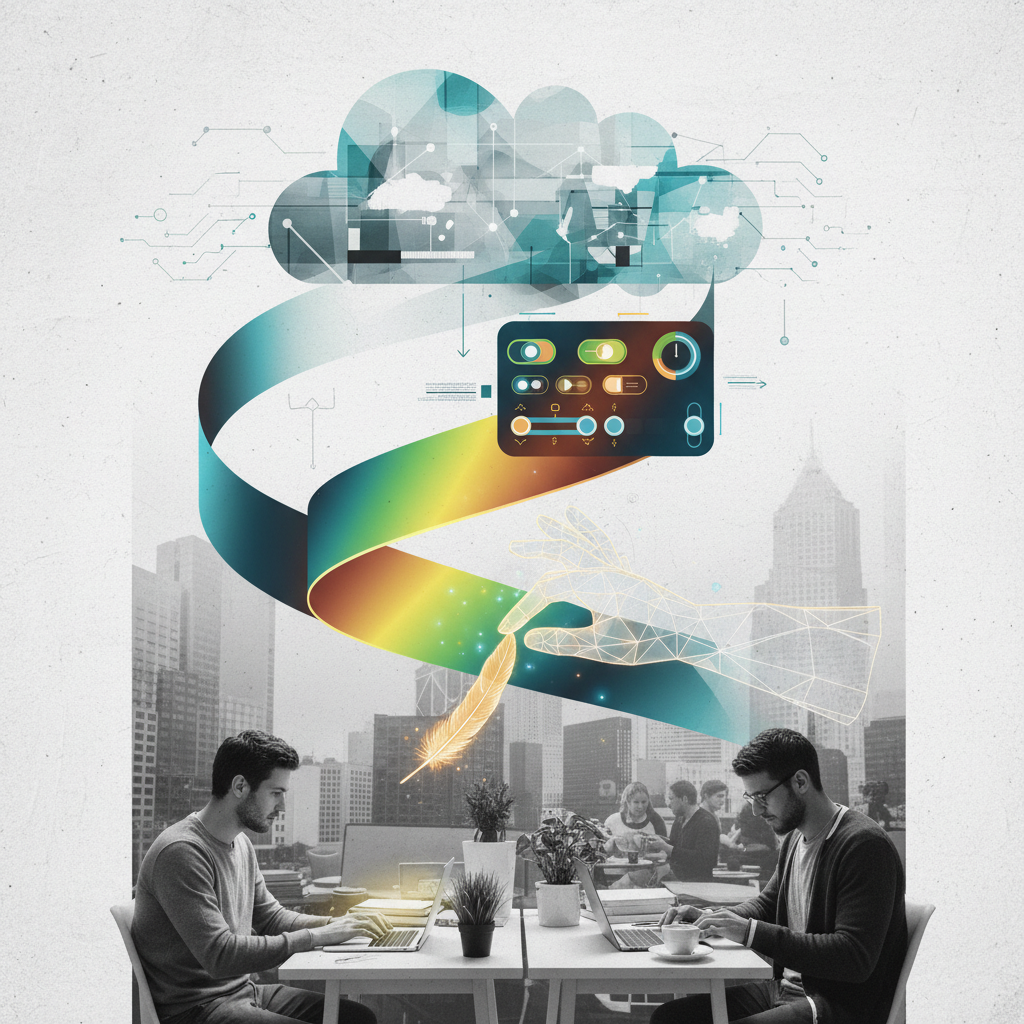
Feeling torn between freedom and oversight, you wonder how remote teams can stay aligned without stifling initiative.
When a distributed group of people tries to turn a shared vision into daily reality, the invisible friction often shows up as a silent tug of war. One side pushes for freedom, the other for certainty, and somewhere in the middle the work slips, stalls, or gets handed off to a waiting inbox. It feels like you are watching a relay race where the baton never quite lands, yet the crowd still expects the finish line to be crossed on time. The real problem is not a lack of tools or a missing process sheet, it is the hidden assumption that ownership can be granted without clear pathways for coordination and visibility. You have felt the pause that follows a vague handoff, the doubt that rises when a teammate’s progress is a mystery, and the quiet fatigue of constantly re‑explaining the same context. In the next section we will look at how the shape of responsibility and the flow of information quietly dictate the speed of any team, whether they sit across a table or across oceans.
What makes autonomy feel safe for the whole team
When a remote group is given freedom, the first question is how each member knows they are moving in the same direction. The answer lies in crystal clear purpose and measurable outcomes that are visible to everyone. Think of a sailing crew that all watch the same compass; the wind may push each boat, but the shared bearing keeps them on course. By translating the vision into specific goals, teams create a safety net that lets individuals experiment without fear of drifting away.
In practice this means setting up a lightweight framework of key results that are updated daily. Each person can see where the collective stands and adjust their effort accordingly. The framework is not a rigid checklist; it is a living map that welcomes new routes while keeping the destination in sight. When the map is trusted, autonomy becomes a source of energy rather than a source of doubt.
How transparent communication turns uncertainty into momentum
Remote work often feels like a game of telephone, where messages get lost in the ether. Transparency cuts through that fog by making information a shared resource instead of a private commodity. Imagine a kitchen where every chef can see the order board, the inventory list, and the timing of each dish. No one has to guess what the next step is, and the whole service runs smoother.
Teams can achieve this by establishing regular rhythm rituals such as brief stand‑ups, concise written updates, and open dashboards. The key is to keep the cadence short and the content focused on progress, blockers, and next actions. When every member knows the status of the work in real time, the anxiety of the unknown disappears and the group can channel its energy into solving problems rather than chasing information.
When control becomes a bottleneck and how to redesign it
Even the best intentions can turn oversight into a traffic jam if decision rights are concentrated in a few hands. The symptom shows up as delayed approvals, endless meetings, and a sense that the team is waiting for permission to move. The remedy is to map out which decisions truly need central sign off and which can be delegated to the people closest to the work.
A practical approach is to create a decision matrix that pairs each type of choice with a level of authority. Simple operational tweaks stay with the individual or the small squad, while strategic pivots remain with the leadership circle. This not only speeds up execution but also builds trust, because people see that control is applied thoughtfully rather than arbitrarily. The result is a fluid system where guidance is present without choking creativity.
Why coordination gaps keep resurfacing
When work is passed between people without a shared ledger, ownership often slips and progress becomes invisible. Informal handoffs rely on memory, email threads, or ad-hoc chats, which means delays are easy to miss and accountability is scattered. The pattern repeats because each participant assumes the next will fill the missing link, while no single view tracks status or responsibility. A centralized work system supplies a single source of truth where assignments, state changes, and handoffs are recorded in real time. By anchoring every piece of work to the same platform, the system automatically surfaces who owns each step and what has been completed, eliminating the need for manual follow-up. Workhint provides such a shared infrastructure that aligns execution with visibility without prescribing a specific workflow. The structural effect is a steady flow of work where gaps are identified instantly and ownership remains clear throughout the lifecycle.
Your initial tug of war between freedom and oversight resolves itself when the team stops chasing control and starts sharing a single, visible compass. The journey through purpose, transparent updates and delegated decision rights shows that autonomy is not a risk but a catalyst, provided every member can see where the collective stands at any moment. The lasting insight is simple: when the map is open, the need for constant permission disappears. Carry that image into your next sprint; let the shared view replace the invisible friction, and watch the rhythm of work become a quiet flow. The work is still demanding, but the path is now unmistakably clear.
Leave a Reply