
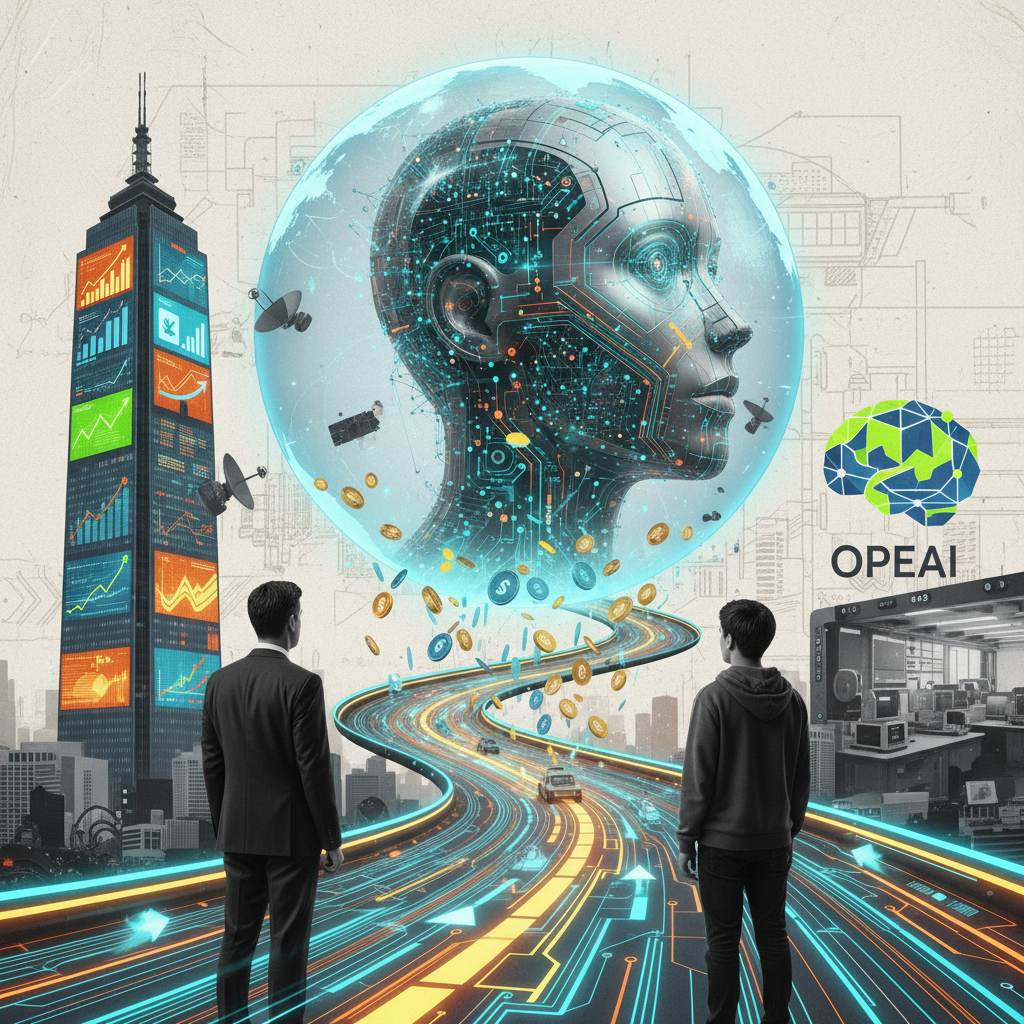
Learn why SoftBank’s sprint to meet a $22.5 billion pledge could reshape AI access for every business
When SoftBank announced it would back a $22.5 billion pledge to fuel the next wave of AI, the headline screamed ambition. What lingered in the quieter corners of the story, however, was a question that feels oddly personal to anyone who’s ever tried to bring a new technology into a real‑world business: Will this flood of capital actually make AI tools more reachable for the companies that need them, or will it simply deepen the gap between the giants and the rest?
The tension isn’t just about money; it’s about a fundamental misunderstanding of how AI scales. Many assume that pouring billions into a single player—like the rapidly growing partnership with OpenAI—automatically translates into broader access. In practice, the mechanics of licensing, integration, and talent pipelines often keep the most powerful models locked behind a handful of privileged doors. The article will peel back that illusion, showing where the current model breaks down, why the promise of democratized AI feels out of reach, and what a different approach might look like.
I’ve watched the AI landscape evolve from the inside of startups and the outside of boardrooms, and I’ve seen the same pattern repeat: hype outpaces infrastructure, and the real work of making technology usable gets lost in the noise. If you’ve ever felt that the AI conversation skips over the gritty details that matter to your day‑to‑day decisions, you’re not alone—and you’re about to get a clearer view.
Let’s unpack this.
Why capital alone won’t unlock AI for midsize firms
Money can open doors, but it does not hand you a ready to use system. A midsize company that suddenly has access to a massive model still faces the puzzle of wiring it into existing workflows, training staff, and negotiating terms that fit a tighter budget. The pledge from SoftBank to pour billions into OpenAI sounds like a guarantee of widespread availability, yet the reality is that licensing fees, compute costs and the need for specialized engineers create a barrier that many firms cannot cross. Think of a high‑performance sports car that arrives in a garage without a driver or a road that matches its speed – the potential is there, but without the supporting infrastructure the vehicle sits idle. This gap explains why headlines about funding often miss the quieter story of implementation challenges that determine whether an organization can actually benefit from the technology.
How the current licensing model keeps power in a few hands
OpenAI’s API pricing and tiered access structure were designed to monetize breakthrough research, but the side effect is a concentration of capability. Large enterprises can afford the premium tiers, negotiate custom contracts and secure priority support, while smaller players are left with limited request quotas or higher per‑call costs that quickly add up. This creates a tiered landscape where the most advanced features are effectively reserved for those with deep pockets. The model also ties developers to a single provider, reducing flexibility and raising the stakes of any policy change or price adjustment. Imagine a marketplace where only a handful of sellers control the best products; competition stalls and innovation narrows. The licensing framework therefore acts as a gatekeeper, shaping not just who can use AI, but how the technology evolves across the broader economy.
What a more inclusive AI ecosystem could look like
A shift toward shared resources and open source collaboration could level the playing field. Projects such as the OpenAI‑compatible libraries hosted on public repositories enable developers to experiment without paying for every token, while cloud providers could offer tiered compute credits aimed at startups and mid‑size firms. Community‑driven datasets and model fine‑tuning tools lower the expertise barrier, allowing teams to adapt powerful models to niche domains without starting from scratch. In addition, industry consortia that pool funding and negotiate collective licensing terms could spread risk and cost, turning the current race into a relay where each participant contributes a segment of progress. This approach mirrors how the internet grew: a network of contributors, open standards and shared infrastructure that turned a novelty into a universal utility. By reimagining the economic and technical scaffolding, the promise of AI can move from a headline to a tool that many businesses actually use.
The question wasn’t whether SoftBank’s $22.5 billion will arrive, but whether it will arrive where it matters – in the hands of the businesses that need it. The journey shows that money alone can’t build the road; we must lay the pavement of shared tools, affordable licensing, and community‑driven infrastructure. If you’re a leader of a midsize firm, the most useful thing you can do today is to seek out the open‑source bridges and collaborative consortia that already exist, and start building a modest, reusable layer on top of them. In doing so you turn a distant promise into a concrete step forward, and you help widen the lane for everyone else. The real race isn’t about who funds the fastest car, but who builds the highway that lets any car travel safely.
Leave a Reply