You feel the gig world is a mystery—learn why its business model departs from traditional employment.
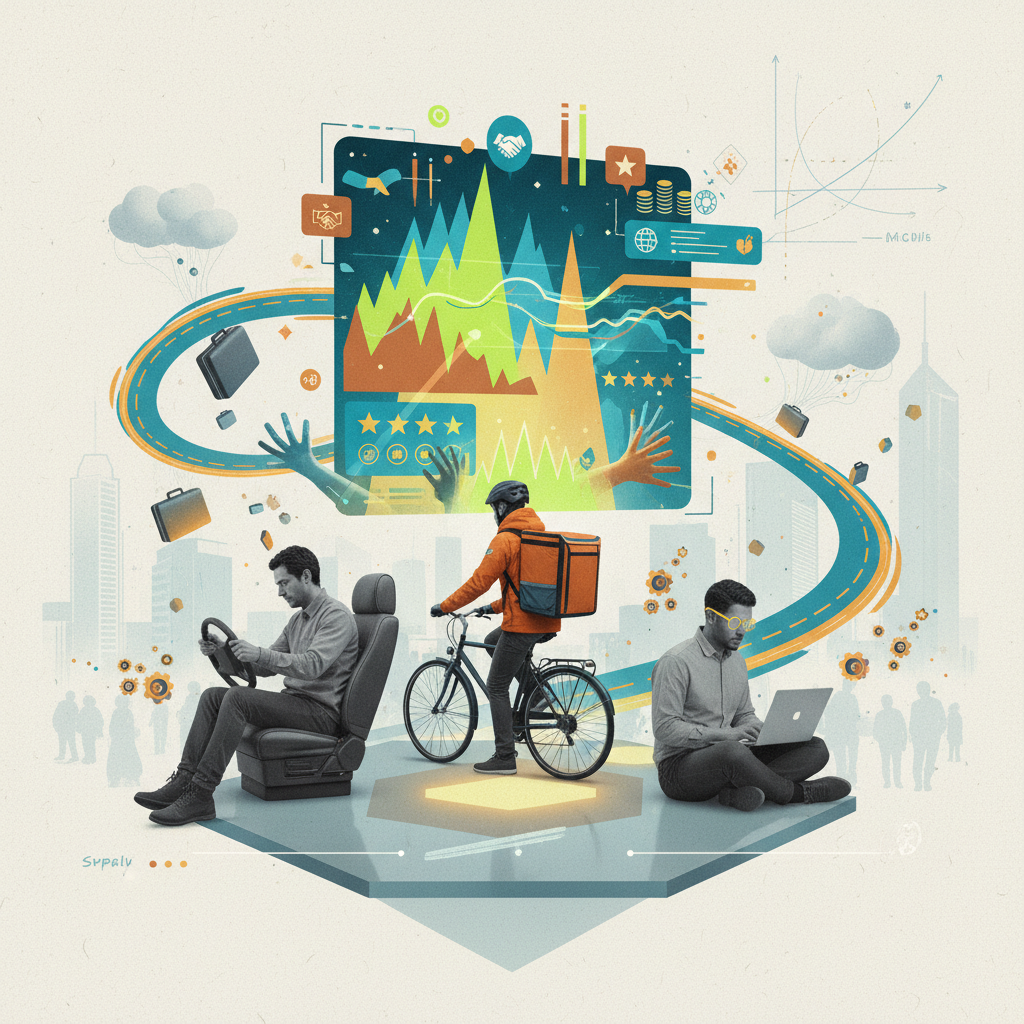
When you watch a rider accept a request on a platform, the moment feels like a tiny promise exchanged across a city. Yet behind that promise lies a maze of handoffs, invisible owners, and a rhythm that never quite syncs. The gig economy promises flexibility, but the reality is a chain of decisions made by strangers, each assuming the next will fill the gap. That assumption creates a quiet friction: work disappears into a black box, visibility evaporates, and accountability becomes a whisper. Operators and founders who have tried to scale these networks often feel they are chasing shadows, unable to name the exact point where a task stalls or a responsibility slips away. By naming that hidden friction, we can start to see why many gig operations feel stuck in a loop of rework and missed expectations. Let us explore how the structure of ownership and coordination shapes every delivery, and what happens when the system itself forgets to show its own moves.
Why ownership matters when a rider takes a job
When a rider clicks accept the promise feels personal but the chain behind it is owned by many invisible parties. Each handoff adds a layer of decision that dilutes responsibility and makes it hard to know who fixes a missed drop. Understanding who holds the title at each moment reveals why rework spikes and why workers often feel powerless. By naming the owners you can see where friction hides and begin to redesign the flow so that accountability travels with the task instead of disappearing into a black box.
Imagine a kitchen where the chef, the sous chef and the dishwasher each claim the same plate. The dish moves but no one feels it is theirs to clean. In a gig network the platform, the local hub and the independent contractor share the same role. When the rider sees a problem the question becomes “who will own the fix?” The answer determines whether the issue is solved quickly or left to linger. Recognizing this hidden ownership map is the first step toward a system that shows its own moves.
How blockchain and DAOs can make the invisible visible
A blockchain records every transaction in a public ledger that anyone can read. When a gig task is logged on such a ledger the path of ownership becomes a traceable line instead of a whisper. Decentralized autonomous organizations add a layer of collective governance that lets participants vote on rules, payouts and dispute resolution without a single gatekeeper.
Consider a ride that is booked, completed and paid out all on a chain. The rider, the driver and the platform all see the same record, so there is no room for hidden fees or surprise cancellations. The DAO structure then lets the community decide how rewards are shared, turning the platform from a distant controller into a co‑owned network. This transparency reshapes trust and gives workers a voice that is recorded as firmly as the fare itself.
What tokenization offers gig workers beyond a paycheck
Tokenization turns a piece of work into a digital asset that can be owned, traded or used as collateral. For a gig worker this means earnings can be packaged into tokens that represent a share of future platform revenue, not just a one time cash flow. Those tokens can be held in a wallet, staked for voting power or exchanged for other services, creating a financial ecosystem that extends beyond the daily grind.
A delivery person might receive tokens that rise in value as the platform expands, giving them a stake in the growth they helped drive. This creates a feedback loop where effort directly influences long term wealth, not just immediate cash. It also opens doors to new forms of security, such as using tokens as a guarantee for loans, something traditional gig pay cannot easily provide.
From side hustle to real ownership: steps a worker can take
The path from independent contractor to co‑owner begins with awareness of the structures that hold power. First, seek platforms that embed equity options or profit sharing in their model. Second, join or form worker cooperatives that pool resources and negotiate terms together. Third, explore token based membership that grants voting rights and a share of the network’s upside.
A graphic designer who starts on a freelance marketplace can move to a cooperative that pools client contracts, allowing each member to earn a stable income and a share of collective profit. By aligning personal effort with collective ownership the side hustle evolves into a sustainable business where the worker’s success is tied to the health of the whole. The transition is incremental but each step adds a layer of control that turns a gig into a stake in something larger.
The recurring friction
When work moves through a chain of independent participants, ownership often slips between parties. Each handoff creates a gap where responsibility is unclear, visibility disappears, and delays go unnoticed. Informal coordination relies on email, chat, or ad hoc agreements, so the system never records who should act next or why a task stalled. Because the network lacks a shared ledger of work states, the same breakdown repeats across projects.
A centralized work system provides a single source of truth for assignments, status, and accountability. By anchoring every step to a common platform, the system makes the handoff visible, aligns responsibility with the current holder of the task, and surfaces delays without manual hunting. In this context, Workhint serves as one example of such a shared infrastructure, illustrating why organizations adopt a unified layer to keep external work observable and controllable.
At the start we asked why the gig world feels like a mystery. As we followed the promise of a rider’s click through layers of invisible owners, the picture cleared. The real engine is not the app alone but the map of who holds the task at each moment. When that map is visible the friction fades and accountability returns. The lesson is simple: a system that can show its own moves gives its participants a voice that can be heard. Imagine a network where every handoff leaves a trace, where workers can see the line that leads to their reward. That vision is already being tested with public ledgers and collective governance. The next step is not more technology but the decision to make ownership explicit. When we do, the gig becomes less a shadow and more a shared journey.
Leave a Reply