
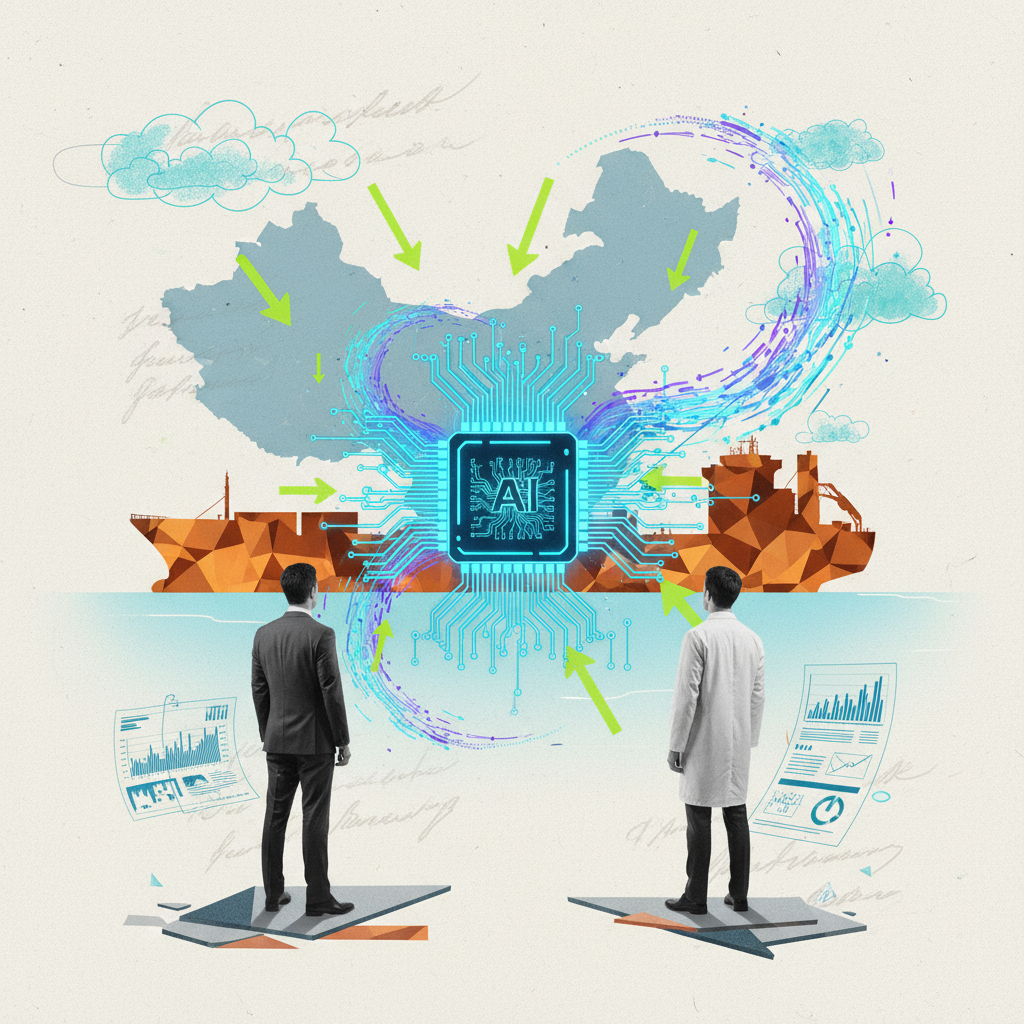
A Senate bill could lock down AI chips, stopping a Trump‑backed push to China and reshaping the global tech balance.
When the Senate whispers about “locking down” AI chips, it feels less like a policy tweak and more like a sudden, quiet hand‑clap that says, “We’re changing the game, and you’re on the board now.” For anyone who’s ever watched a startup scramble to train a model on a single GPU, the idea that those GPUs could be taken off the table for a whole continent feels both surreal and inevitable. It matters because the chips that power everything from medical diagnostics to the next wave of creative tools are the new oil—and the new leverage point in a geopolitical chess match.
The core problem isn’t just about export licenses; it’s about a misunderstanding that technology moves in a vacuum. In reality, the same silicon that fuels a data‑center in Silicon Valley also fuels a research lab in Beijing. When policymakers treat AI chips as ordinary commodities, they miss the fact that these components are the nervous system of modern innovation. The bill, championed by a coalition that includes veterans of the Trump‑era push to open China markets, now threatens to flip that mindset on its head, turning a once‑open pipeline into a tightly‑controlled conduit.
I’ve spent years watching the ebb and flow of tech policy, from the early days of broadband regulation to today’s AI frontier. What I’ve learned is that the most consequential shifts happen not when the headlines scream, but when the quiet decisions reshape the rules of engagement. If you’ve ever felt the frustration of hitting a hardware ceiling or the excitement of a breakthrough that seemed to come out of nowhere, you’re about to see why those moments are about to become a lot more political.
Consider the players on the ground: companies like Nvidia, Intel, and AMD are racing to embed ever‑more sophisticated AI accelerators into their silicon. Their innovations have made it possible for a small team in a garage to compete with the research giants. Yet, under the new bill, the very tools that democratize AI could be re‑centralized, reshaping who gets to build, who gets to compete, and where the next breakthrough will happen.
Let’s unpack this.
Why the Chip Ban Changes the AI Playing Field
When a Senate bill decides to lock down AI accelerators, it does more than tighten paperwork—it reshapes the very terrain where innovation happens. The chips from Nvidia, Intel and AMD are the muscles that let a solo founder train a model that once required a room‑full of servers. By making those muscles harder to export, the bill forces developers to rethink where they build, what they build, and how fast they can move. Think of it like a city that suddenly raises its bridge tolls: commuters still cross, but the cost and delay change the calculus of every trip. For AI startups, the added licensing step can be the difference between a proof‑of‑concept and a stalled venture. For researchers, it can turn a collaborative paper into a siloed effort. The real takeaway is that the policy isn’t just a bureaucratic hurdle; it’s a lever that can accelerate or stall the next wave of AI breakthroughs, depending on who holds the keys.
Who Wins and Who Loses: The Geopolitical Ripple
Geopolitics is rarely about pure ideology; it’s about leverage. By restricting AI chip exports to China, the United States hopes to keep the most advanced models—and the strategic advantage they confer—on its own side of the fence. The immediate winners are domestic firms that can continue to ship their silicon without a new compliance layer, and allied nations that may receive preferential access. The losers are Chinese research labs and corporations that have relied on the same off‑the‑shelf GPUs to power everything from medical imaging to autonomous driving. This creates a bifurcated AI ecosystem: one where cutting‑edge models stay in the West, and another where China is forced to either develop its own supply chain or settle for older generations of hardware. The split mirrors earlier tech wars over semiconductors, and history shows that such divisions can spur parallel innovation—think of the separate smartphone ecosystems that emerged after the early 2000s. Yet it also risks a “technology cold war” where collaboration dries up and each side builds redundant, less efficient solutions.
How Companies Can Navigate the New Licensing Maze
Compliance is no longer a checkbox; it’s a strategic function. Companies must first audit every AI‑accelerated product line to identify which chips fall under the export control thresholds. Next, they should build a cross‑functional team—legal, engineering, and supply‑chain—to map the licensing workflow, much like a production line for a high‑stakes board game. Early engagement with the Department of Commerce can shave weeks off approval times, especially for “technology‑for‑research” exemptions that many universities and labs rely on. Some firms are already exploring dual‑source strategies: pairing U.S. GPUs with domestically produced alternatives like China’s own Hygon or the emerging EU‑based Graphcore chips. While this adds complexity, it also creates resilience against policy swings. Finally, transparent communication with customers about potential delays builds trust; a clear statement that a product may arrive later due to licensing, rather than silence, turns a regulatory headache into a brand‑strengthening narrative.
What the Future Looks Like: Alternatives and Workarounds
If the export road narrows, the detour will be built with different materials. One emerging path is the rise of specialized AI ASICs that sit outside the traditional GPU classification, allowing firms to sidestep the bill’s scope. Companies like Google are already investing in their own Tensor Processing Units (TPUs), and similar efforts are bubbling up in Europe and Israel. Another avenue is software‑level optimization: by making models more efficient, developers can achieve the same performance on older, unrestricted hardware. The open‑source community is rallying around techniques like quantization and pruning, turning a policy constraint into a catalyst for leaner AI. Finally, strategic partnerships—joint ventures between U.S. and allied chipmakers—can create “clean” supply chains that satisfy both regulatory demands and market needs. The lesson is clear: constraints breed creativity. The next breakthrough may not be a faster GPU, but a smarter way to do more with less, reshaping the AI landscape in ways the bill never anticipated.
The bill forces us to ask a simple, unsettling question: what does it mean to innovate when the tools of creation are guarded like weapons? The answer isn’t a policy memo; it’s a reminder that every breakthrough now carries a passport. If you’re building the next model, your first design decision should be to map the geopolitical terrain as carefully as you map the data—because the path to a GPU may be the new moat. By treating compliance as a strategic compass rather than a bureaucratic afterthought, you turn a potential roadblock into a source of resilience. The world will keep inventing, but the places where those inventions can flourish will be defined by the rules we write today. So ask yourself: are you preparing to adapt, or are you waiting for the next wave to wash over you?
Leave a Reply