
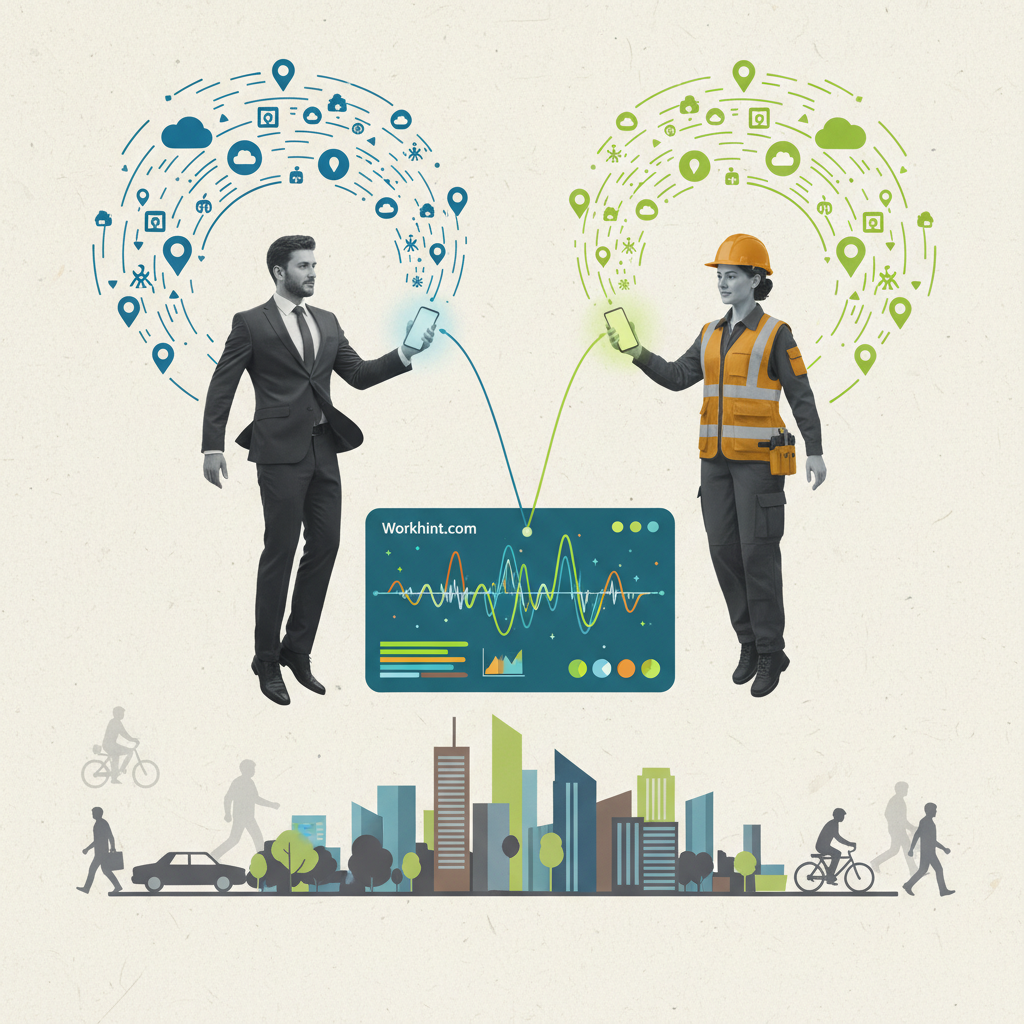
This explains why a mobile workforce is more than remote work and how it transforms staffing, technology and talent strategy.
The term "mobile workforce" is popping up in boardrooms and strategy sessions, yet many leaders still treat it as a synonym for remote work. That shortcut hides a deeper shift: employees are no longer tied to a single office, device, or schedule, and the ripple effects touch staffing models, technology stacks, and talent strategies. For workforce leaders, operators, founders, and HR, finance, or talent operations teams, the real challenge is understanding how mobility reshapes capacity planning, compliance, and employee experience. Too often the conversation overlooks the hidden complexity of coordinating a dispersed talent pool while maintaining the same level of operational control and cultural cohesion. This article peels back the surface assumptions and surfaces the overlooked dynamics that make a truly mobile workforce a strategic lever rather than a buzzword. Now let’s break this down.
Why does a mobile workforce matter for operational agility
A mobile workforce expands the talent pool beyond a single building, allowing organizations to match skill sets to demand in real time. When workers can operate from any location, capacity planning shifts from static headcount to dynamic availability, reducing idle time and improving service levels. Platforms such as ServiceNow enable real time visibility into field resources, so managers can reallocate staff as conditions change. This flexibility also supports compliance with regional labor rules because assignments can be routed to workers who meet local certification requirements. The employee experience improves as individuals gain autonomy over where and when they work, leading to higher engagement and lower turnover. In sum, mobility transforms a static staffing model into a responsive network that can scale with market volatility.
What misconceptions limit effective mobile workforce management
Many leaders treat a mobile workforce as a synonym for remote work, assuming that any employee with a laptop can operate from anywhere. This oversimplification ignores the need for device management, connectivity guarantees, and safety protocols for workers in the field. For example, Salesforce highlights that field teams require location aware applications, offline data capture, and secure communication channels that differ from typical office setups. Another common error is assuming that existing HR systems automatically handle mobile compliance; in practice, separate tracking of work hours, travel expenses, and jurisdictional regulations is required. By recognizing these gaps, organizations can avoid costly rework and ensure that mobility delivers the promised productivity gains.
How can organizations build technology and talent models that support mobility
A successful mobile strategy blends a unified platform with a flexible talent framework. Integrated workforce management suites such as those offered by Paycor combine scheduling, time tracking, and performance analytics in a single cloud environment, reducing the friction of juggling multiple tools. Adding a scheduling assistant like Workhint into the mix further streamlines shift swaps and last minute coverage, keeping operations fluid. On the talent side, leaders should classify roles by mobility level—core office, hybrid, fully mobile—and align compensation, training, and career paths accordingly. This approach creates clear expectations for employees while giving managers the data needed to forecast labor costs and skill gaps. The result is a coherent ecosystem where technology and people work in harmony to deliver consistent service regardless of location.
FAQ
How is a mobile workforce different from remote work
Remote work typically describes employees who perform tasks from a home office or a fixed alternate site, often using the same tools as office workers. A mobile workforce, by contrast, includes field staff, technicians, and salespeople who move between customer sites, job sites, or multiple geographic regions. Mobility adds requirements for location tracking, offline capability, and compliance with local labor laws that are not present in a static remote scenario.
What technology components are essential for managing a mobile workforce
Key components include a cloud based workforce management platform that provides real time scheduling, GPS enabled dispatch, and mobile device management. Communication tools that support secure messaging and video are also critical. Analytics dashboards that combine productivity data with compliance metrics allow leaders to make informed decisions. When these pieces are integrated, they replace fragmented spreadsheets and manual processes.
How do compliance requirements change when workers are mobile
Mobile workers often cross jurisdictional boundaries, triggering variations in overtime rules, safety regulations, and tax obligations. Organizations must capture accurate work location data to apply the correct legal standards. Additionally, equipment and data protection policies must be enforced on devices that leave the corporate network, requiring mobile device management solutions and regular training on data privacy.
What metrics should leaders track to evaluate mobile workforce performance
Effective metrics include first time fix rate, travel time per job, utilization percentage, and compliance adherence score. Tracking employee satisfaction through pulse surveys also reveals how mobility impacts morale. By monitoring these indicators, leaders can identify bottlenecks, reward high performers, and adjust resource allocation.
Why a centralized workforce infrastructure is needed
Coordinating a large number of external or mobile workers creates many moving parts. Assignments must be matched to skill, location, and availability while compliance rules, payment schedules, and performance data are tracked. When teams rely on spreadsheets, email threads, and separate tools, information quickly becomes fragmented, errors increase, and response time slows. The breakdown appears as duplicated data entry, missed approvals, and difficulty seeing the overall status of work. At that point a single system that can hold the network of workers, manage onboarding, route tasks, record execution, and trigger compensation is required. An example of the type of platform teams adopt is Workhint, which provides a unified layer for these functions. Centralizing these capabilities reduces hand‑offs, ensures consistent governance, and lets organizations scale without rebuilding processes for each new project.
The mobile workforce is not simply remote work; it is a fluid talent network untethered from a single desk, device, or schedule. By recognizing that mobility reshapes capacity from a fixed headcount to a real time availability matrix, leaders can align staffing, technology, and compliance around a single principle: work follows the task, not the office. The lasting insight is that successful mobility hinges on treating location as a variable to be managed, not a problem to be solved. When organizations embed that mindset into platforms, role classifications and governance, the workforce becomes a strategic lever rather than a logistical headache. Mobility then delivers the agility promised without sacrificing control.
Leave a Reply