
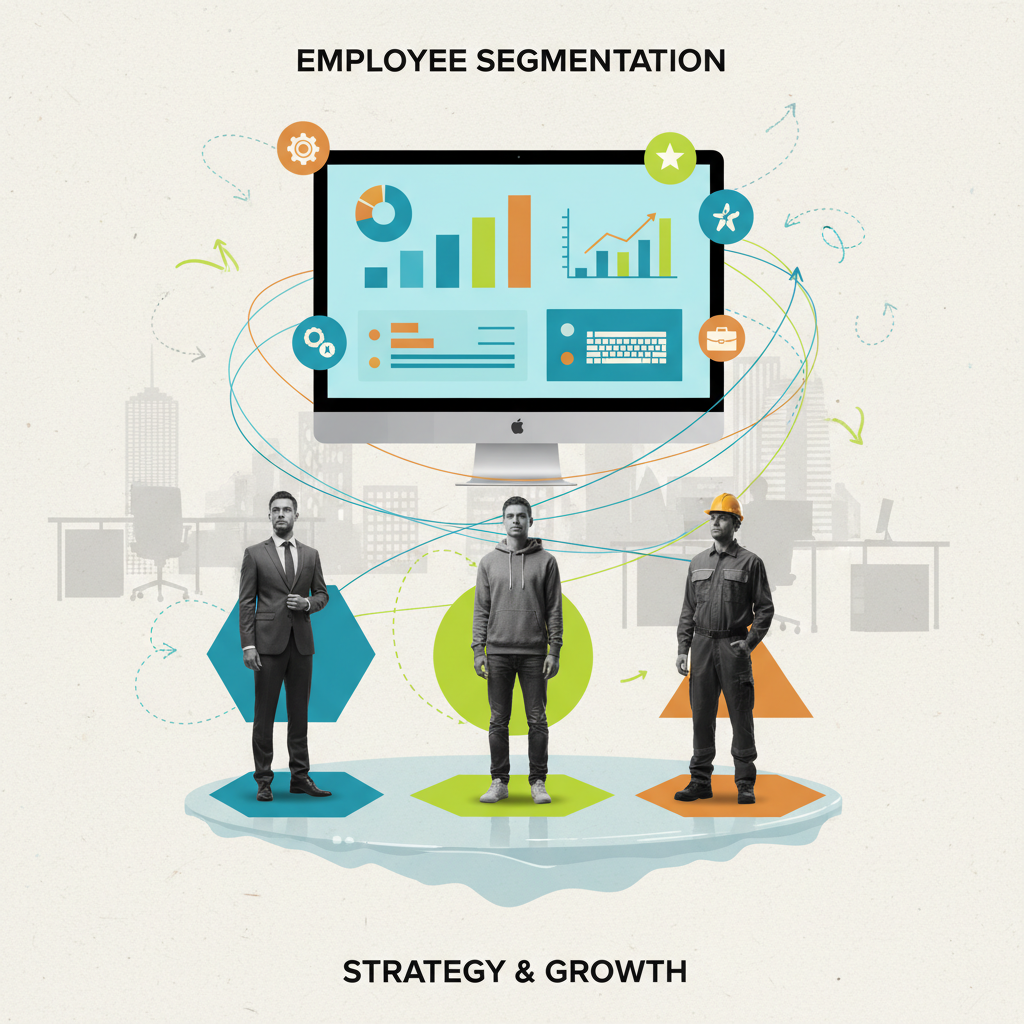
This explains how grouping employees by role, location, and performance unlocks targeted strategies and boosts productivity.
In many organizations the workforce is treated as a single, interchangeable pool, yet the reality is far more nuanced. Leaders in HR, finance, and operations often notice that blanket policies miss the mark, leaving high‑performing teams under‑supported and low‑engagement groups disengaged. This hidden mismatch is not a matter of bad data alone; it stems from a long‑standing assumption that one size fits all, which blinds decision‑makers to the distinct rhythms of different employee groups.
When you look at roles, locations, and performance metrics side by side, patterns emerge that can guide more precise interventions. The challenge is not just collecting the data, but interpreting it in a way that respects the diversity of work experiences while still aligning with overall business goals. By unpacking the concept of employee segmentation, we can reveal why the practice matters for productivity, talent retention, and strategic agility.
Now let’s break this down.
Why does workforce segmentation matter for operational efficiency
Treating every employee as identical masks the distinct cost and capacity patterns that each group creates. When a company groups staff by role function location or performance it can align staffing levels with actual demand. For example a call centre that separates agents working in the office from those remote can schedule shifts that match peak call volumes without overstaffing quieter periods. This targeted approach reduces overtime spend improves service levels and frees budget for strategic projects. The tradeoff is the need for reliable data collection and the discipline to keep segments updated as roles evolve. Organizations that invest in tools such as ActivTrak Delve AI Cerkl Broadcast and Workhint gain a clear view of where talent is most productive and where interventions are required. The result is a more agile workforce that can scale up or down without the friction of blanket policies.
What common misconceptions hinder effective employee segmentation
Many leaders assume that segmenting employees creates silos or unfair treatment. In practice the opposite occurs when segmentation is used to tailor development pathways and resource allocation. A frequent error is grouping employees solely by seniority and ignoring performance signals, which leads to generic training that does not raise underperforming teams. Another myth is that location alone defines productivity; remote workers can outperform office based peers when given autonomy and the right tools. By combining multiple dimensions such as function, performance and location, managers avoid the trap of one dimensional categories. The key is to communicate that segmentation is a diagnostic lens, not a rigid hierarchy, and to pair insights with equitable policies that support growth for every segment.
How can organizations implement a sustainable segmentation model
A sustainable model starts with a clear definition of the dimensions that matter for the business goal. Leaders should select a handful of metrics—role, location, performance rating and engagement score—and map them to actionable outcomes such as training allocation or incentive design. Once defined, the data pipeline must be automated; manual spreadsheets quickly become outdated. Platforms like ActivTrak and Delve AI provide real time dashboards that surface segment performance without extra effort. After the initial rollout, schedule quarterly reviews to adjust segment criteria as the market or internal strategy shifts. This continuous refinement prevents the model from becoming static and ensures that the segmentation continues to drive productivity and retention.
FAQ
How does employee segmentation improve talent retention
When employees see policies and development programs that reflect their specific needs they feel valued and are less likely to leave. Segmentation reveals which groups experience low engagement and allows HR to design targeted recognition or career path initiatives. By addressing the root causes of turnover for each segment retention rates improve without a one size approach.
What data sources are essential for accurate workforce segmentation
Core HR records provide role and location information while performance management systems supply rating and productivity metrics. Engagement surveys add sentiment data and time tracking tools contribute utilization patterns. Combining these sources creates a multidimensional view that supports precise segment definitions.
Can small businesses benefit from segmentation or is it only for large enterprises
Segmentation scales with the size of the workforce. Even a team of twenty can be divided by function and performance to identify high impact training needs. The advantage for small firms is the ability to allocate limited resources where they generate the most return, avoiding blanket spending on initiatives that do not move the needle.
Why a centralized workforce infrastructure matters
Organizations that rely on many external contributors quickly encounter coordination bottlenecks. Each participant may need onboarding, task assignment, progress reporting, and payment, yet these steps are often handled with separate spreadsheets, email threads, and payment services. As the volume grows, mismatched data, delayed approvals, and unclear ownership become chronic. At a certain scale the patchwork of ad hoc tools no longer provides a single source of truth, and teams spend more time reconciling information than delivering value. What is required is a single system that can store identities, route work, capture execution data, and trigger compensation in one place. A platform such as Workhint (https://www.workhint.com) illustrates the type of system teams adopt to close the gap between scattered processes and a unified operational layer. By centralizing these functions, organizations can keep the workflow visible, enforce consistent rules, and scale without rebuilding the coordination fabric each time.
Returning to the opening tension, whether treating employees as a single pool obscures the levers that drive performance, the article shows that the answer lies not in abandoning uniformity altogether but in layering a disciplined segmentation lens on top of shared goals. When role, location and performance data are combined into living groups, policies become precise, resources flow where they matter, and the organization gains the agility to scale without friction. The lasting lesson is that segmentation must be treated as a continuously refreshed diagnostic, not a fixed hierarchy; its value erodes the moment the categories stop reflecting reality. In practice, this means embedding automated data pipelines, revisiting segment definitions each quarter, and communicating the purpose of each group as a means to empower, not to divide. The best way to treat a workforce as one is to remember it is never truly one.
Leave a Reply