
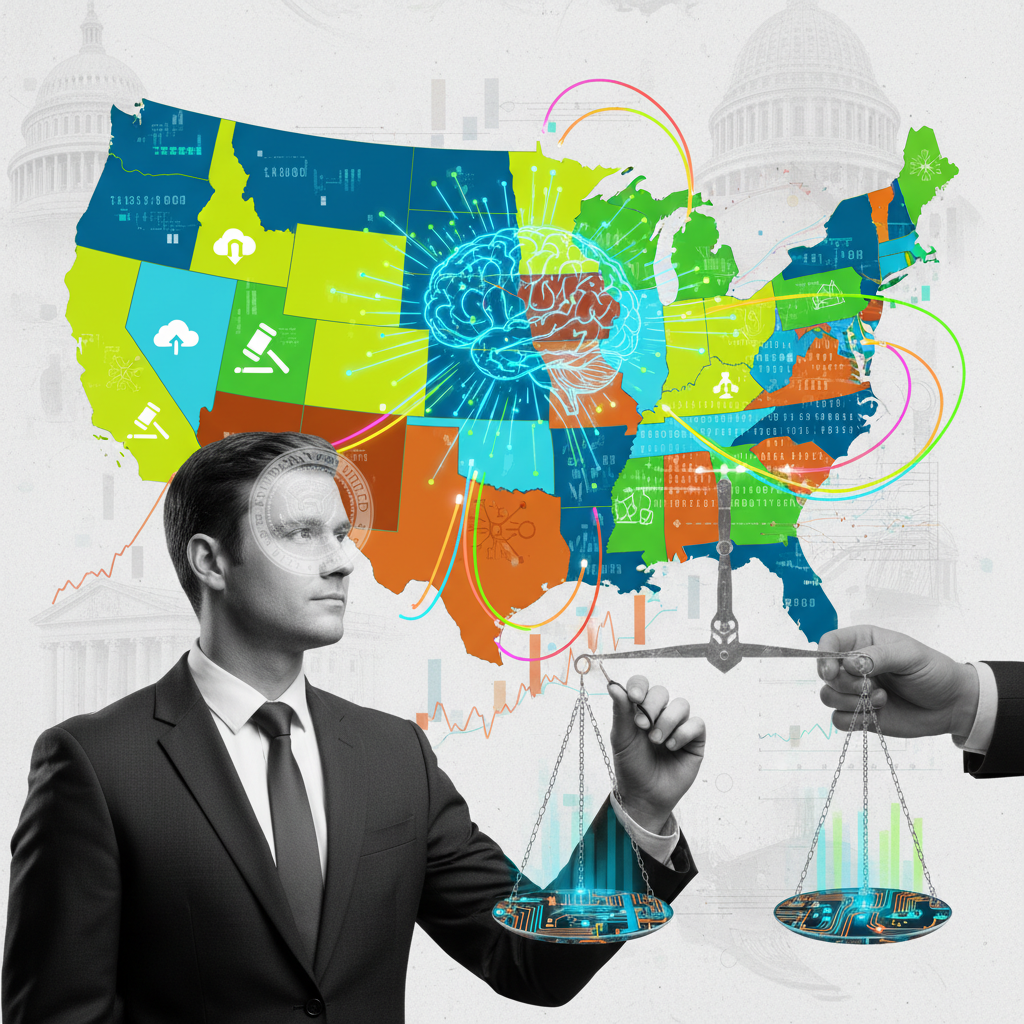
Learn how Trump’s new AI executive order reshapes the battle between federal power and state innovation, and what it means for your business.
When a president signs an executive order on artificial intelligence, the headline reads like a tech‑policy thriller. Yet the real drama unfolds in the quieter corridors of state capitols, where lawmakers wrestle with the same technology that powers everything from local traffic sensors to the AI‑driven tools your marketing team relies on. The tension isn’t just about jurisdiction—it’s about whether innovation gets stifled by a one‑size‑fits‑all rule or flourishes under a patchwork of experiments that reflect local needs.
What’s often misunderstood is that federal edicts, while well‑intentioned, can unintentionally flatten the nuanced ways states have been testing AI safeguards, data‑privacy frameworks, and workforce‑upskilling programs. The result? A landscape where the promise of AI collides with a regulatory maze, leaving businesses unsure whether they’re navigating a clear road or a series of hidden potholes.
I’ve spent years watching how policy ripples through the tech ecosystem—seeing startups pivot overnight when a new rule drops, and watching small towns become unexpected labs for AI governance. That front‑row view gives me a sense of the stakes, not a badge of authority. It’s the same curiosity that drives anyone who’s ever wondered why a rule that looks the same on paper feels so different in practice.
If you’ve felt the friction of trying to comply with a federal directive while still wanting to experiment locally, you’re about to see the pieces fall into place. We’ll untangle the core conflict, spotlight the blind spots in the current debate, and surface the opportunities hidden in the overlap of federal ambition and state ingenuity.
Let’s unpack this.
Why Federal Oversight Could Flatten State Innovation
When President Trump signs an AI executive order, the headline feels like a blockbuster, but the real drama is in how that order interacts with the patchwork of state experiments. A one‑size‑fits‑all rule can turn the vibrant, localized testing grounds—think of the data‑privacy pilots in Colorado or the workforce‑upskilling initiatives in Virginia—into sterile, compliance‑only zones. The danger isn’t just bureaucratic; it’s cultural. Innovators who thrive on iteration lose the feedback loops that make AI safe and useful.
Consider how Oracle reacted to the order: the company’s stock slump reflected investor anxiety that a federal blanket could stifle the nuanced safeguards some states were already proving effective. The same tension shows up in the news about Disney licensing characters for OpenAI, where creative freedom collides with regulatory certainty. The key question is whether the federal mandate will act as a ceiling that caps state‑level creativity, or as a floor that ensures a minimum safety net while still letting states experiment above it.
How States Are Already Pioneering AI Safeguards
Before the executive order landed on the desk, states were quietly building their own AI playbooks. In Washington, legislators passed a bill requiring bias audits for any public‑sector AI system, while Texas introduced a data‑localization rule to keep citizen information within state borders. These efforts aren’t isolated; they form a living laboratory of policies that can inform a smarter federal framework.
Take the example of Broadcom doubling its AI chip sales—its success is partly due to state‑level incentives that reward hardware innovation in places like North Carolina’s Research Triangle. Meanwhile, Rivian announced new AI tech for its robotaxi ambitions, citing supportive state tax credits that made the R&D risk manageable. The pattern is clear: states that tailor incentives and safeguards to local industry strengths can accelerate AI adoption without sacrificing accountability. Understanding these experiments helps businesses anticipate where the next regulatory sweet spot will emerge.
The Real Compliance Minefield: Hidden Potholes for Businesses
For a company, navigating the overlap of federal and state AI rules feels like driving through a city with constantly shifting traffic signals. One moment you’re clear on a federal privacy standard; the next, a state adds a layer of consent requirements that weren’t on your roadmap. Those hidden potholes can derail product launches, inflate costs, and erode customer trust.
Imagine a marketing firm using AI‑generated copy that complies with the new federal transparency rule but runs afoul of a state’s stricter “right to explanation” law. The firm must now redesign workflows, retrain staff, and possibly face penalties—an expensive pivot that could have been avoided with foresight. The lesson is to treat compliance as a dynamic strategy, not a checklist. Build modular governance frameworks that can be toggled for state‑specific rules, and invest in cross‑functional teams that monitor both federal updates and state legislative calendars. This proactive stance turns the compliance maze into a competitive advantage.
Turning Conflict into Opportunity: Leveraging Dual Governance
Conflict between federal ambition and state experimentation isn’t a dead‑end; it’s a fertile ground for strategic advantage. Companies that can harmonize the two can tap into the best of both worlds: the stability of a national baseline and the agility of localized innovation. Think of it as playing chess on two boards simultaneously—mastering the macro moves while exploiting micro‑tactics.
A practical approach is to adopt a “dual‑layer” AI governance model: a core policy that satisfies the federal order, overlaid with state‑specific modules that add extra safeguards or leverage local incentives. This model lets a firm quickly adapt when a state like California rolls out a new AI ethics certification, without overhauling its entire compliance stack. Moreover, being an early adopter of state‑level best practices can position a company as a thought leader, opening doors to partnerships with public agencies and access to grant programs. In short, the friction created by overlapping rules can be transformed into a catalyst for innovation and market differentiation.
When Trump’s AI order lands on the desk of a state legislator, the question isn’t whether the federal rule will dominate—but whether we let it become a floor that lets local experiments soar, or a ceiling that flattens them. The real answer lies in how we choose to build our compliance architecture: not as a static checklist, but as a modular system that can flex to each state’s nuance. By treating every state’s pilot as a source of insight rather than an obstacle, businesses turn regulatory complexity into a competitive edge. So the next time a new directive arrives, ask yourself: am I tightening the bolts on a single, rigid framework, or am I adding a new gear that lets my organization adapt and thrive across the patchwork? The choice determines whether innovation stalls in the shadows of a one‑size‑fits‑all rule or lights up the road ahead.
Leave a Reply