

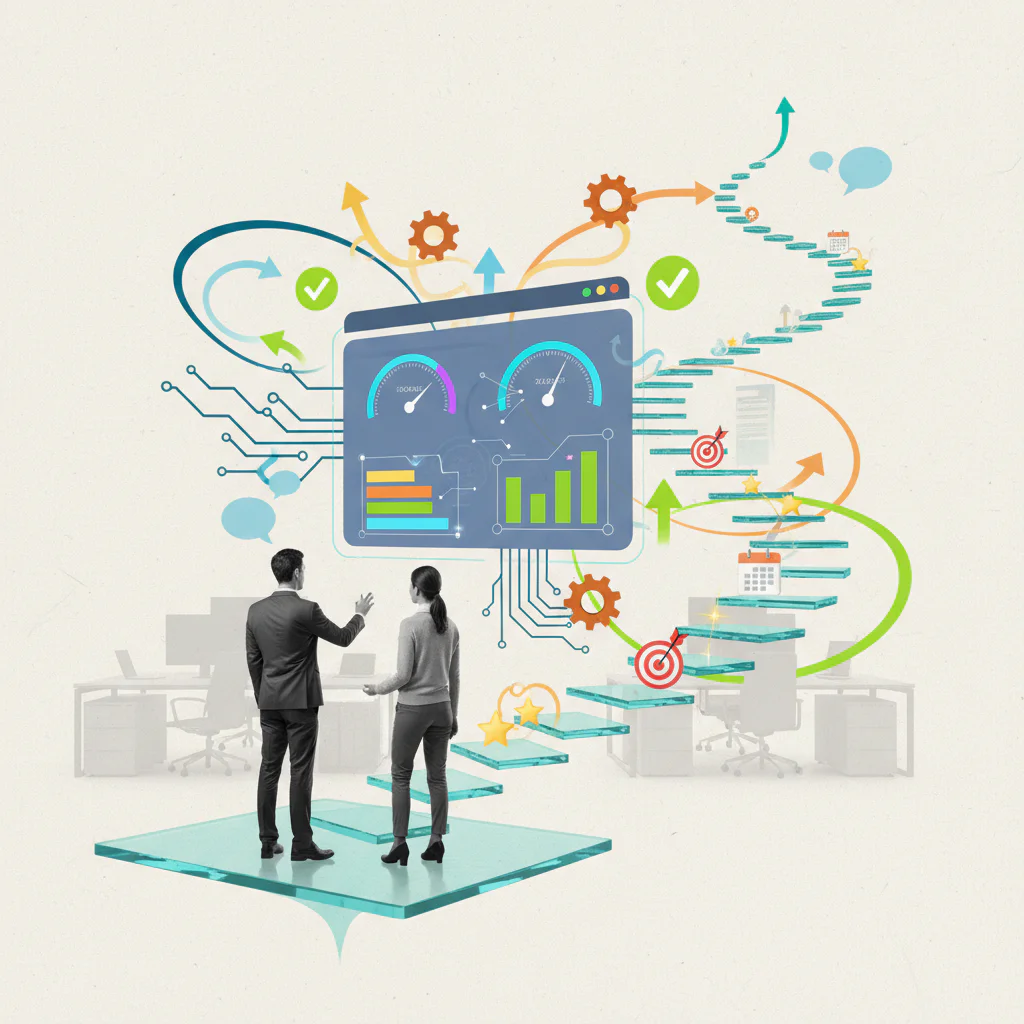
Stop guessing. Discover the proven frameworks that turn reviews into growth and keep top talent thriving
If you’ve ever left a performance review feeling like you were guessing the weather, you’re not alone. The tension between the promise of “growth‑focused feedback” and the reality of vague, one‑size‑fits‑all forms is why so many talented people slip through the cracks. It matters because every missed cue is a missed opportunity—not just for the employee, but for the organization that loses the spark that could have propelled it forward.
What’s broken isn’t the idea of performance reviews; it’s the framework that underpins them. Too often, the tools we use are borrowed from outdated models, or they’re cobbled together without a clear line of sight to real outcomes. Companies like Google and Microsoft have spent years refining their processes, discovering that the magic lies in a few disciplined steps rather than endless paperwork. Yet most of us are still stuck with generic templates that leave people feeling judged rather than coached.
I’ve spent the last decade sitting at the intersection of HR strategy and frontline management, watching the same frustrations repeat in startups, mid‑size firms, and even giants like Adobe. The insight I’ve gathered isn’t about inventing a brand‑new system; it’s about surfacing the proven frameworks that actually translate feedback into measurable growth and keep top talent thriving. Think of it as moving from guesswork to a roadmap you can trust.
So, let’s unpack this.
Why a clear framework matters more than good intentions
When a manager sits down for a review the temptation is to rely on goodwill and generic praise. That approach feels safe but it leaves the conversation without direction, and direction is the currency of growth. A framework supplies a shared language, a set of milestones, and a way to measure progress that goes beyond vague compliments. Think of it as a map: without roads you can wander, but with a map you know which hill to climb and when to pause for a view. Companies that invest in a structured process see higher engagement because employees know exactly what is expected and how they can improve. The framework also protects the reviewer from bias, turning subjective impressions into observable behaviors that can be discussed openly. In short, the framework turns a hopeful chat into a purposeful development plan that benefits both the individual and the organization.
How leading firms turn reviews into measurable growth
The secret of firms like Google and Microsoft is not a secret at all – it is a disciplined rhythm that repeats each quarter. First they set clear objectives that link personal work to larger business goals. Then they collect data continuously, not just at the end of a cycle, using peer feedback, project metrics and self reflection. Finally they hold a concise conversation that focuses on three things: what was achieved, what obstacles appeared, and what the next stretch goal looks like. Adobe adds a twist by pairing each review with a personal development sprint, a short period where the employee tries a new skill or role. The result is a feedback loop that feels like coaching rather than judgment. By breaking the process into repeatable steps, these companies create a culture where performance data fuels learning and the next iteration of work.
Common pitfalls and how to sidestep them
Even with a solid framework, many teams stumble on the same traps. First, they treat the review as a yearly event instead of a continuous dialogue, which dilutes relevance and makes feedback feel stale. Second, they rely on a single rating scale that masks nuance; a numeric score cannot capture the story behind a performance shift. Third, they forget to tie outcomes to concrete actions, leaving employees with praise but no plan. To avoid these errors, schedule brief check‑ins every month, use narrative comments alongside any rating, and end each conversation with two specific next steps. A quick tip is to keep a shared document where both manager and employee log progress, obstacles and wins in real time. This habit transforms the review from a dreaded appointment into a living roadmap.
When you stop guessing the weather of a performance review and replace it with a trusted map, the fog lifts for both manager and employee. The real breakthrough isn’t a fancier form; it’s a rhythm of clear objectives, continuous data, and a brief, focused conversation that ends with a concrete next step. If you can commit to one habit—a shared, living document where progress, obstacles, and next actions are logged in real time—you turn a once‑yearly ritual into a daily compass. That habit alone transforms vague praise into measurable growth and keeps top talent on the road to their own best work. So ask yourself: what small, repeatable practice will you embed today to turn every review into a waypoint rather than a guess?
Make the next review a checkpoint, not a mystery.
Leave a Reply