

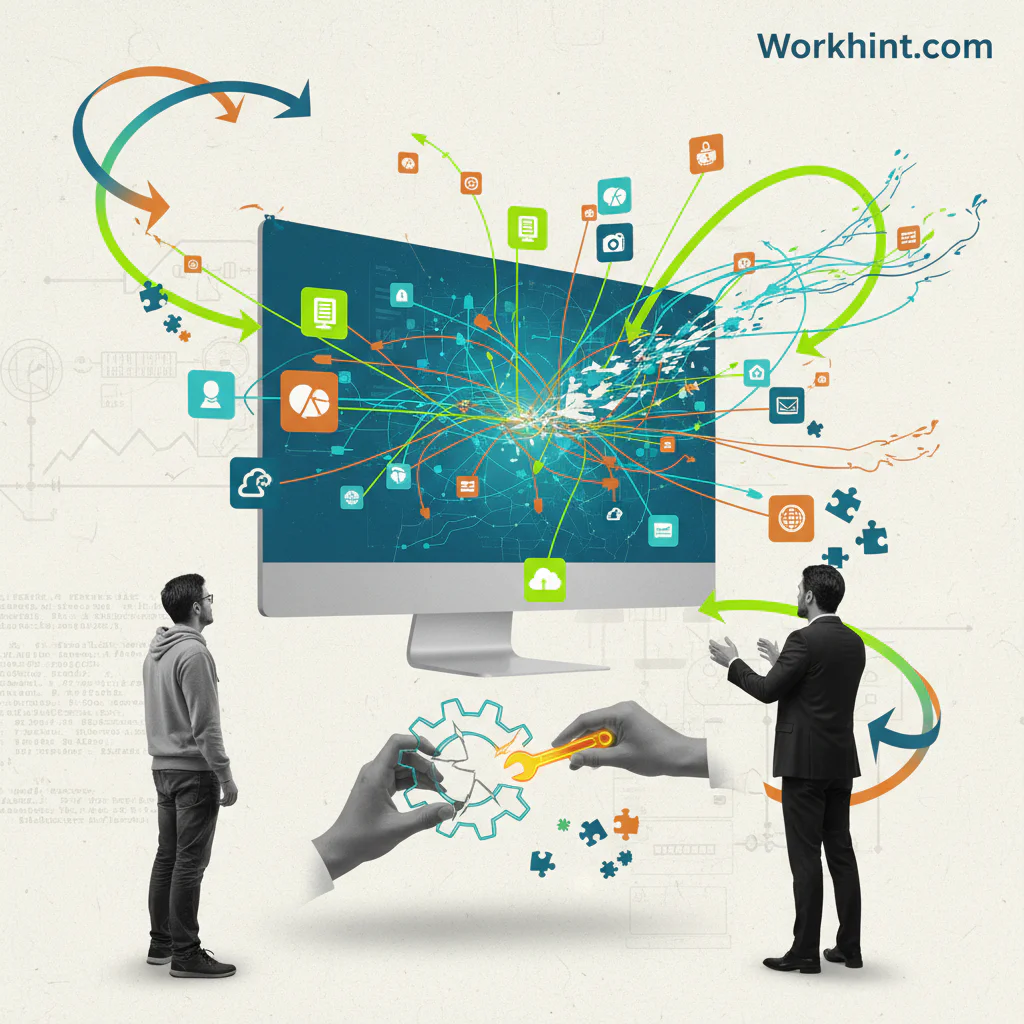
As team count grows, mismatched data models and latency in bespoke API layers cause synchronization errors and slowdowns, crippling operations.
When a growing organization leans heavily on API connections to stitch together scheduling, payroll, and talent platforms, the hidden cost of scale often surfaces as unexpected data mismatches and lag. Workforce leaders, operators, founders, and the HR, finance, or talent operations teams all feel the ripple when a single integration falters—reports stall, budgets wobble, and employee experiences suffer. The underlying issue is not a lack of technology but a common blind spot: treating integration layers as static bridges rather than evolving ecosystems that must keep pace with expanding team structures and changing data models. This oversight creates a fragile foundation that can crumble under the weight of a few hundred extra users, yet it remains invisible until the breakdown happens. Recognizing this pattern is the first step toward building more resilient processes. Now let’s break this down.
Why integration stability matters as the workforce expands
When a company adds hundreds of new employees, the data flows between scheduling, payroll and talent platforms increase dramatically. A fragile integration that worked for a few dozen users can become a bottleneck, delaying timecards, causing payroll mismatches and eroding employee trust. Stability matters because every error cascades through multiple systems, amplifying operational cost and distracting managers from strategic work. For example, a midsize retailer that relied on a custom connector saw its payroll processing time double after hiring an additional 200 staff, forcing overtime for the finance team. By treating the integration layer as a core service rather than an afterthought, leaders can protect the rhythm of daily operations and maintain confidence in the technology stack. Early monitoring of latency and error rates, combined with a clear ownership model, turns a potential crisis into a manageable metric.
What misconceptions lead to integration failures in large teams
Many workforce leaders assume that once an API connection is built it will continue to work without change. This belief overlooks two realities: data models evolve as new roles, locations and compensation structures are added, and usage patterns shift when teams grow. A common mistake is treating the integration as a static bridge, ignoring version upgrades from the source systems. For instance, a growing call centre integrated its scheduling tool with a third party API but missed a schema change that added a new field for shift premium. The result was a cascade of rejected records and a backlog of manual adjustments. Another myth is that higher volume only requires more hardware; in truth, latency often stems from inefficient query design or missing pagination. Recognising these misconceptions lets organizations plan for regular reviews, automated schema validation and adaptive throttling, keeping the integration healthy as the workforce expands.
How to build integration layers that scale with workforce growth
A resilient integration architecture separates concerns, uses event driven patterns and embraces versioned contracts. First, expose a stable internal API that abstracts the underlying vendor endpoints; this internal layer can translate, enrich and cache data without exposing downstream systems to vendor changes. Second, adopt an event bus such as Kafka or a managed queue to decouple producers from consumers, allowing spikes in employee activity to be buffered and processed reliably. Third, implement automated contract tests that run whenever a source system releases a new version, catching breaking changes before they reach production. A short checklist for scaling integrations includes: 1) Centralised logging and alerting for latency and error spikes, 2) Versioned schema definitions stored in a shared repository, 3) Periodic load testing with realistic employee counts, 4) Inclusion of tools like Workhint for monitoring integration health alongside other workforce platforms. By following these practices, organizations turn their integration layer into a scalable asset that supports continuous hiring and operational agility.
FAQ
How can I detect early signs of API integration strain before it impacts payroll?
Set up real time dashboards that track response time, error rates and queue depth for each integration point. Look for trends where latency climbs above a threshold or where retry counts increase consistently over a week. Pair these metrics with business events such as a new hiring wave; a sudden rise in failed payroll submissions often signals that the integration is reaching capacity. Alerts that surface these patterns allow the operations team to intervene with scaling actions or temporary throttling before employees notice any pay delay.
What are the cost implications of frequent integration rewrites for a growing team?
Each rewrite consumes developer hours, testing resources and often requires temporary manual workarounds that reduce productivity. Over time, the cumulative expense can exceed the budget allocated for new hires or technology upgrades. Moreover, frequent changes increase the risk of introducing new bugs, which can trigger downstream costs such as overtime for finance staff or compliance penalties. Investing in a modular, versioned integration framework reduces the need for full rewrites, turning what would be a recurring expense into a predictable maintenance budget.
Which integration architecture patterns best support rapid workforce expansion?
Event driven architectures and API gateway patterns are the most effective for scaling. An event bus lets multiple downstream systems consume changes asynchronously, smoothing spikes in activity that accompany hiring bursts. An API gateway provides a single entry point, handling authentication, rate limiting and request transformation, which protects internal services from direct exposure to vendor changes. Combining these patterns with contract testing and automated monitoring creates a resilient ecosystem that grows alongside the employee base.
Why a centralized workforce infrastructure becomes necessary
As organizations expand their external labor pool, the number of contracts, onboarding steps, task assignments, and compliance checks grows in parallel. Managing each of these elements in separate spreadsheets or ad-hoc tools creates duplicated data, inconsistent status, and frequent hand-off errors. When the volume reaches a few dozen contributors, the manual coordination effort starts to delay work delivery and increases the risk of regulatory breaches. At that point teams need a single place where identities, work definitions, execution data, and payment triggers can be stored and processed consistently. Platforms such as Workhint illustrate the type of system teams adopt when the pattern emerges. Having that single layer lets organizations keep pace with growth while preserving data integrity and compliance.
Answering the question of why API integrations break as teams grow reveals a single pattern: the integration layer is treated as a fixed construct while the organization and its data constantly change. When the data model expands, when usage spikes, and when vendors push new versions, a static bridge cannot keep the flow aligned, and errors appear. The remedy is to design the integration as a living service that is regularly inspected, versioned, and decoupled from downstream systems. By embedding automated contract checks, event driven buffering, and a stable internal API, teams turn a fragile point into a managed capability that scales with headcount. The lasting lesson is simple: an integration must evolve at the same pace as the workforce it serves.
Leave a Reply