


A mobile massage business can start as a branded service platform before you ever lease a room.
If you are researching how to start a mobile massage business, the opportunity is not just going to clients instead of renting a studio. It is building a trusted service platform that connects demand with licensed therapists, safe intake, scheduling, payments, and repeat bookings.
The traditional path is expensive: rent a space, furnish treatment rooms, hire staff, and hope customers arrive. A platform-first model is different. You validate demand first, recruit licensed independent therapists carefully, and use a branded operating system to manage requests, screening, schedules, payments, and provider payouts.
What’s in this article?
- Why mobile massage can work as a lean service business
- What you need before taking paid appointments
- How to price sessions, packages, and events
- How to find the first customers
- How Workhint can help launch the platform and operations
- A 7-day launch plan, checklist, and FAQ
Why this business works
Mobile massage sells convenience, recovery, and privacy. Customers may want massage at home, at work, after training, during events, or while traveling. They are buying a simpler way to access a licensed professional without commuting or fitting into a spa schedule.
The business can also work for providers. Licensed massage therapists often want more control over availability, specialties, and earnings. A branded platform can give them qualified requests, clear appointment details, payment tracking, and fewer administrative tasks.
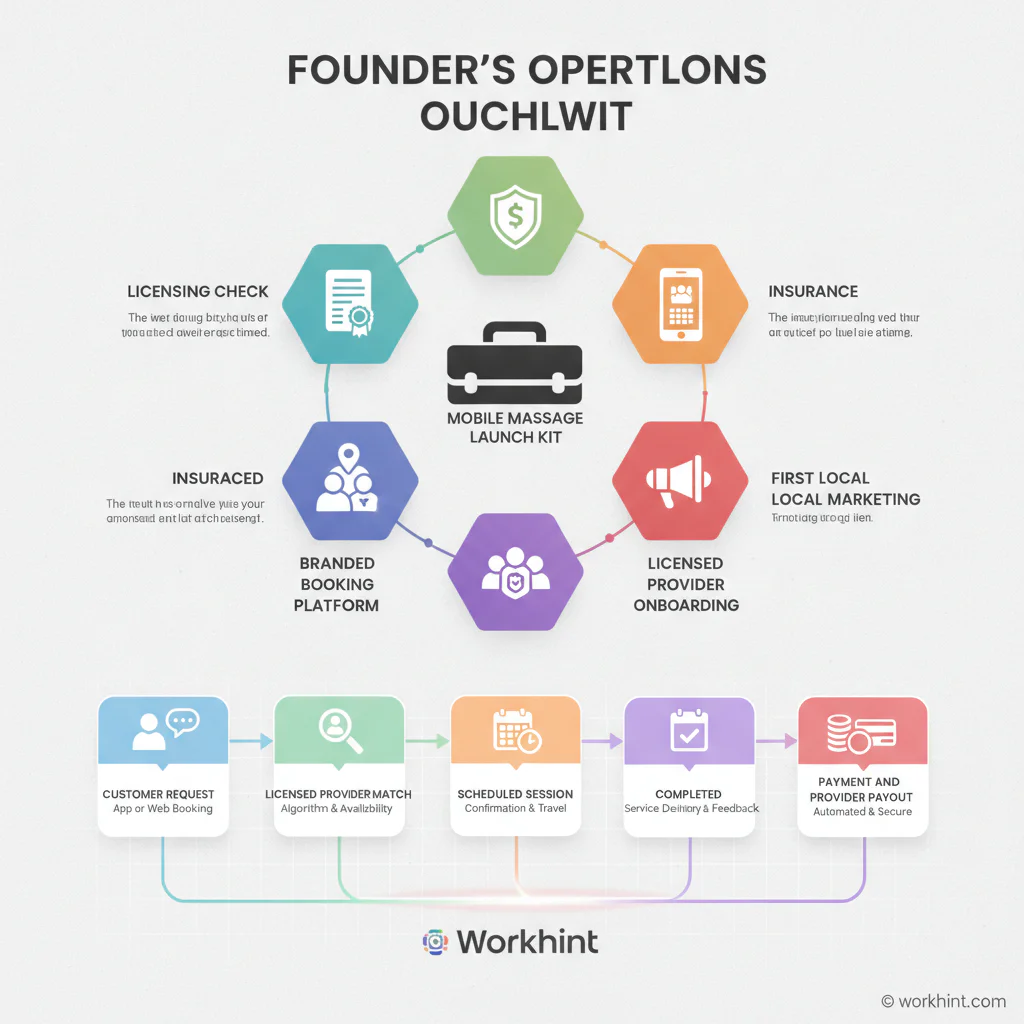
What you need to launch
Start with the operating foundation, not a spa buildout. You need a brand, defined service area, licensed provider standards, client intake, safety policies, insurance review, pricing, and a clean appointment workflow.
Licensing rules vary by state and city. Massage therapists often need an active state license, and local rules may apply to mobile services, business registration, background checks, or permits. Verify requirements before selling paid sessions.
| Launch item | Lean starting approach | Typical budget range |
|---|---|---|
| Business registration and local permits | Register the business and verify city, county, and state massage rules. | $100-$600 |
| Insurance review | Check general liability, professional liability, and provider coverage requirements. | $150-$700/year |
| Branded platform | Create customer intake, booking, provider onboarding, scheduling, payments, and reviews. | Start lean before custom software |
| Provider onboarding | Collect licenses, service areas, specialties, availability, agreements, and safety policies. | $0-$500 |
| Essential equipment | Require providers to bring compliant tables, linens, oils, sanitizer, and supplies where appropriate. | $400-$2,000 per provider |
| Marketing | Launch a local landing page, Google Business Profile, partnerships, and referral offers. | $300-$1,500 |
If you are not licensed yourself, do not imply that unlicensed people can deliver massage. Build around licensed independent providers, clear agreements, and local compliance. If you are licensed, begin solo and add providers once the model is proven.
How to price a mobile massage business
Pricing should account for session time, travel, setup, cleanup, supplies, payment processing, insurance, taxes, cancellations, and provider payout. Do not copy a spa menu directly. Mobile service has a convenience premium and a route-density problem.
| Offer | Example price | Best use |
|---|---|---|
| 60-minute in-home session | $110-$160 | Core consumer offer in many urban and suburban markets |
| 90-minute in-home session | $150-$220 | Higher-value appointments where travel time is worth it |
| Travel fee | $10-$35 by distance or zone | Protects margin outside the core service area |
| Corporate wellness block | $120-$200 per provider hour | Office, event, hotel, gym, or retreat bookings |
| Membership package | Monthly session bundle | Recurring revenue for customers who book regularly |
Keep the first menu simple: 60-minute sessions, 90-minute sessions, back-to-back sessions, and corporate wellness blocks. Add complex modalities only when you have provider depth and demand.
How to get first customers
Your first goal is demand validation, not looking like a national spa brand. Pick one market, one customer type, and one clear offer: busy professionals, athletes, corporate wellness teams, boutique hotels, gyms, clinics, or event planners.
Start with direct local outreach. Partner with gyms, chiropractors, studios, apartments, hotels, trainers, doulas, and office managers. Build a landing page with service area, safety standards, therapist requirements, pricing, and request form. Then run every inquiry through the same intake and scheduling process.
Reviews matter because trust is the product. After every session, request feedback and improve screening, matching, arrival instructions, and follow-up.
How Workhint helps launch it
Workhint can help you launch the mobile massage business as a branded operating platform, not just a collection of scheduling links. The customer sees your brand, your domain, your service request flow, your policies, and your appointment experience from the first interaction.
A customer can submit a request through the branded portal, choose session length, location, preferred time, massage type, medical notes, contraindications, parking details, and access instructions. The system can route that request to licensed providers who match the service area, modality, schedule, and requirements.
Providers can join with licenses, insurance documents, agreements, availability, service radius, specialties, and payout preferences. When a request is approved, Workhint can create the assignment, confirm the schedule, collect payment, track completion, request feedback, and calculate contractor payout.
For the owner, the dashboard can show open requests, provider approvals, upcoming sessions, cancellations, unpaid invoices, payouts, reviews, and revenue by service area. That lets you validate demand and provider reliability before spending money on a studio, employees, or custom software.
First 7-day launch plan
- Day 1: Choose the market, customer type, service radius, first two offers, and provider standards.
- Day 2: Check state massage licensing, local mobile-service rules, business registration, insurance, and safety requirements.
- Day 3: Build the branded request flow, intake questions, provider onboarding checklist, quote rules, payment flow, cancellation policy, and payout model.
- Day 4: Recruit 3-5 licensed independent therapists or start with your own license if you are the provider.
- Day 5: Create the landing page, Google Business Profile, referral offer, and partnership list.
- Day 6: Contact 30 local demand sources and route all interest through the platform.
- Day 7: Review demand, provider readiness, pricing, service radius, safety process, and fulfillment gaps before investing more.
Final launch checklist
- Define the first service area and customer segment.
- Verify massage licensing and local mobile-service rules.
- Register the business and review insurance requirements.
- Create a branded customer request and booking flow.
- Build client intake, contraindication, safety, and cancellation policies.
- Recruit only properly licensed providers or launch as a licensed solo provider.
- Collect provider licenses, availability, specialties, agreements, and payout details.
- Set simple pricing for 60-minute, 90-minute, travel, and event bookings.
- Launch local outreach before buying unnecessary assets.
- Track requests, completion rates, reviews, margins, and provider reliability.
FAQ
How much does it cost to start a mobile massage business?
A lean mobile massage launch can often start with a few hundred to a few thousand dollars if the provider already has required credentials and equipment. Costs rise with licensing, insurance, branding, marketing, supplies, and platform setup.
Do I need a license to start a mobile massage business?
Massage therapy is regulated in many states and cities. Providers usually need active massage licenses, and the business may need local registration or mobile-service permits. Check current rules before selling paid sessions.
Can I start a mobile massage business with independent contractors?
Many service platforms use independent providers, but classification rules matter. Use clear agreements, avoid controlling providers like employees, verify licensing, and get legal or tax advice before scaling a contractor network.
What equipment is essential?
The essential equipment usually includes a portable table or chair, linens, bolsters, oils or lotions, sanitation supplies, carrying case, and professional client documentation. If providers bring their own equipment, set standards in onboarding.
How should I price mobile massage sessions?
Price around total appointment economics: session time, travel, setup, supplies, cancellations, payment fees, taxes, provider payout, and profit. Many markets support a convenience premium.
How do I get my first mobile massage customers?
Start local with partnerships, referrals, Google Business Profile, apartments, hotels, gyms, clinics, offices, and event planners. Send every inquiry through one intake and booking process.
Should I open a studio first?
Usually not at the beginning. Validate demand, pricing, provider reliability, reviews, and repeat booking behavior first. A studio can come later if utilization and margins justify the fixed cost.
Conclusion
A mobile massage business is attractive because it can launch around demand, licensed providers, and operational trust instead of rent-heavy infrastructure. Start narrow, verify the rules, build a branded platform, recruit carefully, and learn from the first real appointments. If the model works, you can expand by adding providers, service areas, partnerships, and recurring packages without guessing your way into a costly buildout.
Leave a Reply