


You can launch a home watch business before hiring a team by selling trust, documentation, and recurring property checks.
A home watch business helps absentee homeowners, seasonal residents, investors, and property owners keep an eye on homes while they are away. The service is simple: scheduled visual checks, documented visit reports, issue escalation, and optional coordination with licensed vendors.
The lean path is not to hire employees, lease an office, or build custom software first. Start with a branded service platform, a narrow service area, a documented checklist, insurance, and a small network of independent home watch providers or property service partners.
What’s in this article?
- Why a home watch business works as a recurring local service
- What you need to launch with minimal upfront spending
- How to price visits, retainers, and add-on services
- How Workhint can become the branded operating platform
- A 7-day launch plan, checklist, and FAQ
Why This Business Works
Home watch works because the customer problem is recurring. A vacant or seasonal home still has risk: leaks, storms, pests, HVAC issues, packages, pool problems, access concerns, and insurance documentation. Customers pay for confidence and a clear record.
The business can start narrow. You do not need to offer repairs, property management, landscaping, cleaning, security, or contracting on day one. A strong first offer can be weekly or biweekly visual property checks with photos, notes, and escalation when something looks wrong.
Independent providers make the model scalable. Your job is to create the brand, checklist, quality standard, customer experience, and operating system that turns local capacity into a professional service.
What You Need To Launch
Start with the minimum that makes homeowners trust you with property access: registration, insurance, bonding where appropriate, service agreements, secure access rules, documented checklists, and a branded customer portal for requests and reports.
| Launch item | Lean first version | Typical early budget |
|---|---|---|
| Business setup | Registration, EIN, bank account, basic terms | $150 to $700 |
| Insurance and bonding | General liability, E&O review, bond where useful | $700 to $2,500+ |
| Branded platform | Customer intake, reports, scheduling, invoices, payouts | $0 to $500 to configure |
| Inspection kit | Flashlight, moisture meter, phone, key process | $100 to $400 |
| Local marketing | Landing page, Google Business Profile, partner outreach | $200 to $1,000 |
Licensing rules vary by location. In many markets, visual home watch checks are different from licensed home inspections, contracting, alarm work, or property management. Keep the first offer clearly defined and confirm local requirements.
How To Price It
Pricing should reflect route time, home size, visit frequency, documentation quality, travel, risk, and response expectations. The easiest starting model is a per-visit fee with monthly packages for recurring clients.
| Offer | Example price | Best use |
|---|---|---|
| Standard visit | $40 to $85 per visit | Basic visual check with report |
| Monthly watch plan | $150 to $400 per month | Weekly or biweekly recurring checks |
| Premium estate plan | $400 to $900+ per month | Larger homes and priority response |
| Emergency visit | $75 to $200 per callout | Storm checks, alarms, leak concerns |
| Concierge coordination | $50 to $125 per hour | Vendor access, deliveries, issue follow-up |
Do not compete only against casual neighbors. Your value is professional documentation, secure access handling, consistent scheduling, fast escalation, and a branded experience.
How To Get First Customers
Start where vacant-home risk is visible: real estate agents, second-home communities, HOAs, insurance agents, estate attorneys, property managers, relocation companies, and local seasonal homeowner groups.
Use one clear offer: weekly documented home watch visits for seasonal homeowners in a specific area. Route every prospect through the same intake flow so property details, access instructions, emergency contacts, vendor contacts, and report preferences become part of your operating system.
How Workhint Helps Launch It
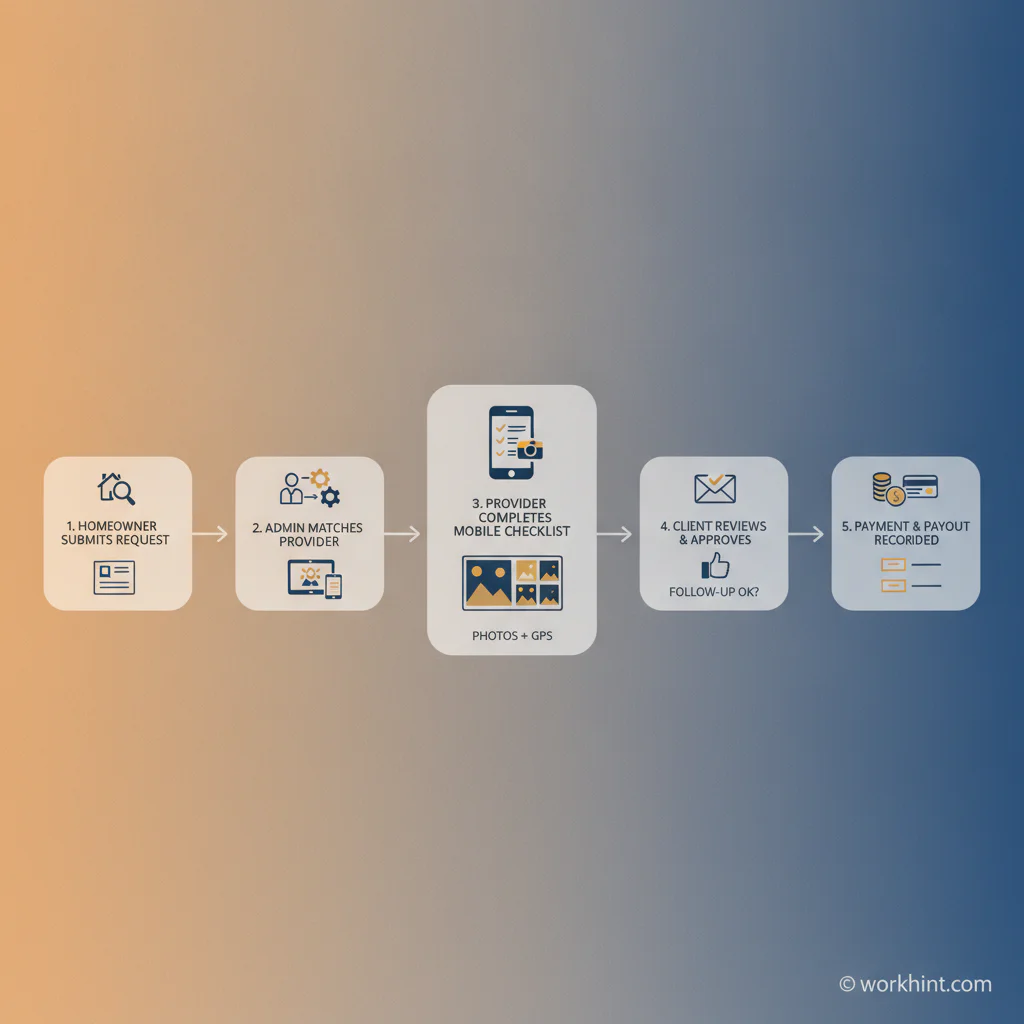
Workhint can become the branded operating platform for the home watch business before you build custom software or stitch together forms, calendars, messaging, invoices, and spreadsheets.
A homeowner requests service through your branded customer portal. Workhint collects property details, access instructions, visit frequency, emergency contacts, checklist preferences, photos, and approval rules. Inside the operations dashboard, you can approve the account, match visits to an independent provider, schedule recurring checks, assign mobile checklists, collect timestamped notes and photos, flag issues, send reports, invoice the client, collect payment, and track provider payouts.
For the provider network, Workhint can manage invitations, onboarding documents, service areas, availability, assignments, visit standards, mobile execution, issue escalation, and payout records. That lets you launch as a professional home watch platform while you focus on clients and trust in one local market.
First 7-Day Launch Plan
- Day 1: Choose one service area, one customer segment, and one first package.
- Day 2: Set up the branded Workhint customer portal, intake form, admin dashboard, and client records.
- Day 3: Configure visit checklists, quote approval, recurring scheduling, report delivery, invoicing, payment, and payout rules.
- Day 4: Recruit the first independent providers or local partners and define screening, access, and documentation standards.
- Day 5: Contact agents, HOAs, insurance brokers, relocation companies, estate attorneys, and seasonal homeowner groups.
- Day 6: Route inquiries through the platform, book discovery calls, and test reports on sample properties.
- Day 7: Review demand, trust objections, pricing, provider readiness, insurance status, and operational gaps.
Final Launch Checklist
- Choose a narrow launch market and first customer type.
- Register the business and confirm local rules.
- Secure insurance, bonding where appropriate, and written service agreements.
- Create a branded Workhint intake, scheduling, report, payment, and payout flow.
- Build a standard visit checklist with photos, issue notes, and escalation rules.
- Recruit and onboard the first independent providers or trusted local partners.
- Define access handling, emergency contacts, vendor coordination, and privacy standards.
- Start partner outreach before spending heavily on ads.
- Validate recurring demand before hiring employees or leasing an office.
FAQ
How much does it cost to start a home watch business?
A lean launch can often start with a few thousand dollars for setup, insurance, bonding, basic tools, a branded platform, and local marketing. Costs rise when you hire employees, buy vehicles, or build a traditional office operation before proving demand.
Do I need employees to start a home watch business?
No. You can start with the owner handling initial visits or build a small network of independent providers. The key is clear onboarding, insurance review, documentation standards, and quality control.
Do home watch businesses need a license?
Requirements depend on the location and the services offered. Visual checks may not require the same license as home inspection, contracting, property management, or alarm services, but confirm local rules before accepting clients.
What insurance does a home watch business need?
Most operators should review general liability, professional liability or E&O, bonding, commercial auto, and cyber or privacy coverage. Customers are trusting you with property access, so insurance is part of the trust product.
How do home watch businesses make money?
Revenue usually comes from per-visit fees, monthly watch plans, premium estate plans, emergency visits, vendor coordination, and concierge add-ons. Recurring plans are usually the strongest foundation.
How do I get the first home watch clients?
Start with referral channels that already serve absent homeowners: real estate agents, HOAs, insurance brokers, estate attorneys, relocation companies, property managers, and seasonal homeowner groups.
Conclusion
A home watch business is a strong startup option when you keep the model focused: recurring property checks, professional documentation, trusted providers, and clear customer communication.
The fastest path is to validate demand first. Build the branded platform, recruit the first providers, create the checklist, secure the right insurance, and sell a narrow recurring offer. Workhint gives the business its operating foundation from day one, so you can launch before investing heavily in employees, offices, or custom systems.
Leave a Reply