


A personal training business can start lean when you sell results first and build the trainer network around proven demand.
How to start a personal training business with no employees is a practical question for fitness professionals who want more control without opening a gym, hiring a staff, or paying for equipment before demand is clear.
The opportunity is straightforward: people want help getting stronger, losing weight, improving mobility, staying accountable, and building routines that fit real life. The mistake is assuming you need a studio, payroll, and a full fitness brand before you can sell the first package. A leaner model starts with a focused offer, a branded customer platform, a small network of qualified independent trainers, and a repeatable operating system for intake, scheduling, payment, and follow-up.
What’s in this article?
- Why personal training works as a low-overhead service business
- What you need before taking the first client
- How to price sessions, packages, and small-group programs
- How to get first customers without pretending to be a large gym
- How Workhint helps launch a branded personal training platform
- A 7-day launch plan, checklist, and FAQ
Why a Personal Training Business Works
Personal training is attractive because customers are buying outcomes, not equipment. A beginner may want confidence in the gym. A busy parent may want two efficient sessions per week. A senior may want better balance. An athlete may want sport-specific strength. Those are clear problems with visible progress.
The business can also start small. You can validate demand with online coaching, park sessions, apartment-gym sessions, partner studios, corporate wellness pilots, or trainers who already have access to equipment. That reduces the need to lease space before you know which customer segment is willing to pay.
A provider-network model makes the business more scalable than a solo trainer calendar. Instead of personally delivering every session, you can recruit certified independent trainers for specific neighborhoods, specialties, and time slots. The business becomes the brand, customer experience, booking system, quality standard, and demand engine.
What You Need to Launch
You need credibility, safety, and a simple operating model before you need a studio. Research from current personal training startup guides consistently points to certification, business registration, liability insurance, client acquisition, pricing, and booking systems as the core launch requirements. Most guides spend less time on the operating system that connects customer intake, trainer matching, scheduling, payments, and service quality.
Start by choosing one narrow offer. Examples include strength training for beginners, postpartum fitness, mobility for older adults, weight-loss accountability, online coaching for busy professionals, or small-group training for apartment communities. A narrow offer is easier to market, easier to price, and easier to recruit trainers for.
| Launch item | Lean starting point | Why it matters |
|---|---|---|
| Certification and CPR/AED | $300 to $1,500 depending on credential | Builds trust and supports safer client delivery |
| Business registration | $50 to $500 depending on location | Creates the legal business foundation |
| Insurance | $150 to $600 annually for many solo or small operations | Protects against injury, property, and professional risk |
| Branded platform | Set up before buying equipment | Handles intake, scheduling, payments, trainer onboarding, and communication |
| Marketing | $100 to $750 for first tests | Validates demand before bigger investment |
| Equipment | Use client, park, gym, trainer-owned, or partner-space equipment first | Avoids buying gear before session volume justifies it |
Check local rules before selling sessions. Personal trainer licensing varies by market, facility, and service type, but reputable certification, CPR/AED training, clear waivers, insurance, and strong client screening are practical minimums. If trainers will work with minors, older adults, rehabilitation needs, or medical limitations, add stricter qualification and referral rules.
How to Price It
Pricing should cover trainer payout, platform costs, insurance, payment processing, marketing, admin time, taxes, cancellations, and margin. Do not price only against the trainer’s hourly wage. Price the customer outcome and the operational work required to deliver it reliably.
| Offer | Example price | Best use |
|---|---|---|
| Single 60-minute private session | $60 to $150 | Trial sessions, premium in-person coaching, or specialized trainers |
| 8-session starter package | $480 to $1,000 | Beginner strength, accountability, or short transformation programs |
| Small-group session | $20 to $50 per person | Apartment gyms, outdoor classes, workplace wellness, or friends training together |
| Online coaching package | $150 to $500 per month | Programming, check-ins, habit tracking, and remote accountability |
| Corporate or property fitness pilot | $500 to $2,500 per month | Recurring sessions for offices, residential buildings, or communities |
The best first model is often a package, not one-off sessions. Packages create commitment, reduce scheduling churn, and give the trainer enough time to produce a result. For a provider network, packages also make capacity planning and payout rules easier.
How to Get First Customers
The first customers usually come from proximity, trust, and a specific promise. Start with people who already have the problem and a natural place to train: apartment residents, busy professionals, parents, founders, seniors, youth athletes, bridal parties, office teams, or local weight-loss communities.
Use simple demand tests. Offer a beginner strength assessment, a four-week mobility program, a lunchtime office fitness pilot, or a small-group apartment gym program. Send every inquiry through the same intake form so you can learn what customers want, where they live, what schedule works, and whether they prefer in-person, group, hybrid, or online support.
- Partner with apartment buildings, coworking spaces, community centers, physical therapy clinics, dietitians, and local employers.
- Ask certified trainers in your area if they want qualified client requests without doing their own marketing.
- Create one landing page for one customer type instead of a broad fitness website.
- Run small local ads only after the offer, pricing, and scheduling flow are clear.
- Collect reviews, progress notes, and referrals after each completed package.
How Workhint Helps Launch It
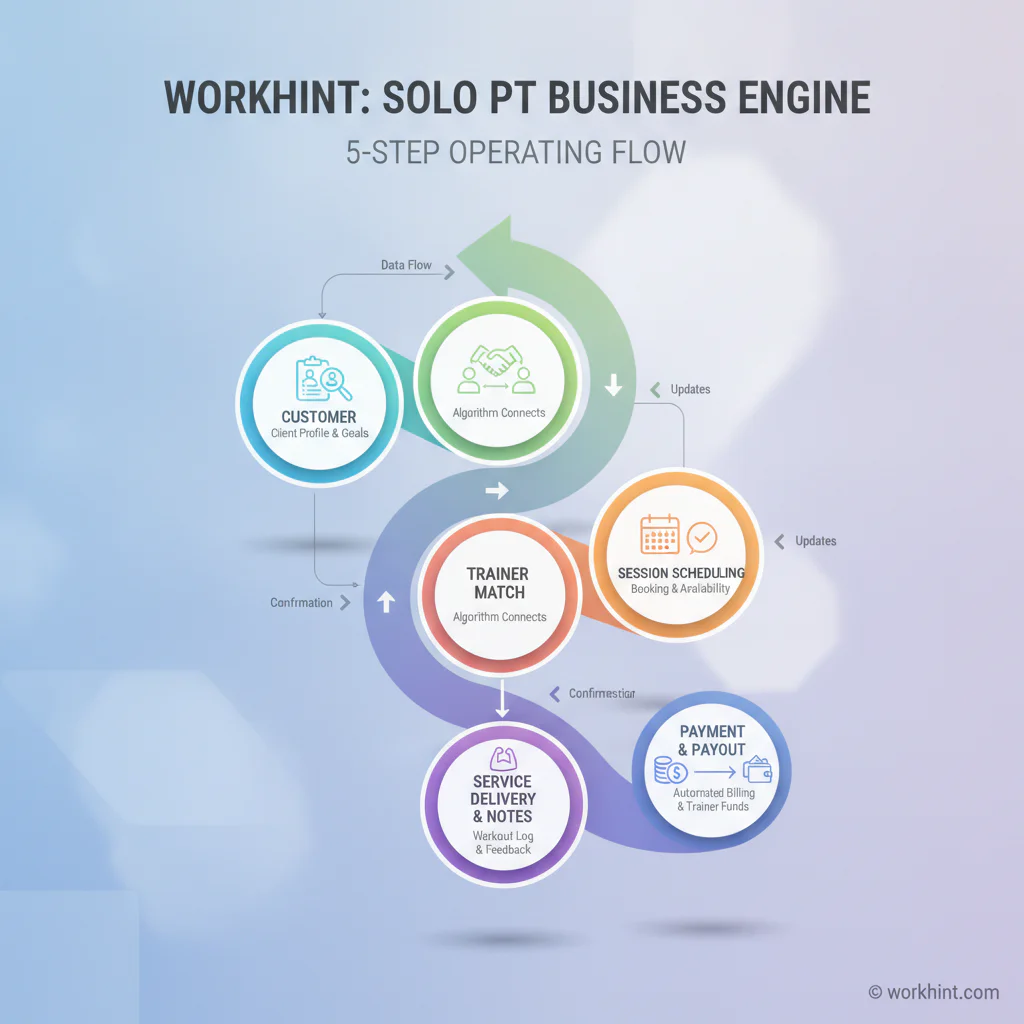
Workhint can help you launch the personal training business as a branded operating platform before you invest in a gym, custom software, or a full-time team. The customer sees your brand, your domain, your intake form, your package options, and your booking experience from the first request.
A customer can request beginner strength training, complete a health and goal intake, choose preferred times, review a package, approve the quote, and pay online. Behind the scenes, you can invite independent trainers, collect certifications and CPR/AED proof, review specialties, set service areas, manage availability, assign sessions, track completion notes, collect client feedback, and handle trainer payouts.
That operating foundation matters because personal training quality depends on consistency. Workhint gives the business one place for client requests, trainer matching, calendars, intake forms, waivers, session checklists, package renewals, invoices, payments, payouts, reviews, and reporting. You can start with one niche and one market, then add trainers, specialties, and locations once demand is visible.
First 7-Day Launch Plan
- Day 1: Choose one customer segment, one training outcome, and one launch market. Avoid a broad fitness brand.
- Day 2: Set up the branded Workhint platform basics: customer intake, package request, trainer onboarding, and admin dashboard.
- Day 3: Create pricing, session rules, cancellation terms, trainer payout logic, and payment collection.
- Day 4: Recruit three to five qualified independent trainers or start with one certified founder-provider while building the network.
- Day 5: Contact apartment managers, coworking spaces, office teams, local communities, and referral partners.
- Day 6: Route every inquiry through the platform, schedule calls or assessments, and test the first package offer.
- Day 7: Review demand, trainer availability, pricing objections, and operational gaps before buying equipment or signing leases.
Final Launch Checklist
- Choose a focused personal training niche and first customer segment.
- Confirm certification, CPR/AED, insurance, waiver, and local business requirements.
- Create one clear starter package and one small-group or online option.
- Configure a branded customer request, intake, scheduling, payment, and follow-up flow.
- Recruit qualified independent trainers with clear standards and payout terms.
- Build trainer onboarding for credentials, specialties, availability, and service areas.
- Launch outreach to local partners and first customer communities.
- Validate demand before leasing a studio, hiring employees, or buying major equipment.
FAQ
How much does it cost to start a personal training business?
A lean personal training business can often start with a few hundred to a few thousand dollars, depending on certification, CPR/AED training, insurance, business registration, platform setup, marketing, and equipment needs. A studio-based model costs much more and should usually wait until demand is proven.
Do I need to be certified to start a personal training business?
Certification is strongly recommended and often required by gyms, partners, insurers, and customers. Well-known certification paths include NASM, ACE, ACSM, ISSA, and NSCA, along with CPR/AED training.
Can I start a personal training business with no employees?
Yes. You can start as a certified solo provider or build a private network of independent trainers. If you use contractors, get legal and tax guidance, use clear agreements, and avoid managing them like employees.
What insurance does a personal training business need?
Many personal trainers carry general liability and professional liability coverage. Depending on the model, you may also need coverage for equipment, employees, events, or rented spaces.
How should I price personal training sessions?
Price around the full business model: trainer payout, scheduling, customer support, cancellations, payment fees, taxes, insurance, marketing, and margin. Packages usually work better than single sessions for both revenue and client results.
How do I get my first personal training clients?
Start with one niche and one local channel. Apartment buildings, office teams, coworking spaces, referrals, community groups, local partnerships, and small-group pilots can produce early demand faster than broad social media posting.
Should I open a gym or studio first?
Usually no. Validate demand first through online coaching, client-home sessions, apartment gyms, outdoor sessions, partner spaces, or trainer-owned facilities. Invest in a studio only when booked demand justifies the fixed cost.
Conclusion
A personal training business does not need to start with employees, a lease, or a room full of equipment. Start with a focused offer, validate demand, build a qualified trainer network, and use Workhint as the branded operating foundation for requests, scheduling, payments, trainer onboarding, and service delivery. Once customers are buying and trainers can fulfill the work reliably, invest where the demand is already visible.
Leave a Reply