

Dryer vent cleaning is small enough to validate fast, but urgent enough that customers already understand the risk.
Learning how to start dryer vent cleaning with no staff is about packaging a safety-driven service and proving demand before buying more equipment than you need.
Lint builds up, airflow drops, drying takes longer, and fire risk increases. Homeowners, landlords, property managers, laundromats, and appliance repair companies all have reasons to care.
The mistake is treating this like a traditional field service company from day one. You do not need an office, payroll, a fleet, or a full air duct rig. Start with a branded customer platform, a clear intake process, and a few trained independent providers.
What’s in this article?
- Why dryer vent cleaning works as a startup idea
- What you need before taking first requests
- How to price first jobs
- How to get first customers without heavy ad spend
- How Workhint helps launch the platform
- A practical 7-day launch plan and final checklist
Why This Business Works
Dryer vent cleaning works because the customer problem is visible. Clothes take too long to dry. Laundry rooms feel hot. The dryer shuts off. Customers need no education campaign.
Search demand is practical. People search for dryer vent cleaning near me, dryer vent cleaning cost, how often to clean a dryer vent, and whether to hire a professional. A local startup can sell around safety, convenience, and appliance performance.
The business can expand through recurring and partner channels. Property managers need repeated service across units. Appliance repair companies see dryer problems that are really airflow problems. Realtors and home inspectors can refer sellers or buyers before closings.
A no-staff launch does not mean doing everything alone forever. It means the first version can coordinate independent providers, subcontractors, or trained local service partners while you validate pricing, demand, quality, and routes.
What You Need To Launch
Start with the operating model before the equipment list. The first version needs a way for customers to request service, answer intake questions, receive a quote, schedule a visit, approve the work, pay online, and leave a review. It also needs a way to assign jobs and track completion.
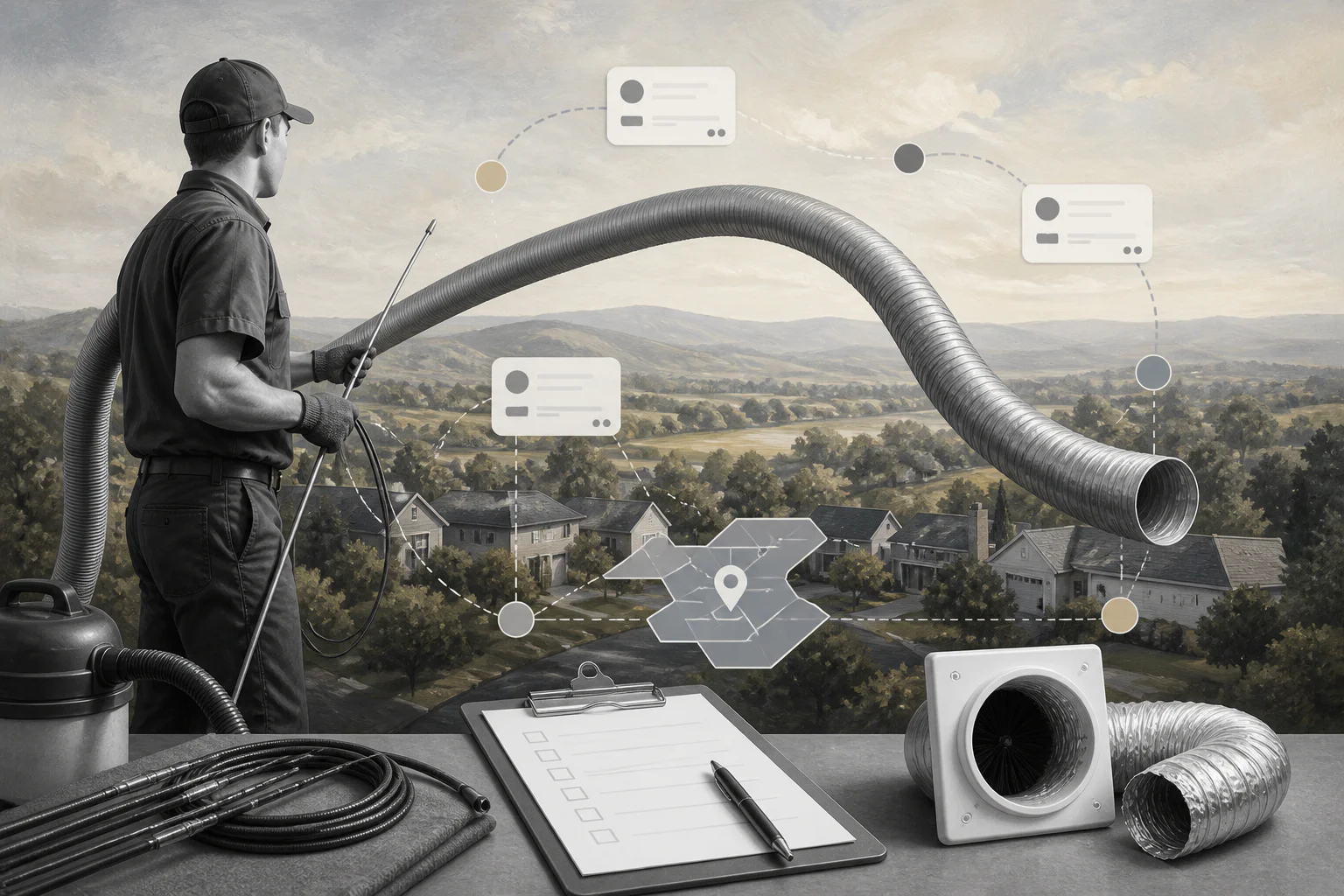
Equipment can stay lean. A basic setup usually includes rotary brushes and rods, a vacuum, drill or driver, inspection tools, safety supplies, ladder access when appropriate, and transportation. For roof vents, long runs, or commercial properties, use qualified providers.
Licensing rules vary by location, so check city, county, and state requirements before launch. Many markets require a general business license and insurance rather than a special dryer vent license.
| Launch Item | Lean Starting Range | Why It Matters |
|---|---|---|
| Business registration and local permits | $100 to $500 | Creates a legal operating base. |
| Insurance | $400 to $1,200 to start | Helps win property accounts. |
| Basic tools or provider-owned tools | $300 to $2,500 | Validates demand without overbuying. |
| Branded platform and intake process | $200 to $1,000 | Handles requests, approvals, and payment. |
| Local marketing | $250 to $1,500 | Funds search, flyers, partners, and first ads. |
The goal is to look trustworthy, respond quickly, and deliver the first jobs cleanly enough to earn reviews and referrals.
How To Price It
Pricing depends on vent length, access, building type, roof access, travel time, and whether the job includes inspection, booster fan cleaning, bird guard cleaning, or minor repairs. A simple residential offer is easiest to sell first.
Use flat packages where possible. Customers do not want a confusing quote for a small safety service. Providers need enough detail to judge job difficulty.
| Offer | Example Price | Best For |
|---|---|---|
| Standard single dryer vent cleaning | $99 to $179 | Simple residential vents with easy access. |
| Inspection plus cleaning | $149 to $249 | Homes with slow drying, unknown vent length, or safety concerns. |
| Multifamily unit package | $75 to $140 per unit | Property managers booking several units at once. |
| Partner referral job | Standard price minus referral fee | Appliance repair, HVAC, real estate, and inspection partners. |
Keep the first offer narrow. Add air duct cleaning, vent repairs, pest guards, or commercial maintenance only after customers prove they want more than a basic dryer vent service.
How To Get First Customers
The first customers usually come from local intent and referrals, not broad advertising. Set up a Google Business Profile, build a simple service page, collect reviews quickly, and make booking easy.
Then build partner channels. Contact appliance repair companies, property managers, real estate agents, home inspectors, laundromats, and HVAC companies that do not want small dryer vent jobs.
Local community groups can work if the message is specific. Lead with signs a vent may need cleaning, what an appointment includes, and how fast customers can book.
How Workhint Helps Launch It
Workhint helps you launch the dryer vent cleaning business as a branded operating platform, not a loose collection of forms, spreadsheets, texts, and payment links.
A customer can request service through your branded portal, answer intake questions about location and access, choose preferred times, and receive a quote. Your internal dashboard can route the request to an approved provider based on location, availability, equipment, and job type.
Once the job is accepted, Workhint can coordinate scheduling, reminders, provider checklists, before-and-after photos, completion notes, invoices, online payment, reviews, and contractor payout. For property managers, the same system can handle multiple units.
This matters because the hard part is making the business feel reliable before you have a large team. Workhint gives you the customer portal, provider onboarding, scheduling, approvals, payments, and dashboard early, so you can focus on demand and provider quality first.
First 7-Day Launch Plan
- Day 1: Choose one launch market, one customer type, and one core offer.
- Day 2: Set up the branded Workhint customer portal, service request form, and basic customer dashboard.
- Day 3: Build the quote, scheduling, provider assignment, job checklist, payment, and payout process.
- Day 4: Recruit two to five qualified independent providers or service partners and collect insurance, service area, equipment, and availability details.
- Day 5: Contact appliance repair shops, property managers, real estate agents, home inspectors, and local groups.
- Day 6: Route every lead through the platform, test response time, and book first appointments only where provider coverage is ready.
- Day 7: Review demand, conversion rate, provider quality, pricing, and objections before spending more money.
The right outcome after seven days is evidence: who wants the service, which channels respond, which providers are reliable, and what pricing holds up.
Final Launch Checklist
- Choose the service area and first customer segment.
- Register the business and check local licensing rules.
- Get appropriate insurance before taking paid jobs.
- Create one simple dryer vent cleaning offer.
- Configure the branded Workhint intake, quote, scheduling, payment, and payout flow.
- Recruit qualified independent providers or service partners.
- Create provider checklists for inspection, cleaning, photos, and completion notes.
- Validate demand before buying expensive equipment or vehicles.
FAQ
How much does it cost to start dryer vent cleaning?
A lean launch can start with a few hundred to a few thousand dollars if providers bring some equipment. Costs rise when you buy tools, insurance, marketing, and vehicle setup upfront.
Do I need a license to clean dryer vents?
Requirements depend on location. Many areas start with a general business license and insurance, but some clients may have additional rules.
Can I start a dryer vent cleaning business with no staff?
Yes, if you build the business around independent providers or service partners and use a platform to manage intake, scheduling, job completion, payments, and provider payouts.
How much should I charge for dryer vent cleaning?
Many simple residential jobs fall around $99 to $179. Inspections, roof vents, multifamily accounts, or added services can support higher pricing.
Is dryer vent cleaning profitable?
It can be profitable because the service is narrow, equipment needs can be modest, and jobs are local. Profit depends on lead cost, payout, travel time, and repeat volume.
Who are the best first customers?
Homeowners are the easiest starting point, but property managers, appliance repair companies, home inspectors, agents, and laundromats can create repeat channels.
Conclusion
Dryer vent cleaning is a strong startup candidate because the customer problem is specific, local, and easy to understand. Do not build the full company before demand exists.
Start with a branded platform, a focused offer, a small provider network, and a disciplined way to handle requests, scheduling, payments, proof, and payouts. Use the first week to validate demand. Invest more only after customers and providers prove the model works.
Leave a Reply