

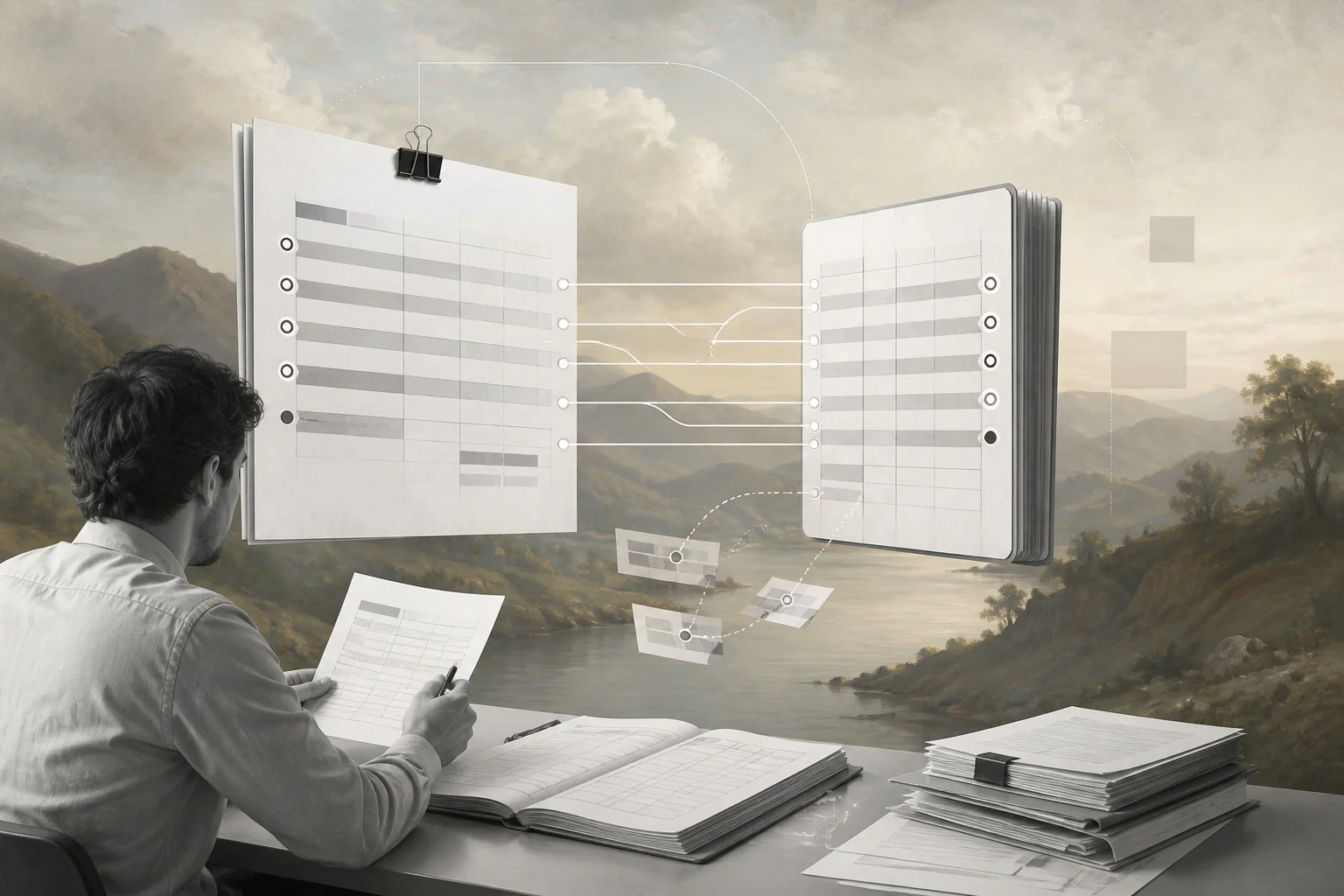
Supplier statements are one of the simplest ways to find AP errors before they become payment or close problems.
Supplier statement reconciliation is the process of comparing a supplier’s statement of account against the company’s accounts payable records. For AP teams, it is not just bookkeeping hygiene. It is a control that catches missing invoices, duplicate payments, unapplied credits, timing differences, incorrect balances, and supplier disputes before a payment run or month-end close locks in the wrong number.
The concept is straightforward: the supplier says, “Here is what you owe us,” and finance checks whether that view matches the AP ledger. ACCA describes supplier reconciliations as a way to maintain accurate records for individual suppliers, while guides from Sage, BILL, and FiscalTec all frame reconciliation around matching supplier or vendor records to internal AP evidence. The practical challenge is building a repeatable workflow that does not depend on one analyst’s inbox and memory.
What’s in this article?
- What supplier statement reconciliation means in accounts payable.
- Which suppliers should be reconciled monthly.
- The documents and data AP needs before matching starts.
- A workflow for finding, routing, and resolving discrepancies.
- Common mistakes that weaken close controls.
- Where automation and Workhint fit into the process.
Why supplier statement reconciliation matters
AP teams often reconcile the general ledger, aging report, payment records, and bank activity. Supplier statement reconciliation adds an outside view. It asks whether the supplier’s records agree with the company’s records at the vendor level.
That matters because AP errors do not always appear as dramatic fraud cases. More often, they show up as a missing credit note, a payment posted to the wrong invoice, a duplicate invoice still sitting open, an old debit memo, a price dispute, a tax amount mismatch, or a supplier statement that includes an invoice AP never received. If those differences are not cleared, finance can overstate payables, delay valid payments, lose supplier trust, or enter the close with unexplained balances.
For high-volume vendors, strategic suppliers, staffing firms, logistics providers, marketplaces, agencies, and contractors paid through vendor-style workflows, supplier statements also help AP prioritize follow-up. A reconciled account gives finance confidence that the next payment run is releasing the right amount to the right party.
Supplier statement reconciliation workflow
A practical supplier statement reconciliation workflow should be simple enough to repeat every month and strict enough to support audit review. Use this operating model:
- Select the suppliers to reconcile. Start with high-spend suppliers, high-volume suppliers, vendors with frequent credits, vendors with disputes, critical operational suppliers, and any supplier with aged balances. Not every small vendor needs monthly reconciliation.
- Collect the supplier statement. Request a current statement showing opening balance, invoices, credit notes, payments, adjustments, and closing balance for the period.
- Export AP records. Pull the supplier ledger, open invoice report, payment history, credit memo records, purchase order or receipt evidence when relevant, and the AP aging detail.
- Check the opening balance. If the starting balance does not match the prior reconciled ending balance, resolve that first. Otherwise every later match becomes harder to trust.
- Match invoices and credits line by line. Compare invoice number, date, amount, currency, tax, credit notes, and payment application. Mark matched items clearly.
- Classify every difference. Separate timing differences from real exceptions. Timing differences include payments sent after the supplier statement date or invoices received after AP export. Real exceptions include missing invoices, duplicate records, unapplied credits, pricing disputes, tax mismatches, and payment posting errors.
- Route exceptions to the right owner. AP can clear posting issues. Procurement or operations may need to confirm receipt, scope, or pricing. The supplier may need to resend invoices, correct credits, or explain statement items.
- Decide payment treatment. If a discrepancy affects the amount due, put the disputed item on hold while clean items continue through normal payment approval. Avoid freezing the entire supplier account unless risk is material.
- Store reconciliation evidence. Keep the supplier statement, AP export, match notes, exception log, supplier replies, approvals, and final balance conclusion together.
Discrepancy types and what to do
| Difference | Likely cause | AP action |
|---|---|---|
| Invoice on supplier statement but not in AP | Invoice lost, sent to wrong inbox, or not approved | Request invoice copy, validate receipt, then enter or dispute |
| Invoice in AP but not on statement | Supplier statement timing or supplier posting issue | Confirm statement date and ask supplier to verify account |
| Credit note missing in AP | Credit issued by supplier but not recorded internally | Obtain credit memo and apply before payment |
| Payment shown by AP but not supplier | Payment not received, misapplied, or sent after statement date | Share remittance detail and trace payment if needed |
| Amount mismatch | Tax, freight, discount, FX, or pricing difference | Route to procurement, tax, or supplier contact for resolution |
How often should AP reconcile supplier statements?
Monthly is the right cadence for strategic, high-volume, or high-risk suppliers. Quarterly can be enough for stable vendors with low activity. Reconcile immediately when a supplier disputes a balance, threatens a hold, changes bank details, sends an unusually large statement, or appears in the AP aging report with old unresolved items.
The cadence should follow risk, not habit. A staffing company paying hundreds of workers through a supplier, a logistics operation with weekly carrier invoices, or a marketplace managing large provider payouts needs tighter reconciliation than a company buying occasional office supplies.
Common mistakes to avoid
- Reconciling only at year-end. Old discrepancies are harder to investigate because emails, approvers, receipts, and supplier contacts change.
- Treating timing differences as solved. Timing explains the difference; it does not prove the item cleared later.
- Ignoring credits. Unapplied credits can lead to overpayment and weak supplier balance reporting.
- Freezing clean payments because one item is disputed. Segment disputed items from approved items when possible.
- Keeping evidence in personal spreadsheets. Reconciliation work should be visible, reviewable, and attached to the supplier record.
Where Workhint fits
Workhint helps teams turn supplier statement reconciliation into a live finance workflow instead of a month-end scramble across inboxes and spreadsheets. A finance team can structure supplier statement intake, AP record exports, owner assignments, exception routing, supplier follow-up, approval evidence, payment hold decisions, and reconciliation status in one operational system.
That matters when reconciliation involves more than AP. Procurement may own pricing, operations may confirm delivery, finance may own payment treatment, and the supplier may need to resend documents. Workhint gives each role a clear step, keeps records connected, and makes the reconciliation trail easier to review later.
FAQ
What is supplier statement reconciliation?
Supplier statement reconciliation compares a supplier’s statement of account with the company’s AP ledger and supporting records. The goal is to confirm that invoices, credits, payments, adjustments, and balances match.
Is supplier statement reconciliation the same as accounts payable reconciliation?
It is one part of accounts payable reconciliation. General AP reconciliation may compare subledger totals, aging reports, bank payments, and the general ledger. Supplier statement reconciliation focuses on the vendor-level balance shown by the supplier.
Who should own supplier statement reconciliation?
Accounts payable should own the workflow, but procurement, operations, tax, finance leadership, and the supplier may own specific exceptions. Clear routing prevents AP from becoming the only place unresolved questions sit.
What should AP keep as evidence?
Keep the supplier statement, AP ledger export, invoice and credit matches, payment references, discrepancy notes, supplier communications, approvals, payment hold decisions, and the final reconciliation conclusion.
Conclusion
Supplier statement reconciliation gives AP teams a practical way to verify vendor balances before payment and close decisions become expensive to unwind. The strongest teams do not treat it as an occasional cleanup task. They choose suppliers by risk, reconcile against clear evidence, classify differences, route exceptions quickly, and keep the final record audit-ready. Once that workflow is clear, automation can reduce the manual work without weakening finance control.
Leave a Reply