

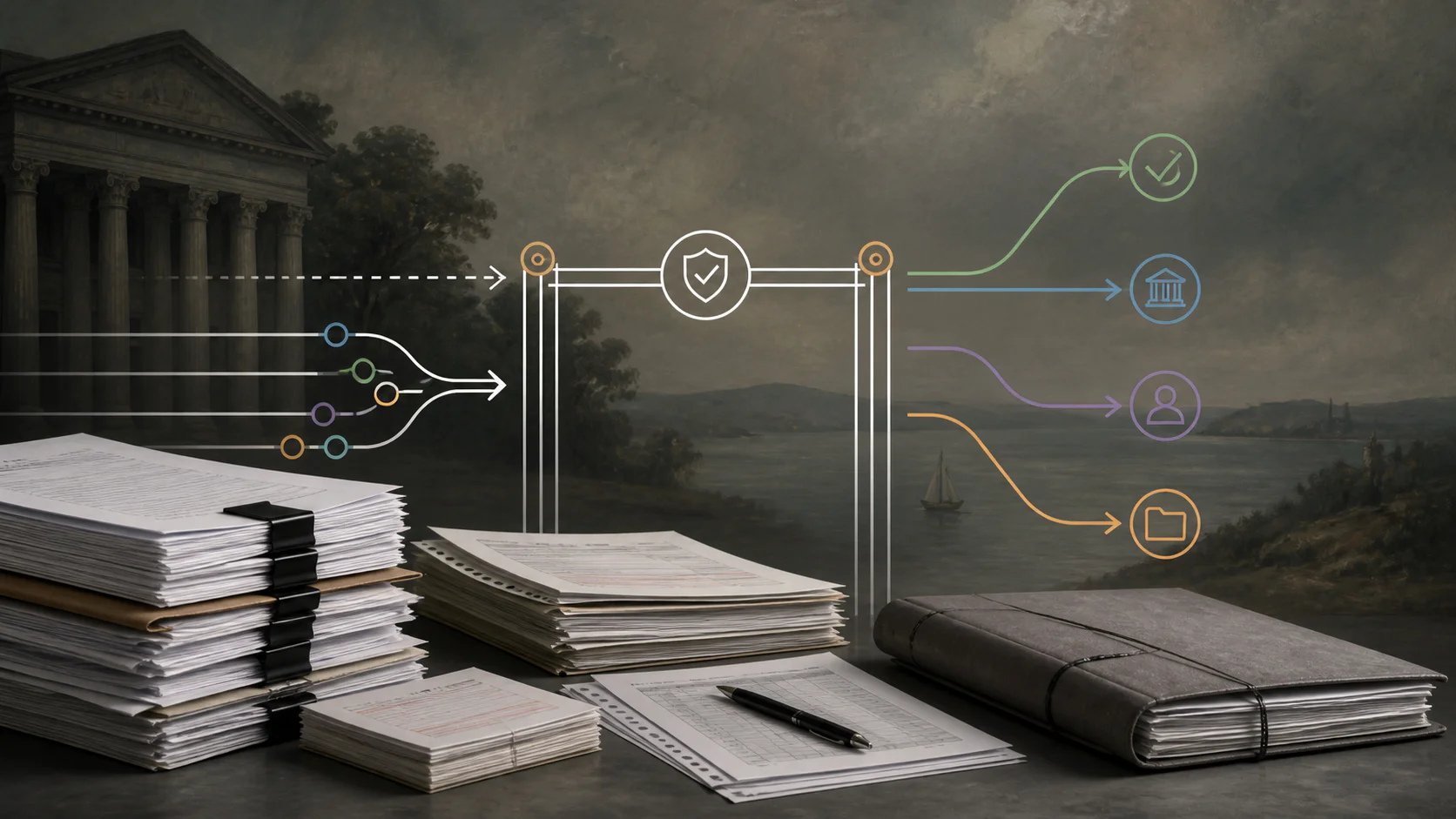
The 1099 reporting threshold 2026 changes the filing trigger, but payment controls still need to stay clean.
The 1099 reporting threshold 2026 update matters because many businesses pay contractors, freelancers, vendors, agencies, and service providers through the same accounts payable process. A higher threshold can reduce filing volume, but it can create false confidence if finance teams stop collecting W-9s, tracking payee totals, or reviewing exceptions before year-end.
This guide explains what changed, what finance teams should keep doing, and how to update the operating workflow around business payments. It is educational guidance, not tax or legal advice. Confirm filing decisions with a qualified tax advisor.
What’s in this article?
- The 2026 1099 reporting threshold in plain English.
- Which finance workflows need updating before filing season.
- Why W-9 collection and backup withholding controls still matter.
- A practical checklist for vendor and contractor payment teams.
- Common mistakes businesses should avoid.
1099 reporting threshold 2026 explained
The core change is simple: for tax years beginning after 2025, the IRS says the minimum threshold for reporting certain payments on certain information returns and for backup withholding on those payments increased from $600 to $2,000, with inflation adjustments beginning in calendar year 2027. The IRS explains this in Publication 1099 for 2026.
In operating terms, finance teams trained to treat $600 as the default annual trigger need to update reporting logic for 2026 payments. The first forms affected by 2026 payments are generally prepared and filed in early 2027. Earlier tax years still need to be handled under the rules that applied to those years.
The change does not mean every payment below $2,000 can be ignored. Finance still needs vendor records, payee classifications, payment history, tax forms, and exception notes. Some forms and payment types have separate rules. The threshold is a reporting rule, not a permission to run AP casually.
Why the question matters for finance teams
Most 1099 problems are not created in January. They are created when a vendor is onboarded without a tax form, when a contractor is paid through an off-system method, or when finance discovers too late that the same payee received payments through multiple workflows.
The IRS page on reporting payments to independent contractors reminds businesses that they may have to file Form 1099-NEC for payments made to independent contractors. That filing obligation depends on the facts, but the operational lesson is broader: businesses need enough payment and payee data to make the right decision.
A threshold increase can reduce forms for low-volume payees, but it does not reduce the need to know who was paid, why they were paid, which entity received the payment, and whether the payment belongs in a reportable category.
The workflow finance should update
Start by separating three controls: vendor setup, payment approval, and information reporting. They are connected, but they are not the same decision.
| Workflow stage | What to update for 2026 | Owner |
|---|---|---|
| Vendor or contractor setup | Require legal name, entity type, address, tax form, payment method, and internal owner before the first payment. | AP or finance operations |
| Payment coding | Use consistent categories for services, rent, legal fees, royalties, reimbursements, and nonreportable items. | Accounting |
| Threshold tracking | Track annual payee totals against the correct 2026 threshold and flag exceptions before year-end. | Controller or tax owner |
| Backup withholding review | Escalate missing or incorrect taxpayer information instead of approving payment silently. | AP manager |
| Year-end review | Reconcile vendor master data, payment totals, excluded payments, and form eligibility before filing. | Finance lead |
The threshold belongs in the reporting layer, but the data that supports reporting is created much earlier. If the vendor master is incomplete, the payment approval workflow is inconsistent, or card and platform payments are not reconciled, the threshold will not fix the control problem.
What should not change
Finance should still collect tax documentation before paying U.S. vendors and contractors. The IRS requester instructions for Form W-9 explain that a properly completed and signed W-9 can help a payer avoid backup withholding to a payee. Waiting until year-end creates avoidable friction because the vendor has already been paid and finance has less leverage to clean up missing data.
Payment approval thresholds should stay separate from tax reporting thresholds. A company might require manager approval above $500, department head approval above $5,000, and CFO approval above $25,000. Those internal controls should reflect spend risk, fraud exposure, budget impact, and operational urgency.
Finally, finance should keep tracking all payments, not only payments above $2,000. A vendor may cross the threshold later in the year, and a contractor may be paid through more than one department. The safest workflow keeps the complete payment trail visible.
Checklist for 2026 business payments
- Update AP and tax calendars so 2026 payment data is reviewed before early 2027 filing deadlines.
- Confirm which payment categories your business treats as potentially reportable.
- Keep W-9 collection in vendor onboarding instead of moving it to year-end cleanup.
- Review vendor records for missing TINs, name mismatches, outdated addresses, and duplicate vendor profiles.
- Track annual payee totals by legal entity, not only by invoice submitter or department.
- Document why a payment was excluded from reporting when the decision is not obvious.
- Separate IRS reporting thresholds from internal payment approval limits.
- Test accounting, AP, payroll, and contractor systems before filing season.
Common mistakes to avoid
The first mistake is treating the higher threshold as a reason to stop collecting W-9s. That creates cleanup work and can weaken backup withholding controls. The second mistake is applying the $2,000 figure to every 1099 situation without checking form-specific rules. IRS instructions for Forms 1099-MISC and 1099-NEC should be reviewed alongside your tax advisor’s guidance.
The third mistake is relying on one January spreadsheet. At scale, vendor and contractor payment data may live across AP software, cards, bank files, contractor platforms, procurement systems, and exception logs. Reconciliation should happen throughout the year.
The fourth mistake is forgetting operational ownership. Someone must own vendor setup. Someone must own tax form review. Someone must own payment exceptions. Someone must own the final reporting decision. Without named owners, the process depends on memory and inbox follow-up.
Where Workhint fits
Workhint helps finance and operations teams turn payment rules into a live workflow. A team can structure vendor intake, W-9 collection, payment approval, annual threshold tracking, exception routing, document storage, and reconciliation follow-up in one operating system.
The point is not to replace tax judgment. It is to make sure the right records, approvals, and exceptions reach the right people before deadline pressure starts.
FAQ
What is the 1099 reporting threshold for 2026?
For certain information returns and backup withholding situations, the IRS says the minimum threshold increased from $600 to $2,000 for tax years beginning after 2025, with inflation adjustments beginning in calendar year 2027. Check form-specific instructions before applying the rule.
Does the 2026 threshold mean I can stop collecting W-9s?
No. Finance teams should still collect W-9s during vendor or contractor onboarding. The form supports correct taxpayer identification, reporting decisions, and backup withholding controls.
Does the new threshold apply to 2025 payments?
No. The 2026 threshold applies to tax years beginning after 2025. Payments made in earlier years should be reviewed under the rules that applied to those years.
Should payment approval limits change because the 1099 threshold changed?
Not automatically. Internal approval limits should be based on spend risk, budget ownership, fraud exposure, and operational controls. Tax reporting thresholds are a separate policy layer.
Conclusion
The 2026 1099 reporting threshold change can reduce some filing work, but it should not reduce payment discipline. Finance teams should update reporting logic, keep W-9 collection early, track annual payee totals, and separate tax thresholds from internal approval controls. The strongest response is operational: make vendor and contractor payment data clean before filing season, not after.
Leave a Reply