


Timesheet approval should confirm billable work without turning every contractor relationship into a slow internal payroll process.
A contractor timesheet approval process is the workflow a team uses to review submitted hours, days, shifts, milestones, or service units before an independent contractor is cleared for invoicing or payment. It sounds administrative, but it is one of the most important control points in contractor operations.
When the process is loose, contractors wait for payment updates, managers approve work from memory, finance receives incomplete records, and operations has no clean view of what was delivered. When the process is too heavy, contractors get pulled into employee-style supervision that can create friction and classification concerns. The goal is a clear approval path that verifies outcomes, records exceptions, and keeps payment moving.
What’s in this article?
- How to separate work verification from employee-style time control
- A step-by-step approval workflow for teams
- A table of roles, records, and approval rules
- Where Workhint fits when the process needs to scale
Why contractor timesheet approval matters
Contractor timesheet approval matters because contractor work often sits between operations and finance. The manager knows whether work was done. The contractor knows what was submitted. Finance needs a record that explains what can be paid. Legal or HR may care whether the working arrangement still looks consistent with the contractor agreement.
For U.S. teams, tax and classification details should be handled carefully. The IRS explains Form W-9 as the form used to provide taxpayer identification information to the requester, and the IRS also notes that businesses may need to report payments to independent contractors using Form 1099-NEC when the rules apply. That does not make a timesheet a tax system, but it does mean payment records should be accurate, complete, and retrievable.
There is also a workforce-design issue. The U.S. Department of Labor’s employment relationship guidance discusses economic reality when distinguishing employees from independent contractors under the FLSA. Teams should get qualified advice for classification questions, but the operational lesson is practical: approve work against the agreement, scope, deliverables, or accepted service units rather than managing contractors like hourly employees unless that is appropriate for the engagement.
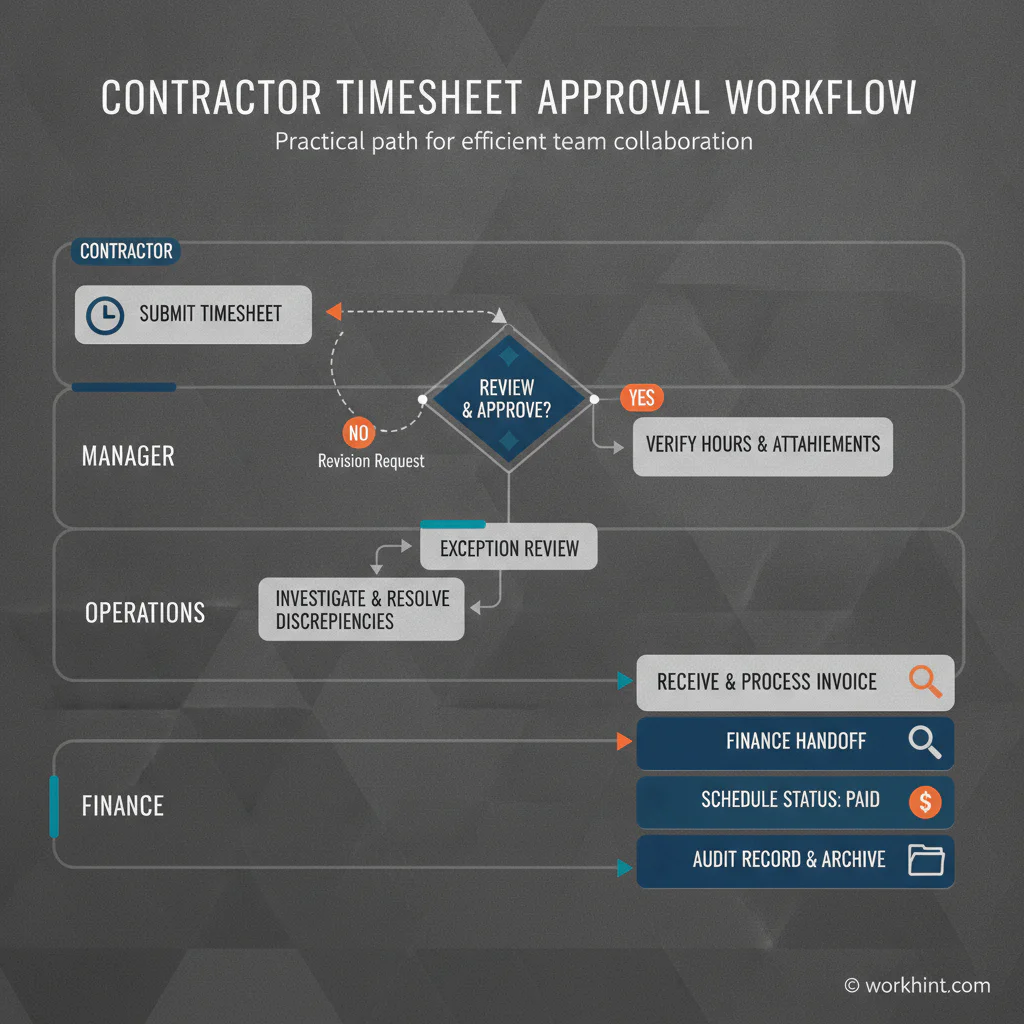
Contractor timesheet approval workflow
A useful workflow starts before the first timesheet is submitted. The agreement or statement of work should define what the contractor can bill for, how time or units should be recorded, what evidence is required, who approves the record, and when payment review begins.
- Define the payable unit. Decide whether the contractor submits hours, days, shifts, completed jobs, milestone progress, service units, or deliverables accepted.
- Set submission rules. Specify the deadline, required fields, project code, work summary, attachments, location if relevant, and invoice relationship.
- Route to the right reviewer. Send the timesheet to the manager, field supervisor, client lead, or operations owner who can verify the work.
- Check against scope. Confirm the submission matches the approved work order, assignment, budget, rate card, purchase order, or milestone plan.
- Handle exceptions quickly. Flag missing evidence, unapproved overtime, rate mismatches, duplicate entries, changed scope, or disputed work before finance review.
- Release to finance. Once approved, pass the clean record to invoicing, accounts payable, or contractor payment tooling with approval history attached.
- Keep an audit trail. Store the submitted record, approver, timestamp, exception notes, final decision, and payment status.
This workflow should be simple enough that contractors can follow it without chasing internal teams.
Approval roles and records
The best contractor timesheet process is clear about ownership. Nobody should wonder who approves, who resolves questions, or who tells finance the record is ready.
| Step | Primary owner | Record needed | Approval rule |
|---|---|---|---|
| Submission | Contractor | Hours, units, milestone, work summary, project code, supporting evidence | Submitted by deadline with required fields complete |
| Work verification | Manager or operations owner | Assignment, work order, acceptance notes, delivery evidence | Work matches approved scope and expected output |
| Exception review | Operations, finance, or contract owner | Rate mismatch, disputed time, missing approval, scope change, duplicate entry | Exception is resolved before payment release |
| Finance handoff | Finance or accounts payable | Approved timesheet, invoice, vendor record, tax documentation, payment terms | Record is complete enough to schedule payment |
| Audit record | Operations system owner | Submission, approval, timestamps, notes, payment status | History can be reviewed later without reconstructing emails |
What to include in each submission
Keep the required fields tight. A contractor timesheet should collect enough information to approve the work, but not so much that every submission becomes a form-filling exercise.
- Contractor name and vendor record: identify the person or supplier submitting the work.
- Project, client, location, or assignment: connect the submission to the approved scope.
- Payable unit: capture hours, shifts, tasks, service visits, milestones, or deliverables.
- Work summary: require a short description of what was completed.
- Evidence: attach delivery notes, job photos, ticket numbers, client signoff, file links, or milestone acceptance when needed.
- Rate and payment terms: show the expected rate, currency, invoice requirement, and payment schedule.
- Approver and decision: record approved, rejected, returned for correction, or escalated.
Common mistakes
The first mistake is approving from memory. Managers often remember that work happened, but finance needs a record. Approval should be tied to the assignment, work order, milestone, or accepted output.
The second mistake is allowing exceptions to travel with the invoice. If a rate, scope, or evidence question is unresolved, finance becomes the dispute desk. Resolve issues before the payment handoff.
The third mistake is giving too many people approval authority. If every project stakeholder can approve time, duplicate approvals and inconsistent standards follow. Name one primary approver and one escalation owner.
The fourth mistake is ignoring access controls. Timesheet systems may include contractor names, rates, client work, location data, or project evidence, so permissions and audit records should be deliberate.
Where Workhint fits
Workhint fits when contractor timesheet approval needs to become part of the operating system around external work. A team can define the contractor roles, payable units, required fields, approvers, exception rules, invoice handoff, payment status, reminders, and reporting in one connected workflow.
For example, a field operations team could let contractors submit service units with evidence, route the record to a regional manager, escalate missing documentation, hand approved records to finance, and show contractors whether payment is pending, approved, or paid. That keeps the process practical for contractors while giving the business visibility across work, approvals, and payment readiness.
FAQ
What is a contractor timesheet approval process?
It is the workflow for reviewing contractor-submitted time, shifts, service units, milestones, or deliverables before the work is cleared for invoicing or payment.
Who should approve contractor timesheets?
The approver should be the person who can verify the work against the approved scope. That is often a manager, field supervisor, client lead, project owner, or operations owner.
Should contractors submit hours or deliverables?
It depends on the engagement. Some contractors bill hourly or by shift. Others bill by milestone, project, service unit, or accepted deliverable. The approval process should match the agreement.
How do teams prevent payment delays?
Define submission deadlines, required evidence, approval owners, exception rules, and finance handoff requirements before work starts. Track status so contractors do not have to chase updates.
Is contractor timesheet approval a compliance process?
It can support compliance by keeping clear records, but it is not a substitute for legal, tax, or classification advice. Teams should review contractor arrangements with qualified advisors when risk is material.
Conclusion
A strong contractor timesheet approval process gives contractors a clear way to submit work and gives the business a clean way to verify, approve, dispute, and pay that work. The process should be specific, lightweight, and tied to the actual agreement.
Start with the payable unit, name the approver, require useful evidence, resolve exceptions before finance review, and keep the audit trail in the same place where the work is managed. That is how contractor payment becomes predictable without adding unnecessary bureaucracy.
Leave a Reply