

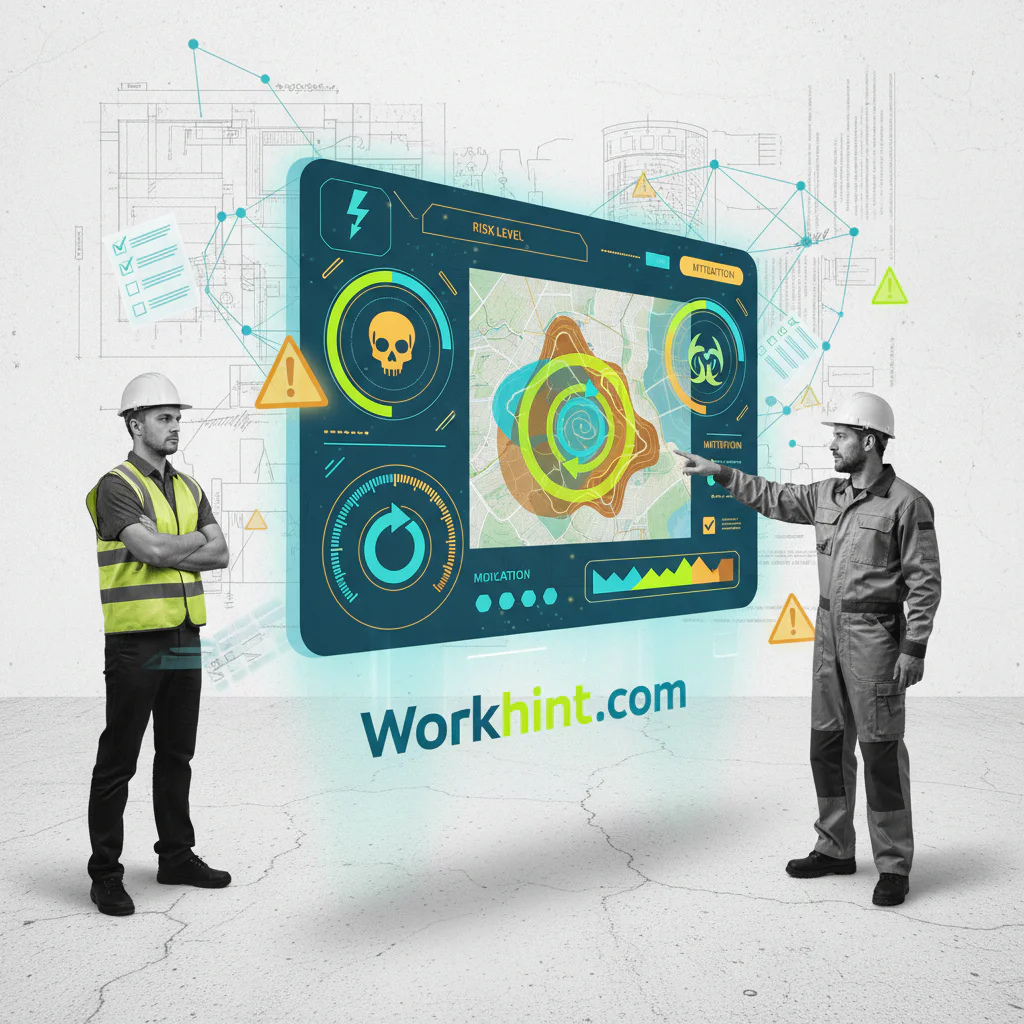
When conditions shift fast, you need clarity, not a checklist, to keep safety and compliance alive.
When the pace of change feels like a gust that knocks over a stack of paperwork, the feeling of being stuck in a loop of handoffs and unanswered emails becomes familiar. You have seen the same task bounce between teams, each waiting for the next piece of information, while the deadline slides further away. The problem is not the lack of tools; it is the invisible architecture of ownership that leaves people guessing who is responsible for the next step. In those moments the whole system sighs, and the work that should move forward stalls in a quiet way that few name out loud. Recognizing that the real friction lives in the way work is handed over and made visible can turn that sigh into a signal. Let us look at how a simple shift in perspective about coordination can make the whole process breathe easier.
Why dynamic risk assessment saves more than paperwork
A dynamic risk assessment is not a substitute for a form it is a living conversation that follows the work as it moves. When a site changes temperature a piece of equipment shifts or a new subcontractor arrives the risk picture shifts too. The benefit is a reduction in surprise incidents and a smoother path to compliance because decisions are made with the latest facts. Companies like Heresafe illustrate how real time data feeds into safety dashboards, turning a static list of hazards into a pulse that beats with the project. This approach also frees teams from the endless cycle of revisiting old documents; the assessment evolves as the work evolves, keeping everyone aligned and confident that the next step is safe.
What most teams get wrong about ownership
The common error is to assume that assigning a name to a task automatically creates clarity. In practice the handoff point becomes a fog of “who knows what” and the work stalls. Safety Management Group points out that true ownership is a shared contract that defines the trigger, the decision point and the communication channel. When the trigger is a change in environment the person who sees the change must have the authority to update the assessment and the duty to inform the next stakeholder. This loop removes the silent waiting period that slows progress. A simple checklist of who does what at each stage replaces ambiguity with a visible chain of responsibility.
How to embed real time hazard spotting into daily flow
Embedding hazard spotting starts with making it part of the routine rather than a special event. Workers on the floor can use mobile devices to capture a photo, add a brief note and tag the location. The entry then appears on a shared board where the safety lead can approve or adjust the risk level. Bodytrak shows a model where the capture tool integrates with the project schedule so that any shift in timing automatically prompts a review of the associated hazards. The process looks like this: 1. Spot a change. 2. Record the observation. 3. Notify the responsible lead. 4. Update the assessment. 5. Communicate the new plan. When each step is a single click the habit forms quickly and the assessment stays current without adding paperwork.
When the system grows how to keep the signal clear
Scaling a dynamic risk assessment across many crews or sites can drown the signal in noise if the structure does not adapt. The key is to tier the assessment so that high level summaries roll up from detailed local inputs. Each site maintains its own live view while a central dashboard aggregates trends, flagging patterns that require a broader response. This hierarchy preserves the granularity needed for on site decisions and the overview needed for corporate compliance. Automation can route alerts when a hazard repeats across locations, prompting a review of standard procedures. By keeping the flow of information layered yet connected the system grows without losing the clarity that makes it effective.
Ownership gaps and stalled execution
The article highlighted how an invisible handoff point leaves teams guessing who should act next, causing work to pause and visibility to drop. When coordination is handled through ad‑hoc emails or spreadsheets, the responsibility chain is not recorded in a single place, so any change can slip through unnoticed. Because the system that holds ownership information is informal, updates depend on memory and personal initiative, which naturally creates delays and mis‑alignment. A centralized work system replaces that fragile web with a shared ledger of tasks, roles, and status that all participants can view in real time. By anchoring handoffs to a common platform, the structural cause of the bottleneck disappears and execution can continue without the quiet stall that the article described. Workhint, for example, is one such centralized work system that embodies this approach, illustrating why these platforms are built to keep work flowing.
At the beginning we asked how a team can move from a stagnant loop of handoffs to a clear signal of safety. The journey shows that the answer is not a longer form or a fancier tool, but a simple contract of who sees a change, who can adjust the assessment, and who tells the next person. When that contract is visible, the sigh of the system turns into a breath of confidence. The insight that stays with you is that ownership is a conversation, not a name on a chart. Carry that conversation into every shift, and the work will keep flowing even as conditions change. Let the next change you notice become the moment you speak, update, and move forward.
Leave a Reply