

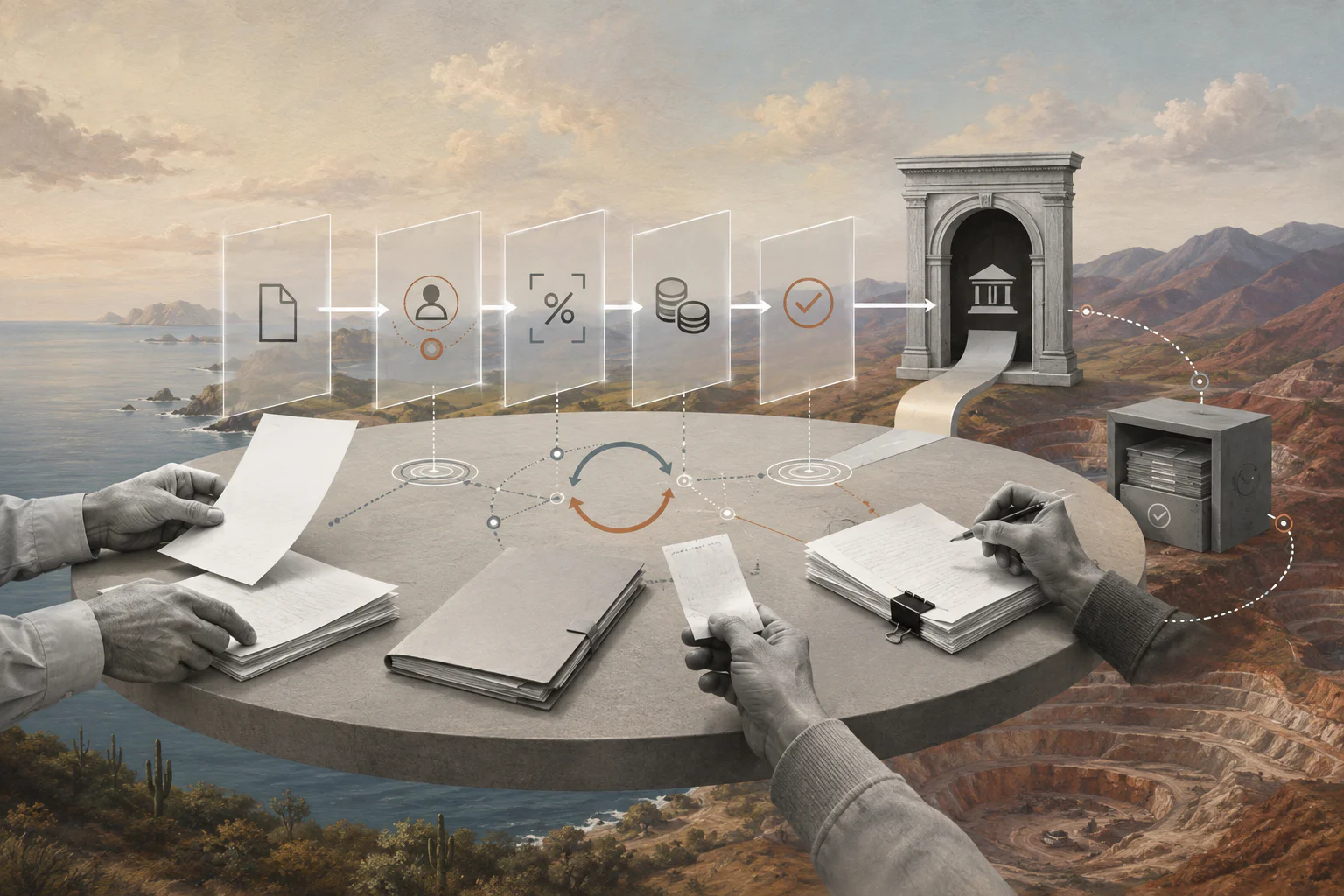
Paying Chilean contractors is straightforward when finance treats it as a documented payment workflow, not a one-off transfer.
If your company is hiring independent talent in Chile, the question is not only which rail can move money. The better question is how to pay contractors in Chile while keeping classification, invoice review, withholding awareness, foreign tax documents, currency decisions, approvals, and payment evidence in one clean process.
Chile has a mature electronic tax-document environment, and many independent professionals work through boletas de honorarios or business invoices. For a foreign company, the practical challenge is building a repeatable accounts payable workflow around that local context.
What’s in this article?
- Which payment methods usually work for Chilean contractors
- What documents finance should collect before payment
- How boletas de honorarios and 2026 withholding affect the workflow
- How to choose between CLP, USD, wires, and payment platforms
- A practical checklist for approvals, payment release, and reconciliation
Why paying contractors in Chile needs a workflow
For a simple domestic vendor, accounts payable may only need an invoice, approval, and bank details. Chilean contractor payments add more variables: local tax documents, possible Chilean peso exposure, international transfer timing, contractor classification, and different records depending on whether the contractor is an individual professional or an incorporated service provider.
The risk is usually operational before it is legal. A team pays from chat approval, stores the invoice in email, loses the exchange-rate record, and later cannot prove why payment was released.
Chile contractor payment workflow
Use this sequence before sending funds to a Chile-based independent contractor.
- Confirm the engagement model. The contract should describe services, deliverables, milestones, payment terms, currency, tax responsibility, and ownership. Avoid salary-like payment language.
- Collect contractor records. Capture legal name, tax ID or local registration details when applicable, address, payment account information, and a signed services agreement.
- Collect foreign tax documentation. For US payers, an individual foreign contractor commonly provides Form W-8BEN to certify foreign status to the payer.
- Validate the invoice or boleta. Chilean professionals may issue a boleta de honorarios, while companies may issue electronic invoices or other DTE documents.
- Check withholding responsibility. SII guidance states that the 2026 withholding rate for boletas de honorarios is 15.25%. Whether your company must withhold depends on payment structure, local presence, contractor status, and document type.
- Approve the work and amount. Match the invoice to the contract, milestone, purchase order, or manager approval. Payment should not move until the business owner and finance owner agree that the work is payable.
- Release payment through the selected rail. Use the method that balances cost, speed, currency support, and documentation quality.
- Store the audit packet. Keep the agreement, tax form, invoice or boleta, approval trail, FX rate, payment receipt, and reconciliation record together.
Payment methods for Chilean contractors
Most companies choose direct bank transfer, international wire, or a global payment platform. The right option depends on volume, currency, contractor preference, fees, and documentation needs.
| Method | Best for | Watchouts |
|---|---|---|
| Local bank transfer | Companies with a Chilean banking setup or local entity | Requires local banking operations and clear internal controls |
| International wire | Occasional high-value payments where bank proof matters | Higher fees, slower settlement, intermediary-bank deductions, and manual reconciliation |
| Global payment platform | Recurring contractor payments across countries | Compare FX markup, contractor payout options, document storage, and approval controls |
If you pay one Chilean contractor once, a wire may be enough. If you pay contractors across several markets every month, a structured contractor payment platform becomes easier to justify because payment status, approvals, invoices, and reconciliation need to live together.
Currency and FX decisions
Do not treat currency as a minor detail. A contractor may quote in Chilean pesos, US dollars, or another agreed currency. Finance should decide who carries FX movement, which rate source applies, how fees are handled, and what amount counts as full settlement.
For recurring work, put those rules in the agreement. For milestone projects, include currency and payment timing in the statement of work. That prevents disputes when a transfer arrives short because of intermediary-bank fees or a rate moved between approval and settlement.
Boletas, invoices, and tax records
The most important local document concept for individual professionals is the boleta de honorarios. SII explains that 2026 withholding on these fee receipts is 15.25% and publishes a gradual schedule through 2028. For companies issuing electronic invoices, finance teams should expect structured digital records rather than informal PDFs alone.
A foreign payer should not guess its Chilean withholding obligation from a generic article. Build a checklist that asks who issued the document, what type it is, who handles withholding or monthly tax payment, and what evidence should be retained.
Approval and reconciliation checklist
- Signed contractor agreement or statement of work is on file.
- Contractor classification was reviewed before onboarding.
- W-8BEN or other required foreign tax documentation is stored when relevant.
- Invoice, boleta, or electronic tax document matches the contractor name and payment account.
- Milestone, hours, deliverable, or service period has been approved by the business owner.
- Currency, FX rate, transfer fee treatment, and net payment amount are documented.
- Payment receipt is matched back to the approved invoice.
- Any exception, short payment, failed transfer, or duplicate invoice is logged.
Common mistakes
The first mistake is paying before classification and document review are complete. The second is treating the payment receipt as the whole record. It proves funds moved, but not that the contractor, amount, and tax document were approved.
The third mistake is letting country-specific knowledge live with one operations manager. If that person leaves, finance inherits a brittle process. Keep the Chile payment workflow in a shared system with named owners, required fields, and approval steps.
Where Workhint fits
Workhint helps operational teams turn contractor payment rules into a live workflow: intake, document collection, agreement status, invoice submission, approval routing, exception handling, payout status, and finance reporting. For Chilean contractors, finance can track the agreement, boleta or invoice, tax records, FX decision, payment approval, and reconciliation evidence in one operating process.
FAQ
Can a US company pay contractors in Chile?
Yes, a US company can generally pay an independent contractor in Chile, but it should confirm the contractor relationship, collect the right tax documentation, agree on payment terms, and keep clear records. For legal or tax-sensitive details, use local counsel or a qualified advisor.
What is the best way to pay contractors in Chile?
For occasional payments, an international wire may work. For recurring contractor payments, a global payment platform or contractor payment platform is usually better because it can centralize invoices, approvals, payment status, FX records, and reconciliation.
What is a boleta de honorarios?
A boleta de honorarios is a Chilean fee receipt commonly used by independent professionals. It matters because it can affect withholding and monthly tax-payment responsibilities, so finance should identify the document type before payment.
Should contractors in Chile be paid in CLP or USD?
Either can work if the agreement is clear. The contract should define the currency, FX rate source, fee treatment, and whether the contractor or company carries exchange-rate movement.
Conclusion
The safest way to pay contractors in Chile is to design a repeatable finance workflow before the first invoice arrives. Confirm the contractor model, collect tax records, validate the invoice or boleta, make a clear currency decision, approve the payable amount, send funds through the right rail, and store the audit packet. That process protects the contractor relationship and gives finance the evidence it needs when payments scale.
Leave a Reply