

A mobile pet grooming business can start as a booking platform and provider network before you buy a van.
How to start a mobile pet grooming business is a practical question because demand is visible, customers value convenience, and the first version can be tested without building a traditional salon.
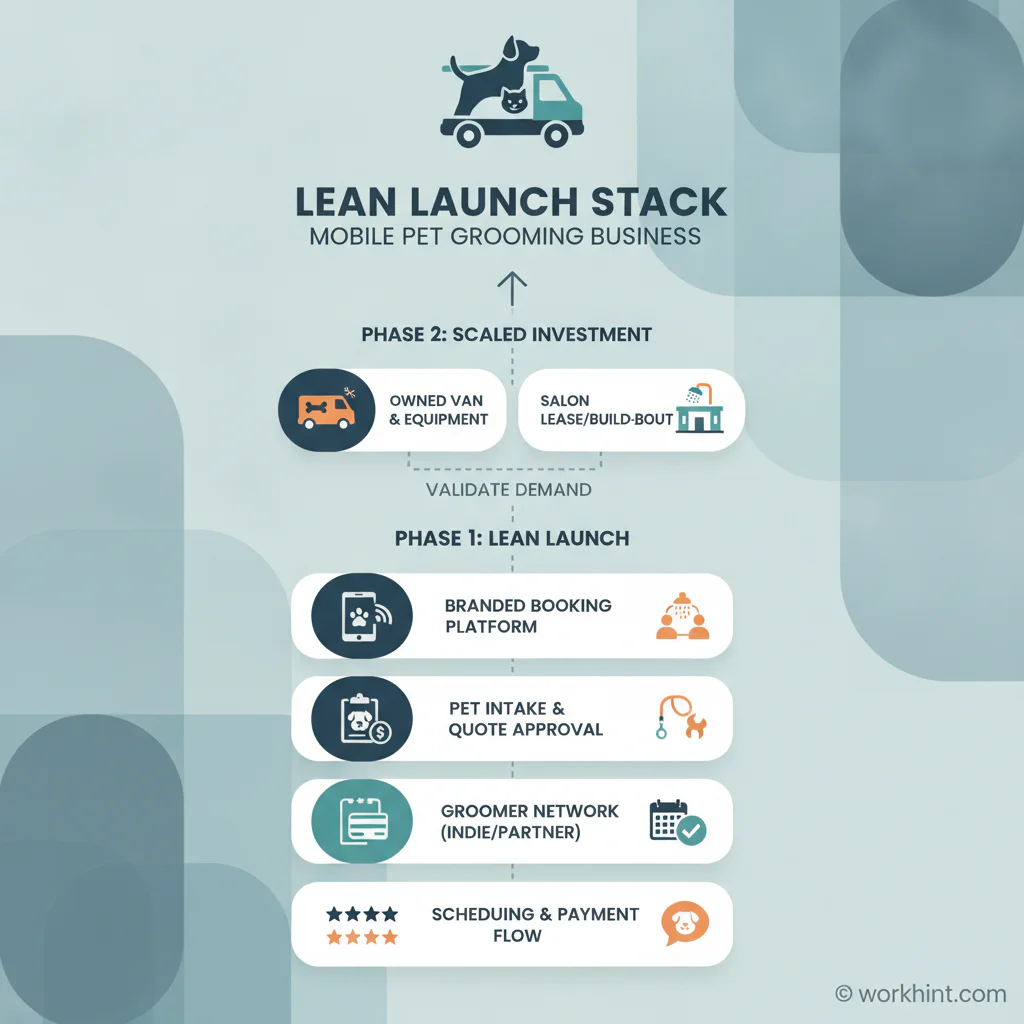
The lean model is not to buy vehicles, hire groomers, and hope demand appears. Start by creating a branded booking platform, recruiting qualified independent groomers or grooming partners, selling a focused first offer, and routing requests through a repeatable operating system.
What’s in this article?
- Why mobile pet grooming is attractive
- What you need to launch without overinvesting
- How to price grooming services
- How to get first customers
- How Workhint helps launch the business platform
- A 7-day launch plan, checklist, and FAQ
Why this business works
Mobile grooming works because pet owners buy convenience, trust, and less stress for the animal. Instead of driving to a salon, waiting, and coordinating pickup, the customer can request grooming at home or through a nearby partner location.
Current search results show strong reader intent around mobile pet grooming startup costs, dog grooming pricing, equipment, licensing, insurance, and whether the business is profitable. Top guides commonly explain vans, grooming tools, legal setup, pricing, and marketing. The missing piece is how to validate demand and coordinate providers before the founder takes on heavy vehicle and payroll costs.
The first offer should be narrow: bath and brush, nail trim, puppy grooming, senior pet grooming, or breed-specific maintenance in one launch area. A narrow service is easier to sell, schedule, and assign to the right provider.
What you need to launch
The first version needs a brand, a booking flow, basic service packages, provider onboarding, insurance review, local licensing checks, customer communication, payment collection, and a reliable fulfillment process.
Licensing rules vary by city and state. Some areas may require a general business license, mobile business permit, animal care rules, sanitation standards, zoning compliance, or commercial vehicle requirements if you operate your own unit. Check local rules before taking bookings.
| Launch item | Lean first version | Typical early budget |
|---|---|---|
| Business setup | Registration, basic bookkeeping, service terms, provider agreement review | $150 to $900 |
| Branded platform | Booking, intake, scheduling, payments, provider onboarding, reviews | $0 to $500 to configure |
| Insurance and compliance | General liability, animal care coverage, local permit checks | $400 to $1,500 |
| Provider network | Independent groomers, partner salons, mobile groomers with equipment | $100 to $600 for recruiting |
| Customer acquisition | Local landing page, neighborhood outreach, pet business partnerships | $200 to $1,000 |
A van, trailer, salon lease, and full grooming setup can come later. If your launch model uses independent groomers or partner providers with their own equipment, your first investment goes into demand validation, trust, and coordination.
How to price it
Pricing depends on pet size, coat condition, breed, location, travel time, and service depth. Mobile grooming usually commands a premium because it saves the customer time and reduces logistics.
| Offer | Customer price | Provider payout | Best use |
|---|---|---|---|
| Bath and brush | $60 to $120 | $40 to $80 | Simple first booking and repeat visits |
| Full groom | $90 to $180 | $60 to $120 | Breed maintenance and higher-value work |
| Nail trim route | $25 to $50 | $15 to $30 | Fast neighborhood route validation |
| Monthly care plan | $120 to $250 per month | Per completed visit | Recurring revenue and predictable schedules |
Start with three packages, a travel zone, clear add-ons, and a policy for matted coats or anxious pets. Track booking conversion, provider acceptance, job duration, customer reviews, and repeat requests before buying assets.
How to get first customers
The strongest early channels are local trust channels. Contact apartment managers, dog walkers, trainers, pet stores, veterinarians, rescue groups, neighborhood associations, senior communities, and busy professional groups.
Make the offer concrete. “Mobile nail trims in Northwest Austin this Saturday” is easier to test than “premium pet care.” Every campaign should send customers to a branded intake form where they choose pet type, breed, size, coat condition, service, address, schedule, and special handling notes.
How Workhint helps launch a mobile pet grooming platform
Workhint helps you launch the business as a branded operating system instead of a pile of forms, texts, calendars, payment links, and spreadsheets.
A customer can request grooming through your branded portal, enter pet details, upload coat photos, select a service package, approve a quote, and pay online. Inside the operations dashboard, you can review the request, match it to an independent groomer or partner provider, confirm availability, schedule the visit, send reminders, collect completion notes and photos, request a review, and trigger the provider payout.
For providers, Workhint can manage invitations, onboarding documents, certifications, service areas, availability, assignments, mobile job checklists, customer notes, payout status, and performance reporting. That lets you prove demand with a private provider network before you invest in owned vans, employees, or a custom booking app. When grooming demand spreads across locations, service marketplace software can manage customer bookings, groomer onboarding, service zones, availability, visit records, and payment flows.
First 7-day launch plan
- Day 1: Choose the launch area, customer segment, and first offer. Avoid serving every pet and every neighborhood at once.
- Day 2: Set up the branded Workhint platform basics: customer portal, intake form, service packages, and admin view.
- Day 3: Configure quote approval, scheduling, payment collection, provider assignment, completion notes, reviews, and payout tracking.
- Day 4: Recruit three to five qualified independent groomers or partner providers with equipment, experience, and service-area availability.
- Day 5: Launch outreach to local pet communities, apartments, trainers, pet stores, and neighborhood groups with one focused offer.
- Day 6: Route inquiries through the platform, confirm provider fit, and book first grooming requests or route days.
- Day 7: Review demand, margins, provider readiness, customer feedback, and operational gaps before spending on vehicles or equipment.
Final launch checklist
- Choose one launch area and one first grooming offer
- Check business registration, insurance, sanitation, and local mobile service rules
- Create branded booking, quote, schedule, payment, and review flows
- Recruit independent groomers or partner providers with clear standards
- Define service packages, add-ons, travel zones, and pet safety policies
- Publish one local landing page and one referral message
- Book first customers through the platform
- Validate demand before buying vans, leasing space, or hiring employees
FAQ
How much does it cost to start a mobile pet grooming business?
A traditional mobile grooming business with a fully equipped van can cost much more than a lean platform-first launch. A lean launch may start with business setup, insurance, provider recruitment, local marketing, and a branded booking platform while independent providers supply the grooming capacity.
Do I need a license to start a mobile pet grooming business?
You may need a business license, local mobile vendor approval, insurance, sanitation compliance, or animal care permits depending on your location. Requirements vary, so check city, county, and state rules before accepting customers.
Can I start without buying a grooming van?
Yes, if you structure the first version around independent groomers, mobile grooming partners, or limited route-based services. Buying a van can wait until demand, margins, and repeat bookings justify the investment.
How much should mobile pet grooming cost?
Many mobile grooming services charge premium prices because they save time and travel for the customer. Your price should reflect pet size, coat condition, service complexity, travel time, provider payout, and local competition.
How do mobile pet grooming businesses get customers?
Early customers usually come from local SEO, neighborhood groups, apartments, pet stores, trainers, veterinarians, dog walkers, rescues, and referrals from happy pet owners.
Is mobile pet grooming profitable?
It can be profitable when routes are efficient, pricing covers provider payouts and travel time, customers rebook, and the business avoids heavy fixed costs before demand is proven.
Conclusion
A mobile pet grooming business is strongest when you launch it as a focused service platform, not an expensive vehicle purchase. Validate one local offer, build a small network of capable providers, route every request through a branded operating system, and invest in owned assets only after real demand is visible.
Leave a Reply