

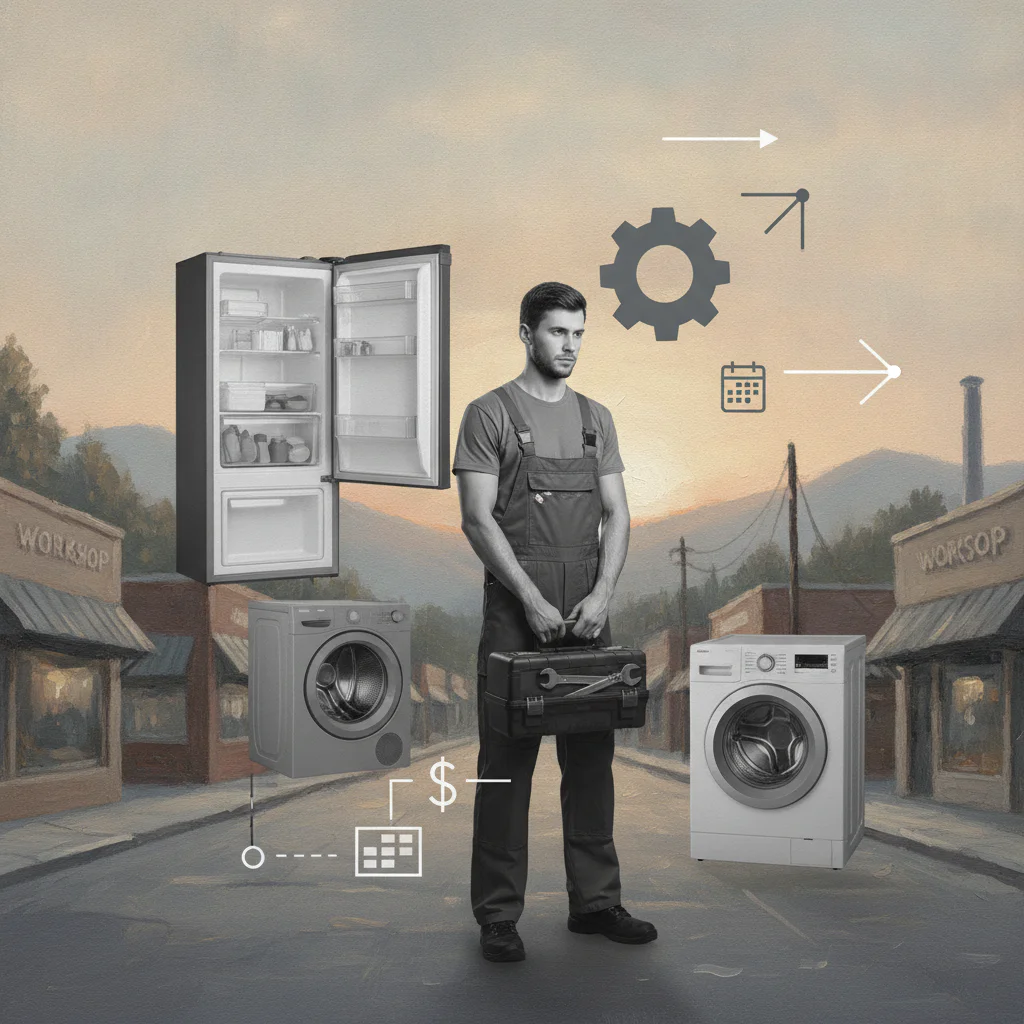
You can validate appliance repair demand before buying a van, stocking parts, or hiring technicians.
If you want to know how to start an appliance repair business, the low-risk path is not to copy the traditional owner-technician model. Start by building a branded intake and scheduling platform, then recruit qualified independent appliance repair technicians who can fulfill jobs as demand proves itself.
Appliance repair works because customers need help quickly, replacement costs are high, and many local markets still rely on phone calls and loose scheduling. A platform-first model lets you sell the service and coordinate providers before investing in heavy assets.
What’s in this article?
- Why appliance repair can work as a low-overhead service business
- What you need before accepting the first customer request
- How to price common appliance repair jobs
- How to find first customers and independent repair providers
- How Workhint helps launch the operating platform
- A practical 7-day launch plan and final checklist
Why This Business Works
Appliance repair has clear demand because refrigerators, washers, dryers, ovens, and dishwashers are not optional for most households. When one breaks, the customer usually wants a fast diagnosis, a clear quote, and a reliable appointment.
The business is attractive because the first version does not have to own trucks, inventory, or a repair shop. You can begin as the branded coordination layer: customers request service, you qualify the job, and independent technicians accept work that matches their skills and availability.
Customers buy convenience and trust. Providers join because you bring jobs, handle intake, reduce scheduling friction, and make payment predictable. Your job is to make customers feel they are dealing with one reliable local brand.
What You Need To Launch
The lean version of an appliance repair business needs an operating system before it needs a fleet. Start with a narrow offer, such as diagnostic visits for refrigerators, washers, dryers, dishwashers, and ovens in one city or service area.
You also need registration, insurance, customer terms, technician qualification rules, and a way to collect model numbers, symptoms, photos, availability, addresses, approvals, and payments. Licensing requirements vary by state and city, especially for electrical, gas, or warranty work, so verify local rules before assigning jobs.
| Launch item | Lean startup range | Why it matters |
|---|---|---|
| Business registration and local checks | $100 to $800 | Creates the legal base and helps you confirm local repair rules. |
| Insurance | $600 to $2,000 | Protects against job-site damage, customer claims, and provider risk. |
| Branded platform and website | $300 to $1,500 | Lets customers request service and lets you coordinate jobs professionally. |
| Provider onboarding and screening | $100 to $700 | Helps verify skills, service area, documents, and availability. |
| Local marketing tests | $300 to $1,500 | Validates demand before buying vehicles, tools, or inventory. |
| Owned tools, van, or parts inventory | $0 at launch | Delay until job volume proves the investment is justified. |
If you personally repair appliances, tools and diagnostic equipment may become essential. If you are launching as a platform-led operator, the first constraint is not tools. It is reliable demand, qualified providers, and a clean customer-to-technician workflow.
How To Price It
Appliance repair pricing usually combines a diagnostic visit fee with repair labor and parts. A simple model is easier to sell: charge a diagnostic fee, credit part of it toward approved repair work, and set minimum labor pricing by appliance type or job complexity.
| Offer | Example customer price | Provider payout logic |
|---|---|---|
| Diagnostic visit | $79 to $149 | Fixed payout per completed diagnosis. |
| Dryer or washer repair | $150 to $400 plus parts | Provider receives an agreed labor share after completion. |
| Dishwasher or oven repair | $175 to $450 plus parts | Payout varies by complexity and return visit needs. |
| Refrigerator repair | $200 to $500 plus parts | Higher labor share for specialized work and urgency. |
| Property manager maintenance plan | Monthly minimum plus per-job pricing | Creates recurring account revenue for repeat jobs. |
Do not try to win by being the cheapest. Win by being easier to book, clearer about approvals, faster to communicate with, and more reliable after the appointment.
How To Get First Customers
Your first customers should come from channels where appliance problems already create urgency. Start with property managers, small landlords, real estate agents, local Facebook groups, neighborhood apps, senior communities, and Google Business Profile.
Offer a focused promise: fast appliance diagnosis in a defined service area. Ask early customers for reviews, photos, and permission to use before-and-after service notes. Build trust around response time, transparent pricing, and technician quality.
Partnerships can work faster than ads. Property managers and landlords need repeat appliance repair help, but they care about documentation, appointment windows, invoice clarity, and tenant communication. Those are operational problems a platform-first business can solve from day one.
How Workhint Helps Launch It
Workhint helps you create the branded operating platform before you invest in custom software, office staff, or owned vehicles. The customer sees your brand, submits the appliance type, issue, model number, photos, address, and preferred times, then receives updates through a customer portal.
Behind the scenes, Workhint routes each request to the right independent technician based on service area, appliance category, availability, documents, and rating. The technician can accept the job, follow a mobile checklist, upload findings, request quote approval, record parts needs, and mark the visit complete.
The owner can manage provider onboarding, scheduling, communication, quote approvals, invoices, payments, contractor payouts, reviews, and reporting in one place. The company can operate like a real appliance repair brand while staying lean enough to validate demand before buying vans or inventory.
First 7-Day Launch Plan
- Day 1: Choose one city, five appliance categories, and a simple diagnostic offer.
- Day 2: Set up the branded Workhint customer portal, intake form, and service request dashboard.
- Day 3: Configure pricing, quote approval, appointment scheduling, payment collection, and provider payout rules.
- Day 4: Recruit three to five independent appliance repair technicians or small repair partners.
- Day 5: Contact property managers, landlords, real estate agents, and neighborhood groups with the first offer.
- Day 6: Route every inquiry through the platform and track where customers drop off.
- Day 7: Review demand, provider response time, pricing, and job quality before spending more money.
The goal of the first week is proof: customers will request service, qualified providers will accept jobs, and the workflow can move from intake to payment.
Final Launch Checklist
- Pick a local service area and appliance categories.
- Register the business and check local repair, electrical, gas, and warranty rules.
- Get appropriate insurance before sending providers into homes.
- Create diagnostic pricing, repair quote rules, and cancellation terms.
- Configure the branded Workhint platform for intake, scheduling, approvals, payments, and payouts.
- Recruit and screen the first independent technicians.
- Launch a simple website and Google Business Profile.
- Contact property managers, landlords, and local referral partners.
- Validate demand before buying vehicles, tools, inventory, or office space.
FAQ
How much does it cost to start an appliance repair business?
A lean platform-first launch can often begin with registration, insurance, a branded operating platform, provider onboarding, and local marketing tests. If you personally perform repairs, tools and diagnostic equipment increase the startup budget.
Do I need a license to start an appliance repair business?
Licensing depends on your location and the type of work. Some areas regulate electrical, gas, warranty, or in-home repair work more strictly, so verify state, city, and trade rules before taking jobs.
Can I start an appliance repair business with no employees?
Yes, if you structure the company around a private network of qualified independent technicians. You still need clear contracts, insurance, quality standards, customer communication, and payout processes.
What appliances should I repair first?
Start with common household appliances that create urgent demand: refrigerators, washers, dryers, dishwashers, ovens, and ranges. Keep the first offer narrow enough to screen and route jobs accurately.
How do appliance repair businesses get customers?
Strong early channels include Google Business Profile, local SEO, property managers, landlords, real estate agents, neighborhood groups, and referral partnerships with home service companies.
Should I buy a van and parts inventory before launching?
Not unless you are personally performing repairs and already have proven demand. A platform-first model lets you validate requests and provider coverage before investing in owned assets.
Conclusion
An appliance repair business can start small if you focus on demand, provider quality, and operational control before assets. Build the branded platform, recruit qualified repair providers, sell a clear diagnostic offer, and let real customer demand show you where to invest next.
Leave a Reply