


You can launch a dog training business without leasing a facility or hiring trainers before demand is proven.
If you want to know how to start a dog training business, the old path is expensive: rent space, buy equipment, hire trainers, and hope clients show up. A leaner path starts with a focused offer, a customer platform, and qualified independent trainers while you validate demand.
This model works for obedience training, puppy foundations, in-home lessons, leash manners, and behavior coaching that does not require boarding. You sell the customer relationship and operating experience first. Invest into facilities, vehicles, and staff only after booking volume proves the market.
What’s in this article?
- Why a dog training business can work as a low-overhead service business
- What you need to launch before spending heavily
- How to price private lessons, packages, and group sessions
- How to find first customers and build trainer supply
- How Workhint can power the branded platform behind the business
Why This Business Works
Dog training has steady demand because owners search at high-intent moments: a new puppy arrives, a dog pulls on leash, barking becomes stressful, or a family needs better routines. Customers often pay for trusted help.
The best first version is narrow. Start with one clear package: puppy basics, private obedience, rescue-dog adjustment, or leash walking skills. A simple offer is easier to sell, route, and measure.
The provider-network model also makes sense. Many skilled trainers prefer flexible client work. Your job is to create the brand, intake process, standards, scheduling, communication, and payment system that makes independent trainers easier for customers to trust.
How to Start a Dog Training Business Leanly
You do not need a kennel, storefront, or training yard to test demand. You need a credible brand, legal setup, insurance, customer intake, qualified trainers, and a repeatable service process.
Licensing rules vary by city and state. Dog trainers generally do not need a universal professional license, but some areas require a business license or animal-related permit. Start mobile until you understand local rules.
| Startup item | Lean launch range | Notes |
|---|---|---|
| Business registration and local license | $50 to $400 | Depends on state, city, and entity choice. |
| Insurance | $400 to $1,200 per year | Prioritize general and professional liability coverage. |
| Brand, domain, and basic website | $100 to $600 | Start simple: niche, location, packages, and booking request. |
| Workhint platform setup | Variable | Use it to create intake, scheduling, provider onboarding, payments, and dashboards. |
| Trainer onboarding materials | $0 to $300 | Service standards, checklists, agreements, and evaluation forms. |
| Local marketing tests | $200 to $1,000 | Google profile, flyers, vet partnerships, social posts, and small paid tests. |
| Training gear | $100 to $500 | Keep this light if trainers bring their own approved tools. |
The avoid list matters: do not lease a training facility, build a boarding program, buy a van, or hire full-time trainers until you know which package sells and which neighborhoods produce repeat demand.
How To Price It
Dog training pricing depends on market, trainer experience, and format. Start with packages because they are easier for customers to understand and easier for trainers to deliver consistently.
| Offer | Example price | Best use |
|---|---|---|
| Single private session | $75 to $175 | Low-friction assessment or one urgent behavior issue. |
| Four-session puppy basics package | $350 to $700 | Clear starter offer for new dog owners. |
| Six-session obedience package | $600 to $1,200 | Core recurring package for steady revenue. |
| Small group class | $150 to $350 per dog | Useful after you have a venue partner and consistent demand. |
| Monthly support plan | $99 to $250 | Follow-up texts, progress plans, and trainer check-ins. |
Keep provider payouts clear. If a customer pays $700 for a four-session package, the trainer can receive a fixed per-session payout while the business keeps margin for marketing, support, insurance, payment processing, and quality control.
How To Get First Customers
Start where trigger events happen. Build referral relationships with vets, groomers, pet stores, rescues, apartment communities, dog walkers, and breeders. These partners meet owners who need training help.
Create a Google Business Profile, publish short training stories, and offer a simple assessment request on your site. Do not hide pricing completely. Customers want to know whether the service is a $100 conversation or a $2,000 commitment.
Your first goal is to prove that ten real owners in one local market will request help, accept your package, and complete sessions with good outcomes. That proof tells you which niche to scale.
How Workhint Helps Launch It
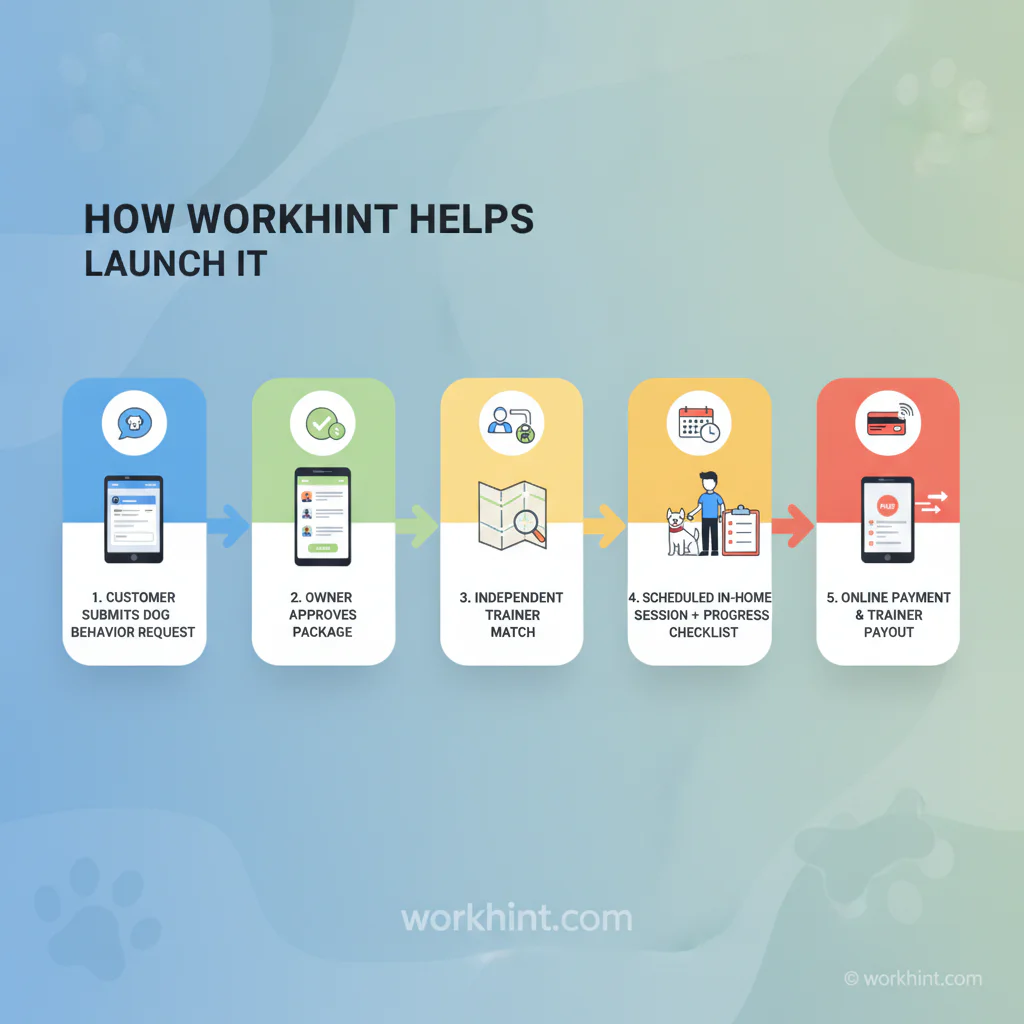
Workhint can become the branded operating platform for the dog training business before you invest in custom software or a large team. A customer lands on your branded portal, describes the dog, selects the issue, uploads basic details, chooses availability, and requests a quote or assessment.
Inside the same system, you invite independent trainers, collect experience notes, define service areas, set availability, and assign approved requests. The trainer receives the job details, uses a mobile checklist, records progress notes, and marks the visit complete.
The customer can approve the package, view sessions, receive reminders, pay online, and leave feedback. You can monitor trainer performance, route follow-ups, manage reschedules, collect payments, and trigger contractor payouts without stitching together forms, calendars, spreadsheets, and email threads.
This is the launch advantage: Workhint lets you sell a real branded service experience while keeping the business asset-light. Validate demand in one area, add trainers as volume grows, then expand by neighborhood or city.
First 7-Day Launch Plan
- Day 1: Choose one niche, one market, and one starter package. Puppy basics or private obedience is easier than complex behavior cases.
- Day 2: Create the brand basics and configure the Workhint customer request flow.
- Day 3: Build the quote, scheduling, payment, session checklist, review, and trainer payout process.
- Day 4: Recruit three to five qualified independent trainers or trainer partners.
- Day 5: Contact vets, groomers, rescues, apartment managers, and local pet groups.
- Day 6: Route every inquiry through the platform and book assessments or first sessions.
- Day 7: Review demand, trainer capacity, pricing, conversion rate, and customer concerns before spending more.
Final Launch Checklist
- Pick a specific dog training niche and local launch market.
- Register the business and check city or county animal-service rules.
- Buy appropriate liability insurance.
- Create one simple package and a clear starting price range.
- Set up a branded Workhint portal for intake, scheduling, payments, and trainer operations.
- Recruit qualified independent trainers with clear standards and agreements.
- Create session checklists, progress notes, customer reminders, and review requests.
- Test demand with local partners before leasing space or hiring employees.
FAQ
How much does it cost to start a dog training business?
A lean dog training business can often start with a few hundred to a few thousand dollars for registration, insurance, branding, platform setup, basic marketing, and trainer onboarding. Costs rise quickly if you lease a facility or offer boarding.
Do I need a license to start a dog training business?
There is no single national dog trainer license in the United States, but local business licenses, animal-service permits, insurance rules, and zoning requirements can apply. Check your city, county, and state before selling services.
Can I start a dog training business without being the trainer?
Yes, if you build the business as a branded service platform and partner with qualified independent trainers. You still need strong quality standards, customer support, trainer screening, insurance, and clear operating procedures.
What dog training service should I offer first?
Start with one focused, low-risk offer such as puppy basics, private obedience, leash manners, or new-dog transition support. Avoid complex aggression or board-and-train programs until you have the right specialists and risk controls.
How do dog trainers usually charge?
Common pricing models include single private sessions, multi-session packages, group classes, and monthly support plans. Packages are usually better for a new business because they create clearer outcomes and more predictable revenue.
How do I get my first dog training clients?
Start with referral partners: vets, groomers, rescues, pet stores, apartment communities, dog walkers, and breeders. Pair that with a Google Business Profile, local SEO pages, social proof, and a simple request form.
Conclusion
A dog training business does not have to start like a facility-based company. First, validate one package, build a trainer network, and give customers a branded way to request, schedule, pay for, and review training.
Once demand is proven, decide whether to add group classes, specialty trainers, venue partners, or owned facilities. Until then, keep the model lean and built around real customer demand.
Leave a Reply