

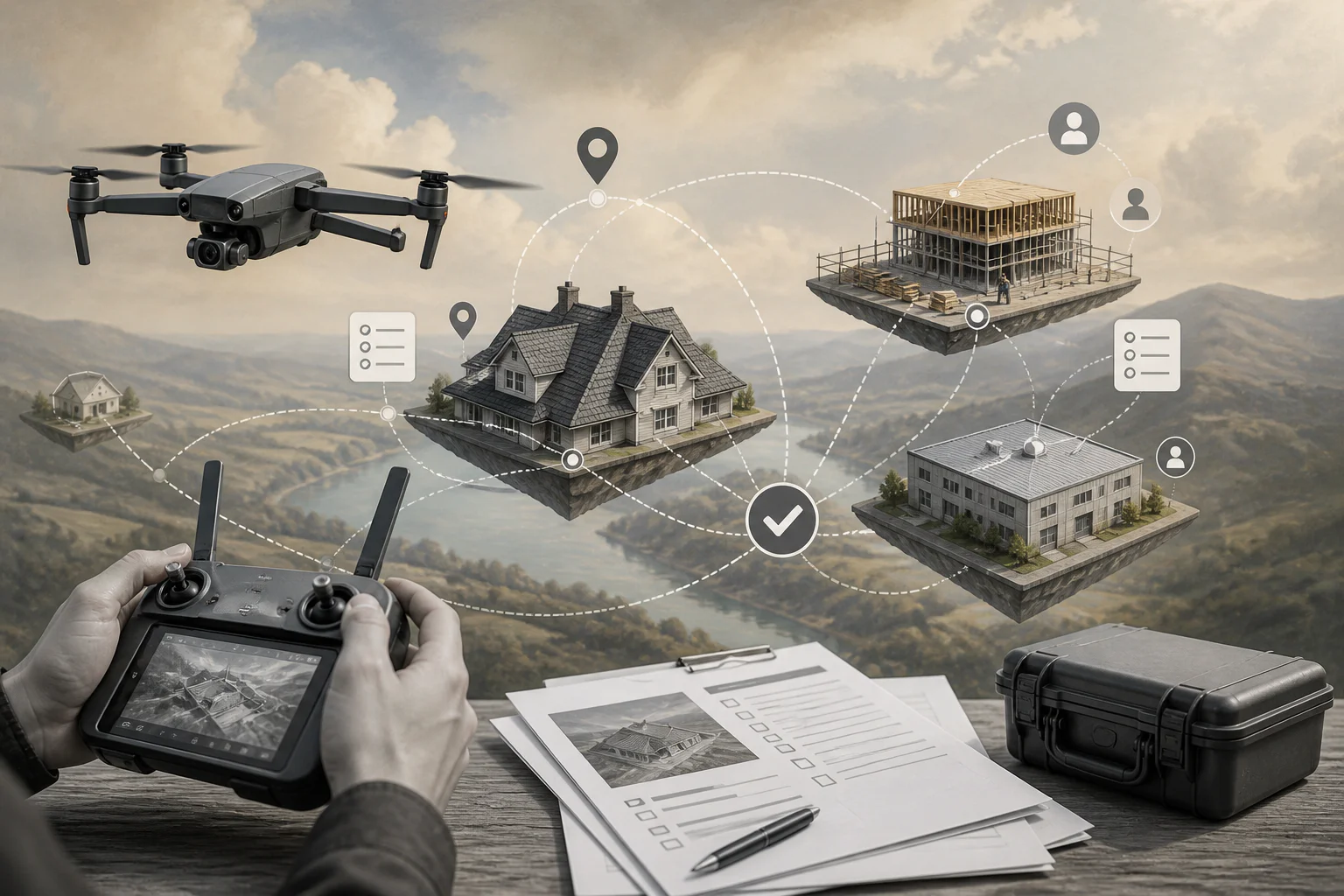
A drone inspection business can start as a certified pilot network before you buy expensive equipment or hire a team.
If you are researching how to start a drone inspection business, the best first move is not buying the most advanced drone you can find. The better path is to validate demand, choose a narrow niche, recruit certified independent pilots, and build a branded platform for requests, quotes, assignments, payments, and payouts.
Customers want faster, safer ways to inspect roofs, solar panels, construction sites, land, towers, and commercial properties. The opportunity is delivering useful evidence, not simply flying a drone.
What’s in this article?
- Why drone inspection works as a lean service business
- What you need before launching
- How to price inspection services
- How to get first customers
- How Workhint can become the operating platform for the business
- A 7-day launch plan, checklist, and FAQ
Why This Business Works
Drone inspection works because many inspections are slow, risky, expensive, or hard to document manually. Customers pay when the service produces clearer answers faster than the traditional process.
The business can start with low overhead if you avoid trying to own every asset on day one. Instead of buying enterprise drones, sensors, software, and vehicles immediately, define the first offer and build a network of FAA Part 107 certified pilots who already have suitable equipment.
Because demand is local and job-specific, a provider network lets you test which services customers book before committing capital to specialized hardware.
How To Start a Drone Inspection Business
Start with one category that has clear buyers and simple deliverables. Residential roof inspection, contractor progress photos, property manager exterior checks, or small commercial roof documentation are easier first offers than complex utility or industrial inspections.
Your first setup should include a branded customer platform, service request forms, quote rules, provider onboarding, pilot certification checks, insurance requirements, site permission workflows, safety checklists, deliverable review, customer payment, and pilot payout.
| Startup item | Lean launch range | Why it matters |
|---|---|---|
| Business registration and legal setup | $100 to $800 | Creates the business entity, bank account, agreements, and tax setup. |
| Insurance and basic risk review | $500 to $2,000 per year | Covers general liability, drone-related exposure, and customer requirements. |
| Branded Workhint platform | Start lean | Runs intake, quotes, assignments, checklists, deliverable review, payments, and payouts. |
| Pilot recruitment and verification | $0 to $1,000 | Finds certified independent pilots with the right equipment, availability, and coverage. |
| Marketing and local sales materials | $300 to $1,500 | Supports outreach to roofers, property managers, solar installers, insurers, and contractors. |
| Owned drone equipment | $0 to $3,000 initially | Optional at launch if provider partners already own suitable equipment. |
Avoid thermal cameras, mapping subscriptions, vehicles, or enterprise drones before you know which jobs sell. Let demand tell you which equipment is worth owning later.
How To Price It
Pricing should reflect inspection type, travel time, flight complexity, deliverable quality, risk, and turnaround time.
| Offer | Example customer price | Best use case |
|---|---|---|
| Residential roof photo inspection | $150 to $400 | Roofers, insurers, property owners, and real estate teams needing fast exterior evidence. |
| Small commercial roof inspection | $500 to $1,500 | Property managers and contractors needing structured photos or annotated findings. |
| Construction progress package | $300 to $800 per visit | Builders, owners, and lenders needing repeat documentation over time. |
| Solar or thermal inspection | $600 to $2,500+ | Solar owners and operators needing specialized equipment, trained pilots, and reports. |
For the first version, publish starting prices and quote the final job after reviewing the site, deliverables, travel distance, airspace, and turnaround time.
How To Get First Customers
The fastest early customers usually come from businesses that already need inspection evidence: roofing companies, public adjusters, property managers, solar installers, home inspectors, construction companies, real estate investors, restoration contractors, and facility managers.
Your first outreach should be practical. Offer a clear inspection package, sample deliverable, service area, turnaround time, and booking link. Customers care that the report helps them estimate repairs, document damage, monitor progress, or make a decision faster.
Build local search pages around intent such as drone roof inspection, drone property inspection, construction progress drone photos, and drone inspection near me. Track quote requests, booked jobs, reports, and repeat customers before expanding.
How Workhint Helps Launch It
Workhint can help you launch the drone inspection business as a branded operating platform instead of stitching together forms, spreadsheets, calendars, file folders, payment links, and manual pilot coordination.
A customer starts in your branded portal, chooses the inspection type, enters the property address, uploads notes, selects urgency, and requests a quote. Workhint routes the request based on service type, location, site access, airspace complexity, equipment, and deliverable format.
On the provider side, Workhint can onboard independent drone pilots, collect certification and insurance documents, track service areas, store equipment capabilities, manage availability, and assign jobs only to pilots who match the requirements. For a roof inspection, the pilot receives the address, safety checklist, required angles, access notes, upload steps, and completion checklist in one workflow.
After the flight, Workhint can route reports for review, notify the customer, collect payment, generate invoices, release pilot payouts, and track repeat accounts. You can validate demand before hiring staff or buying specialized drones, then add pilots, cities, and inspection categories.
First 7-Day Launch Plan
- Day 1: Choose the first inspection niche, buyer, and service area. Start with a simple offer such as roof photo inspections or construction progress documentation.
- Day 2: Create the branded Workhint portal with customer intake, property details, quote request fields, service options, and file upload requirements.
- Day 3: Build quote approval, scheduling, pilot assignment, checklist, deliverable upload, payment, and pilot payout workflows.
- Day 4: Recruit the first independent Part 107 certified pilots and verify equipment, insurance, availability, coverage area, and sample work.
- Day 5: Contact roofers, property managers, contractors, solar installers, adjusters, and investors with one clear package.
- Day 6: Route early quote requests through the platform and review the first deliverable format before selling harder jobs.
- Day 7: Review demand, pricing, pilot readiness, objections, and fulfillment quality before investing in owned equipment.
Final Launch Checklist
- Choose one inspection niche and one launch market.
- Register the business and set up banking, contracts, and insurance.
- Create the branded customer portal, intake flow, quote approval, scheduling, payment, and reporting process.
- Recruit certified independent drone pilots with the right coverage and equipment.
- Verify pilot certification, insurance, sample work, and safety process.
- Create one sample deliverable customers can understand quickly.
- Build a list of roofers, contractors, property managers, solar installers, and adjusters.
- Sell the first jobs before buying expensive drones or sensors.
- Track quote requests, booked jobs, profit per job, delivery time, and repeat customers.
FAQ
How much does it cost to start a drone inspection business?
A lean launch can often start with a few thousand dollars for business setup, insurance, marketing, provider recruitment, and a branded operating platform. Costs rise if you buy drones, sensors, software, vehicles, or hire pilots before proving demand.
Do I need FAA Part 107 certification?
Commercial drone operations in the United States generally require FAA Part 107 certification for the pilot. If you use independent pilots, verify certification, insurance, permissions, and procedures before assigning jobs.
Can I start without owning a drone?
Yes, if you structure the business as a branded inspection platform and work with qualified independent pilots who already own suitable equipment. You can buy your own equipment later once job volume and service type justify it.
What drone inspection niche should I start with?
Start with a niche that has clear buyers and simple deliverables. Roof inspections, property exterior checks, construction progress photos, and contractor documentation are usually easier than utility or industrial inspections.
How do drone inspection businesses get customers?
Begin with businesses that already need inspection evidence: roofers, property managers, public adjusters, construction firms, solar installers, real estate investors, and facility managers. Pair direct outreach with local SEO pages for inspection searches in your market.
What should I avoid buying at the beginning?
Avoid enterprise drones, thermal cameras, vehicles, office space, and annual software commitments until demand proves which inspection services sell.
Conclusion
A drone inspection business is a local evidence, coordination, and delivery business. Customers pay for safer inspections, clearer documentation, faster decisions, and reliable service.
The fastest path is to launch with a branded platform, a narrow offer, and a small network of certified pilots. Workhint gives you the operating foundation for requests, quotes, matching, scheduling, checklists, deliverables, payments, and payouts before you invest heavily.
Leave a Reply