

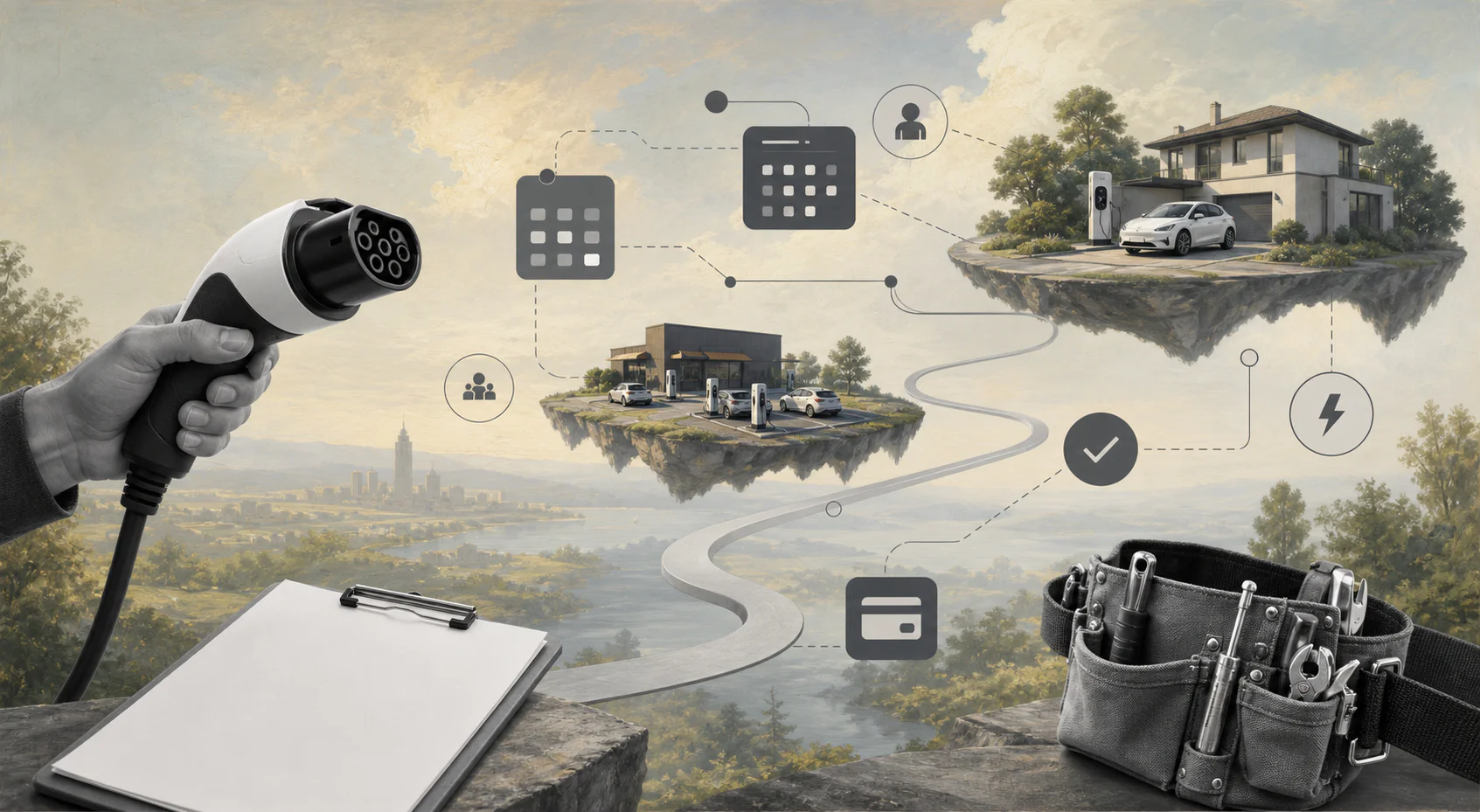
You can launch around EV charger demand without owning stations, hiring electricians, or buying expensive hardware first.
If you want to start an EV charging business, the lowest-risk path is not owning chargers on day one. First, sell the service, coordinate licensed installers, and validate demand.
EV charging is growing because drivers, property managers, and businesses need reliable Level 2 charging at homes, apartments, offices, hotels, parking lots, and fleet yards. The operational problem is not just hardware. Customers need site assessment, quoting, permitting guidance, scheduling, payment, and follow-up support.
This article explains how to launch a platform-first EV charging business with no staff, using licensed electricians instead of building a traditional electrical company.
What’s in this article?
- Why an EV charging business can work as a service platform
- What you need before selling your first installation
- How to price residential and commercial jobs
- How to find first customers and provider partners
- How Workhint can run the operating foundation
- A 7-day launch plan, checklist, and FAQ
Why This Business Works
An EV charging business works because the customer need is clear. EV owners want home charging. Property managers want tenant amenities. Small fleets need charging plans before vehicles arrive. Local businesses want to understand costs before spending tens of thousands of dollars.
The mistake is assuming you need chargers, a warehouse, electricians, and a full electrical contracting company before testing demand. In many places, installation must be completed by properly licensed electricians. That creates an opening for a branded coordination platform.
Your first offer can be simple: request assessment, electrician match, quote coordination, scheduling, payment, and follow-up support.
Providers join because you send qualified requests and reduce back-and-forth. Customers buy because you make the process easier than decoding charger types, permits, panel capacity, rebates, and scheduling alone.
What You Need To Launch
To launch lean, start with a market, a narrow offer, and a small network of licensed electrical contractors. Do not promise electrical work you are not licensed to perform. Your job is to structure the customer experience and route work to qualified providers.
You need a branded customer platform, provider onboarding, intake questions, quote workflow, scheduling, document collection, insurance review, payment process, and local compliance guidance.
| Launch item | Lean budget range | Why it matters |
|---|---|---|
| Business registration and basic legal setup | $100 to $800 | Creates a formal business before signing provider or customer agreements. |
| Insurance review | $500 to $2,500+ | Helps protect the coordination business and clarifies provider insurance requirements. |
| Branded Workhint platform | Start lean | Gives customers a place to request assessments and providers a place to receive work. |
| Provider recruitment and vetting | $0 to $1,000 | Builds the independent electrician network before customer demand arrives. |
| Website, local SEO, and launch marketing | $300 to $2,500 | Creates the first demand source for homeowners and commercial buyers. |
| Charger hardware inventory | $0 initially | Avoid holding inventory until demand and preferred models are proven. |
For physical installs, customers or installers can purchase hardware directly until job volume is proven. Charger type, panel capacity, trenching, utility upgrades, and permits can change final cost, so collect those details before quoting.
How To Price It
Pricing should separate your coordination value from the licensed electrical work. You can earn through referral fees, project coordination fees, approved package margin, or recurring maintenance coordination for commercial accounts.
Keep early pricing simple. Residential Level 2 installations are usually easier to sell. Commercial projects can be larger, but they require more site assessment, utility coordination, and permitting discipline.
| Offer | Example customer price | Your revenue model |
|---|---|---|
| Residential charger assessment | $99 to $250 | Fixed assessment fee or credited toward install. |
| Residential Level 2 install coordination | $750 to $2,500+ | Provider referral fee, coordination fee, or approved package margin. |
| Small commercial site review | $500 to $2,500 | Paid feasibility review before the customer commits to installation. |
| Commercial installation coordination | Project-based | Percentage fee, project management fee, or partner margin. |
| Ongoing support and maintenance routing | $50 to $300 per site monthly | Recurring coordination fee for support requests and provider dispatch. |
A good first target is not maximum margin. It is proof that customers request quotes, providers accept jobs, and your operating process moves work from request to completion.
How To Get First Customers
Start with buyers who already feel the pain: new EV owners, realtors, builders, multifamily owners, small fleets, hotels, offices, gyms, clinics, and restaurants exploring chargers.
Your first channels should be direct and local. Build launch-market pages for residential, apartment, and small business EV charger installation. Contact electricians, property managers, HOAs, fleet managers, dealerships, solar companies, and agents.
Sell like a local operating partner: clear intake, fast quote routing, licensed provider matching, simple scheduling, and no equipment pressure before the site is understood.
How Workhint Helps Launch It
Workhint can become the branded operating platform before you build custom software or hire operators. The customer sees your brand, portal, and process. Behind the scenes, Workhint routes each request through qualification, quoting, scheduling, and completion.
A homeowner can submit a charger request, upload panel and parking photos, answer intake questions, and choose appointment windows. Workhint routes the request to an approved electrician, triggers a quote workflow, collects approval, schedules installation, and keeps the customer updated.
For commercial customers, Workhint can support site intake, property contacts, charger goals, expected vehicle count, permit notes, utility questions, quote approvals, project documents, provider visits, payment milestones, and maintenance requests.
This lets you launch as a coordinated service platform: recruit providers, manage permissions, track jobs, collect payments, coordinate contractor payouts, and review performance from one system.
How To Start an EV Charging Business in 7 Days
Day 1: Choose one launch market and one first offer, such as residential Level 2 charger assessment and installation coordination.
Day 2: Set up the branded Workhint basics: customer request portal, provider application form, internal job dashboard, and status stages.
Day 3: Build intake, quote, scheduling, payment, and payout workflows. Include photo uploads, panel questions, parking location, property type, and urgency.
Day 4: Recruit the first licensed electrical contractors. Verify licensing, insurance, service area, charger experience, availability, and preferred job types.
Day 5: Contact dealerships, realtors, property managers, fleet operators, solar installers, HOAs, and local EV groups.
Day 6: Route early requests through the platform. Watch where customers hesitate and what providers need before quoting.
Day 7: Review demand, provider readiness, pricing, and bottlenecks. Improve intake before buying hardware, hiring staff, or expanding.
Final Launch Checklist
- Choose one city or service area.
- Define the first offer clearly.
- Register the business and review insurance needs.
- Confirm local licensing, permit, and electrical compliance requirements.
- Create the branded Workhint customer portal.
- Build provider onboarding for licensed electricians.
- Create quote approval, scheduling, payment, and payout workflows.
- Recruit at least three qualified provider partners.
- Launch local pages for residential and commercial EV charger demand.
- Contact dealerships, realtors, property managers, and fleet operators.
- Validate demand before buying charger inventory or committing to owned sites.
FAQ
Can I start an EV charging business without being an electrician?
Yes, but do not perform regulated electrical work unless you are properly licensed. A lean model is to operate the platform, intake, quoting, scheduling, and provider network while licensed electricians complete installations.
How much does it cost to start an EV charging business?
A platform-first launch can start with business setup, insurance review, a branded platform, provider recruitment, and local marketing. Owning chargers or commercial sites costs much more, so validate demand first.
Do I need to buy EV chargers before launching?
No. For a lean launch, customers or installers can source approved hardware per job. Buying inventory too early can trap cash in charger models that may not fit customer sites.
Who are the best first customers?
Good first customers include new EV owners, realtors, home builders, apartment operators, small fleets, hotels, offices, gyms, clinics, and local businesses exploring customer or employee charging.
How do EV charging businesses make money?
Common revenue models include assessment fees, referral fees, project coordination fees, installation package margin where appropriate, commercial project management fees, and recurring maintenance coordination.
Conclusion
The fastest way to start an EV charging business with no staff is to launch the operating platform first, build a licensed provider network, and sell a clear service before investing heavily.
Workhint gives you the foundation to do that as a branded business from day one. You can validate demand, coordinate independent electricians, manage customer requests, and expand only after the market proves where your next investment should go.
Leave a Reply