

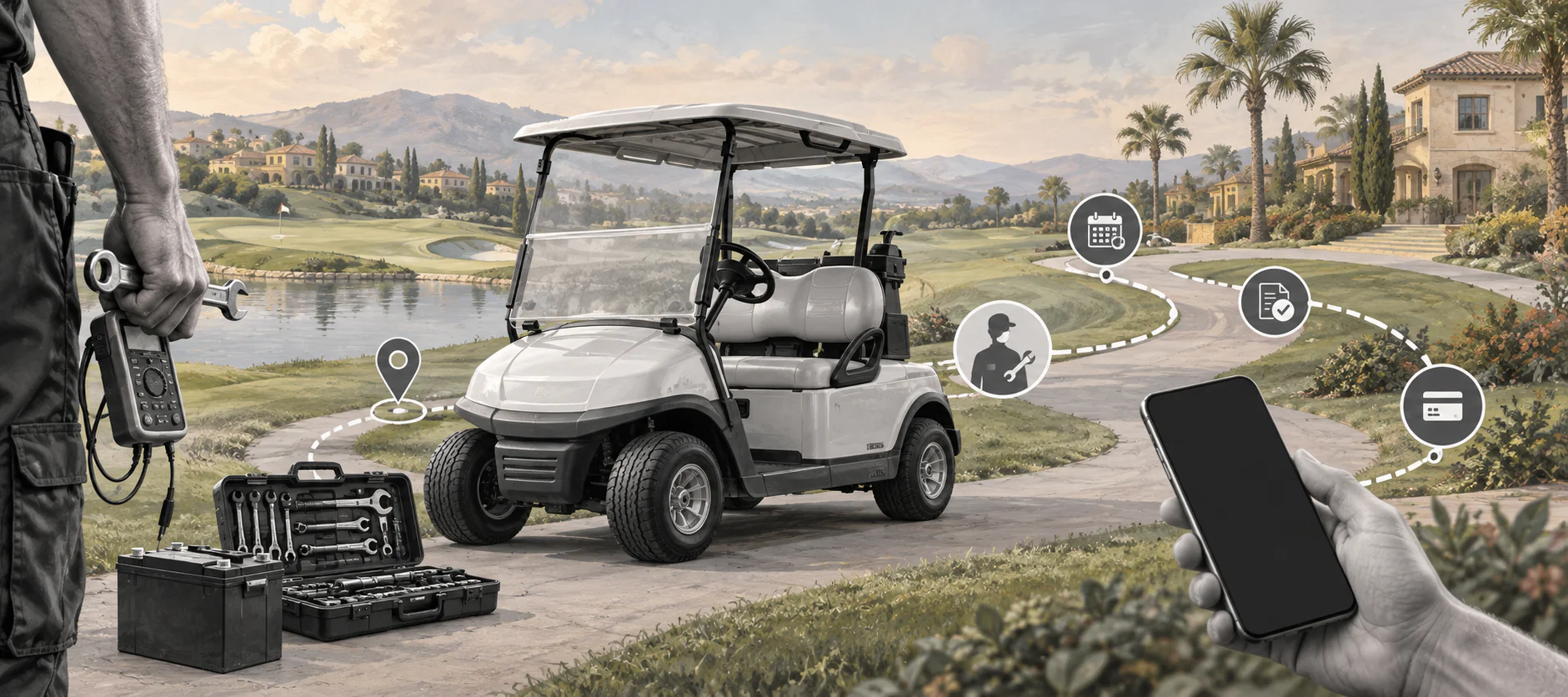
You can launch golf cart repair as a mobile service first, then invest in a shop only after demand is real.
Quick answer
Start a Golf Cart Repair Business With No Shop can usually be launched lean by validating demand first, defining a narrow service offer, using independent providers or partners where appropriate, and building a repeatable intake, scheduling, delivery, approval, and payment workflow before adding fixed overhead.
If you want to start a golf cart repair business, the expensive path is to lease a shop, buy lifts, stock parts, purchase carts, and hope customers appear. The smarter path is to validate demand with a mobile repair model before you carry heavy fixed costs.
Golf carts now serve retirement communities, resorts, campgrounds, gated neighborhoods, campuses, event venues, and small commercial properties. Owners need battery checks, tire repairs, brake work, electrical troubleshooting, seasonal maintenance, pickup and delivery, and accessory installs.
This guide shows how to launch with a branded platform, a service area, a technician network, and a process for quotes, scheduling, parts, and payments.
What’s in this article?
- Why golf cart repair works as a no-shop business
- What you need before taking first requests
- How to price common repair and maintenance services
- How to get first customers from local demand sources
- How Workhint helps you launch the operating platform
- A 7-day launch plan and final checklist
Why This Business Works
Golf cart repair works because the buyer wants convenience. A golf cart owner may not own a trailer, may not want to tow the cart to a shop, and may not know whether the problem is a battery, charger, controller, tire, brake, cable, or wiring issue.
That creates room for a mobile-first repair business. You do not need to begin as a dealer, showroom, or cart reseller. You can start with diagnostics, maintenance, battery testing, tune-ups, tire replacement coordination, and a vetted network of independent golf cart mechanics or small repair partners.
The best early customers are concentrated. Focus on one golf-course corridor, retirement community cluster, campground area, resort market, or neighborhood where low-speed vehicles are common. The goal is to prove that people will submit requests, approve quotes, and pay for convenient repair.
What You Need To Launch
A no-shop golf cart repair business still needs structure. You are dealing with vehicles, batteries, customer property, parts, and safety.
| Launch item | Lean version | Estimated starting cost |
|---|---|---|
| Business setup | LLC or local registration, EIN, bank account, basic terms | $150 to $800 |
| Insurance | General liability, garagekeeper or bailee coverage review, commercial auto if needed | $700 to $3,000+ |
| Branded platform | Service request form, customer portal, scheduling, quote approval, payments | $0 to $500 to configure |
| Technician network | Independent mechanics, small repair shops, mobile tech partners | Mostly time |
| Basic tools | Only if you or your first provider is doing simple diagnostics directly | $300 to $2,000 |
| Marketing | Local landing page, Google Business Profile, flyers, partnerships | $100 to $750 |
Do not buy carts, lease a bay, or stock expensive parts until demand supports it. Your first assets are a clear offer, reliable providers, fast quoting, and customer trust.
How To Price It
Golf cart repair pricing should make the first conversation simple. Use a diagnostic fee to protect technician time, then quote parts and labor after the issue is understood. For repeat customers, sell annual maintenance plans.
| Service | Example price model | Best use |
|---|---|---|
| Mobile diagnostic visit | $75 to $150 visit fee | Battery, charger, wiring, brake, or controller issues |
| Hourly repair labor | $90 to $150 per hour plus parts | Repairs that vary by cart condition |
| Battery service | Flat diagnostic plus replacement quote | High-demand electric cart service |
| Seasonal tune-up | $149 to $299 package | Preventive maintenance and recurring work |
| Community maintenance plan | Monthly or quarterly route pricing | Retirement communities, resorts, HOAs, campuses |
Make the diagnostic fee creditable toward approved repair work if margins allow. That reduces buyer hesitation while protecting provider time.
How To Get First Customers
Start where golf carts already concentrate. Talk to property managers, golf course staff, HOA managers, campground operators, resort teams, vacation rental managers, and cart owners in low-speed vehicle neighborhoods.
Your first offer should be narrow: mobile golf cart diagnostics and maintenance in one local area. Avoid full rebuilds, custom carts, and sales until you have the providers, parts relationships, and operating process to support them.
Useful first channels include a Google Business Profile, local Facebook groups, HOA newsletters, bulletin-board flyers, golf course relationships, referral cards under seats, and seasonal maintenance reminders.
How Workhint Helps Launch It
Workhint can become the branded operating platform for the business before you spend money on a shop. Instead of stitching together forms, calendars, spreadsheets, invoices, payment links, and text messages, you can use Workhint to create the customer and provider system around the repair model.
A customer submits a repair request through your branded portal, adds cart make and model, uploads photos, explains the issue, and chooses preferred visit windows. Workhint routes the request to your dashboard and lets you assign it to an independent technician or service partner.
The technician can receive job details, confirm availability, complete a diagnostic checklist, attach photos, request parts approval, and update status from the field. The customer can approve the quote, pay online, and receive service updates.
For this model, Workhint works as the contractor management platform behind the business: provider onboarding, role-based access, scheduling, service forms, quote approvals, invoices, payments, contractor payouts, customer history, and reporting all connect in one branded system.
That means you can validate demand with a provider network first. If requests grow, then you can decide whether to add owned tools, a service vehicle, parts inventory, storage, or a small shop.
First 7-Day Launch Plan
- Day 1: Choose one launch market and one offer, such as mobile diagnostics and seasonal maintenance for electric carts.
- Day 2: Set up the branded Workhint platform with customer intake, cart details, photo upload, and service area rules.
- Day 3: Create pricing, diagnostic fee rules, quote approval steps, scheduling windows, payment collection, and technician payout logic.
- Day 4: Recruit two or three independent golf cart mechanics, small repair shops, or mobile technicians willing to take assigned jobs.
- Day 5: Contact HOAs, golf courses, campgrounds, resorts, and property managers with a simple service page and request link.
- Day 6: Route every inquiry through the platform, test response time, quote approval, technician assignment, and payment flow.
- Day 7: Review demand, provider reliability, margins, parts bottlenecks, and customer questions before investing in equipment or space.
Final Launch Checklist
- Choose a narrow service area with visible golf cart usage.
- Register the business and review insurance with a qualified broker.
- Create a simple branded customer request portal.
- Define diagnostic fees, hourly repair labor, and maintenance packages.
- Recruit independent technicians or repair partners before selling heavily.
- Create checklists for diagnostics, photos, parts approval, and completion notes.
- Set up online payments, invoices, and contractor payout tracking.
- Contact local demand sources before buying carts, leasing a shop, or stocking inventory.
- Track every lead, quote, job, margin, and repeat maintenance opportunity.
FAQ
Can I start a golf cart repair business without a shop?
Yes. Start with mobile diagnostics, maintenance, and a technician network. A shop can come later if job volume, parts needs, and margins justify the fixed cost.
How much does it cost to start a golf cart repair business?
A lean mobile launch may start with business setup, insurance, a branded platform, basic marketing, and provider recruitment. A shop-heavy model with lifts, inventory, parts, and space can cost much more.
Do I need to be a golf cart mechanic myself?
It helps, but it is not the only path. You can build the business as a branded service platform that coordinates qualified independent mechanics and repair partners.
What services should I offer first?
Start with diagnostics, battery testing, preventive maintenance, tire and brake coordination, pickup and delivery, and seasonal service plans. Avoid complex rebuilds until you have proven partners.
Who are the best first customers?
Focus on concentrated buyers: golf communities, retirement neighborhoods, resorts, campgrounds, HOAs, campuses, and property managers with multiple carts or frequent service needs.
Should I sell golf carts too?
Not at the beginning unless you already have inventory knowledge, licensing, capital, and storage. Repair and maintenance validate demand with less upfront risk.
Conclusion
The best way to start a golf cart repair business is not to imitate a full dealership on day one. Launch the platform first, build a trusted provider network, sell into a concentrated local market, and validate repeat demand.
Once customers are submitting requests, approving quotes, and coming back for maintenance, you can make better decisions about tools, parts, vehicles, storage, or a shop. Workhint gives you the operating foundation to test that model before you overinvest.
Leave a Reply