

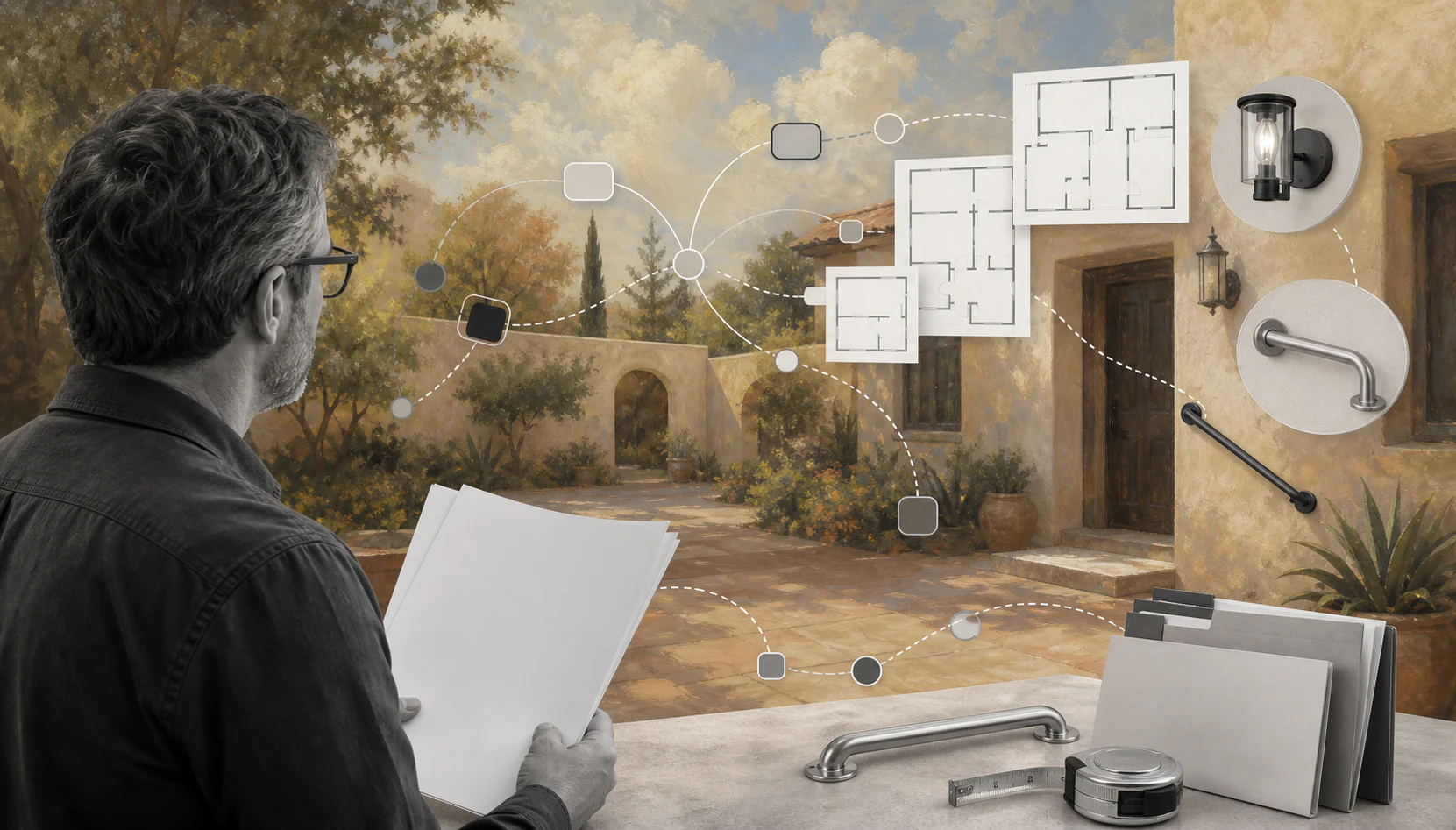
You can start with assessments, referrals, and a provider network before buying tools, hiring staff, or acting like a contractor.
A home modification business helps older adults, people with disabilities, and busy families make homes safer and easier to use. Families want grab bars, better lighting, safer stairs, small ramps, bathroom updates, and clear advice before a fall or hospital discharge forces a rushed decision.
The lean way to start a home modification business is not to build a full remodeling company on day one. Start with a focused offer, a branded customer platform, and a small network of insured independent providers who can handle installation work. Your job is to validate demand, manage the customer experience, coordinate qualified providers, and build trust.
What’s in this article?
- Why a home modification business works
- What you need to launch without staff
- Startup costs, pricing, and revenue examples
- How to get first customers through local referral channels
- How Workhint helps you launch the operating platform
- A 7-day launch plan, checklist, and FAQ
Why this home modification business works
The market is driven by a simple reality: people want to stay safe at home. CDC fall-prevention data shows that falls are a major injury risk for adults 65 and older, and AARP has reported that many adults over 50 want to remain in their homes as they age.
This business also has a clear first offer. You can begin with home safety assessments, written recommendations, and simple modifications such as grab bars, stair rail improvements, brighter lighting, threshold fixes, and non-slip surface upgrades. More complex work can be routed to licensed or specialized providers in your network.
Customers buy because the problem is urgent and personal. Adult children want confidence that a parent is safe. Home health agencies need referral partners. Physical therapists see hazards families may ignore. Providers join because your platform can bring organized jobs, clear scopes, approved pricing, and faster payment.
What you need to launch
Start with the smallest version that proves demand: a service area, home safety checklist, clear packages, insurance, licensing research, a provider recruitment plan, and an online assessment request flow.
Licensing depends on your state, city, and work type. Simple assessments may not require a contractor license, but installation, electrical, plumbing, ramps, and structural changes may. Check local rules, then route regulated work to properly licensed providers.
| Launch item | Lean startup range | Why it matters |
|---|---|---|
| Business registration | $50 to $500 | Creates a basic legal and banking foundation. |
| Insurance | $500 to $2,500+ | Protects you when working around homes and safety risks. |
| Assessment checklist and forms | $0 to $300 | Turns each visit into a consistent service. |
| Brand, website, and local marketing | $200 to $1,500 | Helps families and referral partners trust the offer. |
| Provider onboarding | $0 to $500 | Builds a vetted network before you hire employees. |
| Essential supplies | $100 to $800 | Covers basic measuring, documentation, and demo materials. |
Avoid buying a truck, stocking materials, leasing space, or hiring installers before you have customers. Coordinate local providers and prove the channel first.
How to price it
Price around trust, responsiveness, and coordination. The simplest model is an assessment fee plus installation coordination. Add packages once you know which requests repeat.
| Offer | Example price | Best use |
|---|---|---|
| Home safety assessment | $125 to $300 | Entry offer for families, caregivers, and referral partners. |
| Assessment plus written plan | $250 to $500 | Useful when the customer needs a prioritized project list. |
| Simple safety package | $600 to $1,500+ | Grab bars, lighting, railings, mats, and minor fixes. |
| Provider-coordinated project | Cost plus margin or coordination fee | For ramps, bathroom changes, electrical work, or specialized installs. |
Keep the first offer easy to say yes to. A family may not be ready for a $10,000 bathroom project, but they may pay for a practical assessment and a few urgent safety fixes this week.
How to get first customers
Your best early customers will probably come through trust channels, not ads. Start with physical therapy clinics, occupational therapists, home health agencies, senior centers, elder law attorneys, discharge planners, and caregiver groups.
Offer a simple promise: you help families identify risks, prioritize fixes, and coordinate qualified providers. Bring a one-page checklist, sample report, and clear examples of common fixes.
Local SEO also matters. Claim your Google Business Profile, collect reviews, and publish answers to practical questions families already search.
How Workhint helps launch it
Workhint lets you launch the business as a branded operating platform before you build custom software or hire an operations team. A customer can request a home safety assessment through your branded portal, share property details, upload photos, choose available times, and approve the first appointment.
Behind the scenes, Workhint routes the request to your dashboard, matches the job with the right assessor or installer, collects provider documents, manages scheduling, stores checklists, sends quote approvals, creates invoices, accepts payment, and tracks provider payout.
The platform matters because the work has many handoffs: assessment, hazard documentation, provider quote, customer approval, installation, photos, payment, and payout. Workhint keeps those steps connected so you can focus on referral demand and provider quality.
First 7-day launch plan
- Day 1: Choose your launch market, customer type, and starter offer: home safety assessments plus simple modification coordination.
- Day 2: Set up branded Workhint request forms, customer intake, provider profiles, and job tracking.
- Day 3: Build the assessment checklist, quote approval flow, scheduling, payments, and payout rules.
- Day 4: Recruit five independent providers or referral partners for assessments, grab bars, railings, lighting, ramps, or specialized work.
- Day 5: Contact physical therapists, senior centers, home health agencies, and caregiver groups with your assessment offer.
- Day 6: Route every inquiry through the platform, follow up quickly, and document which problems customers mention most.
- Day 7: Review demand, provider readiness, pricing, and scope before buying equipment, hiring staff, or expanding.
Final launch checklist
- Choose a clear local service area.
- Register the business and open a business bank account.
- Check city, state, contractor, and insurance requirements.
- Create a home safety assessment checklist.
- Configure the branded Workhint customer portal and request form.
- Recruit independent providers with relevant licenses, insurance, and references.
- Create assessment, quote, scheduling, payment, and payout flows.
- Build a one-page referral partner flyer.
- Ask for the first three assessments before investing in heavy equipment.
FAQ
How much does it cost to start a home modification business?
A lean launch can start with registration, insurance, assessment materials, local marketing, and provider onboarding. Costs rise when you buy tools, vehicles, inventory, or hire installers, so validate demand first.
Do I need a contractor license?
It depends on your location and the work performed. Structural, electrical, plumbing, ramp, and major bathroom work may require licensed providers. Check local rules before selling regulated services.
Can I start without employees?
Yes, if you build the business around assessments, coordination, and a vetted independent provider network. You still need clear provider standards, insurance checks, documentation, scheduling, and customer communication.
What services should I offer first?
Start with home safety assessments, written recommendations, grab bar coordination, stair and lighting improvements, non-slip upgrades, and simple accessibility fixes.
How do I get first customers?
Start with referral partners who already see the problem: physical therapists, occupational therapists, home health agencies, senior centers, elder law attorneys, caregiver communities, and real estate agents serving older homeowners.
Is CAPS certification required?
CAPS certification is not always required, but it can strengthen credibility. Treat it as a trust-builder, not a substitute for checking local licensing and provider requirements.
How does this business make money?
Revenue usually comes from paid assessments, written safety plans, simple modification packages, project coordination fees, and margins on provider-managed work. Recurring referral relationships make the business more predictable.
Conclusion
A home modification business is strongest when it starts as a focused service platform, not an expensive contracting operation. Validate demand, recruit qualified providers, and use Workhint to coordinate the customer journey from request to payout. Once the market proves itself, invest in tools, staff, and larger projects with less guesswork.
Leave a Reply