

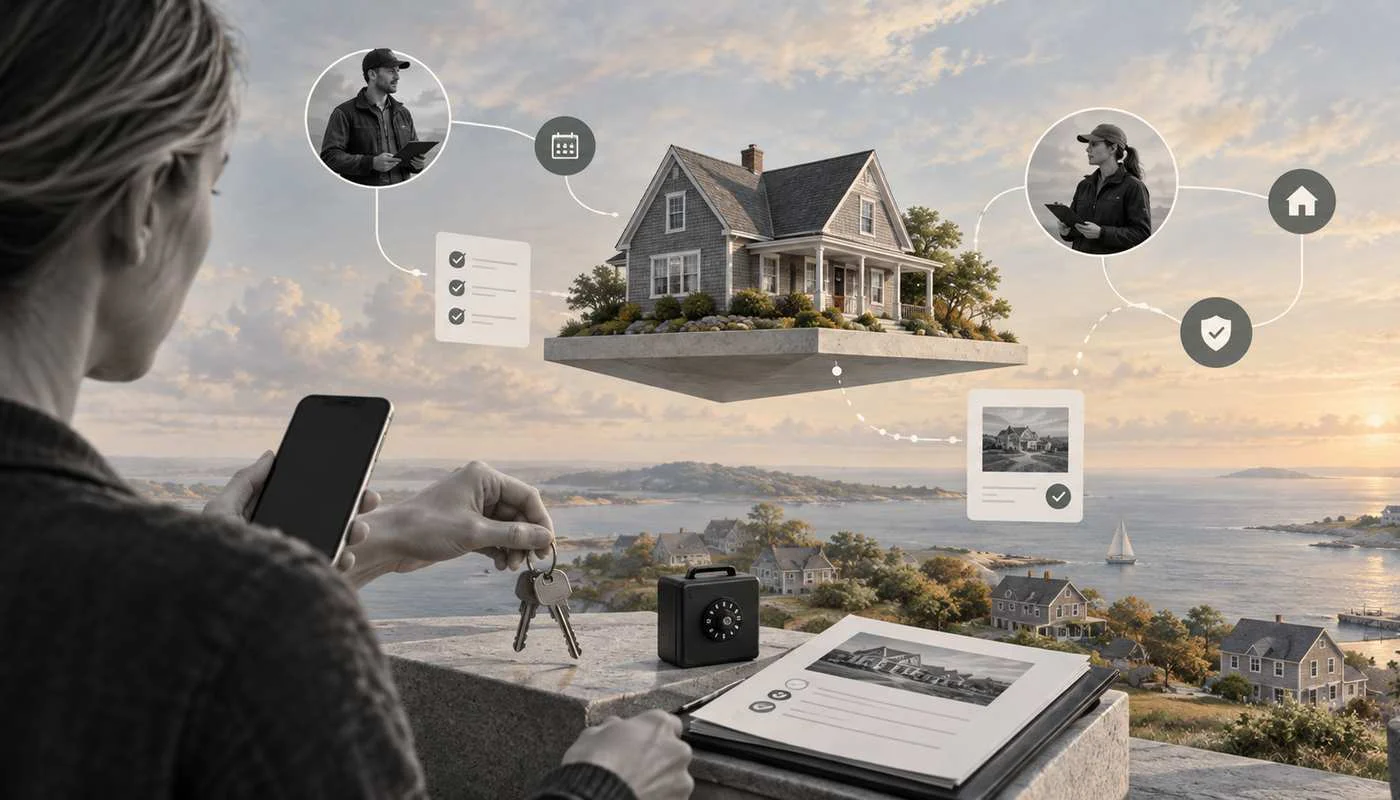
Empty homes create recurring service demand, but the business works best when the platform and provider network come first.
Learning how to start a home watch business with no staff starts with a simple customer problem: seasonal homeowners, vacation-home owners, and absentee landlords need someone they trust to check properties while they are away.
Home watch is attractive because it can be launched with low overhead, recurring revenue, and a narrow first offer. You are selling documented visits, clear reports, and fast escalation when something looks wrong.
The lean path is to build a branded platform, recruit vetted independent providers, and validate demand before hiring employees.
What’s in this article?
- Why a home watch business works
- What you need before the first visit
- How to price home watch services
- How to get first customers
- How Workhint helps launch the operating platform
- A 7-day launch plan and final checklist
Why This Business Works
Home watch works because the need is specific and recurring. The U.S. Census Bureau has reported more than 4.3 million vacant units for seasonal, recreational, or occasional use. Many of those homes sit empty for weeks or months, especially in vacation, coastal, snowbird, and second-home markets.
Owners want proof that someone checked the home. Dated reports, photos, moisture notes, HVAC observations, package checks, and escalation history turn a casual favor into a professional service.
The provider-network model reduces risk. Instead of covering every visit or hiring early, recruit trained home watch providers, retired property managers, local operators, or inspection-minded contractors.
What You Need To Launch
The first version does not need an office, vehicle fleet, employee team, or large equipment budget. It needs trust, documentation, insurance, and a clean way to manage recurring visits.
Start with one market and one offer, such as weekly or biweekly visits for seasonal homeowners. Keep add-ons separate until the core visit process is reliable.
| Launch item | Lean starting budget | Why it matters |
|---|---|---|
| Business registration and local licenses | $50-$500 | Creates the legal base for banking, contracts, taxes, and local compliance. |
| General liability and E&O insurance | $500-$1,500 per year | Clients trust you with empty homes, keys, and reporting accuracy. |
| Bond, agreement review, and key policy | $200-$900 | Raises trust and protects the business before visits begin. |
| Branded Workhint platform | Variable | Runs intake, recurring schedules, visit checklists, reports, payments, and provider payouts. |
| Basic field kit | $100-$400 | Phone, flashlight, moisture meter, lockbox process, and simple safety supplies. |
| Local marketing | $100-$500 | Supports outreach to realtors, HOAs, property managers, and seasonal communities. |
Confirm local rules before selling. Some markets may require registration, bonding, or limits around what you can call an inspection. Avoid licensed home inspection, contracting, security, or property management work unless you have the required credentials.
How To Price It
Most home watch businesses price around recurring visits. The rate should account for travel time, home size, checklist complexity, provider payout, software, insurance, and margin.
| Offer | Example price | Best use |
|---|---|---|
| Standard visit | $40-$75 per visit | Interior and exterior check for an average seasonal home. |
| Weekly recurring plan | $175-$350 per month | Reliable recurring revenue for homes vacant for months. |
| Luxury or waterfront home plan | $300-$600+ per month | Larger homes, pools, docks, complex systems, or higher liability. |
| Storm or freeze check | $75-$200 per event | Pre-event preparation, post-event photo report, or urgent condition check. |
| Vendor coordination | $50-$100 per task or hourly | Meeting vendors, unlocking access, documenting completion, and reporting back. |
Keep the first rate card simple. A standard visit, a larger-home tier, and a few clear add-ons are enough to test demand. If you use independent providers, define their payout before customers book recurring service.
How To Get First Customers
Your best early buyers already know empty homes create risk. Start with real estate agents who sell to out-of-state buyers, HOA managers, vacation rental operators, property managers, insurance brokers, relocation specialists, and local service providers who see vacant homes often.
Use direct outreach instead of broad advertising first. A useful first message is simple: you provide documented home watch visits for seasonal owners in a specific area and every visit produces a photo report.
Referrals matter because trust is the product. Ask agents, cleaners, pool technicians, landscapers, and handymen who they currently refer when a homeowner needs regular eyes on an empty property. Many do not want that operational burden themselves.
How Workhint Helps Launch It
Workhint helps you launch the home watch business as a branded operating platform before you invest in employees, custom software, or a large field team.
A homeowner can request service through your branded portal, choose a visit frequency, share access instructions, approve the service agreement, and set up payment. Workhint routes that request into your operations dashboard so you can schedule visits and assign a provider.
Provider onboarding happens inside the same system. Independent providers submit service areas, availability, insurance documents, checklist training, and payout details. Once approved, they receive visits, complete mobile checklists, upload photos, flag issues, and submit completion records.
The platform connects intake, provider matching, recurring scheduling, visit execution, issue escalation, invoice collection, customer reporting, reviews, and contractor payouts while you focus on validating demand.
For a deeper platform setup, see Workhint’s service marketplace software page.
First 7-Day Launch Plan
| Day | Focus | Outcome |
|---|---|---|
| Day 1 | Choose one launch market, customer type, and standard visit offer. | A narrow offer for seasonal homeowners in one local area. |
| Day 2 | Set up the branded Workhint portal and customer intake flow. | Customers can request service, share access rules, and choose visit cadence. |
| Day 3 | Create the checklist, report format, quote approval, payment, and provider payout process. | Every visit has a repeatable workflow. |
| Day 4 | Recruit 3-5 independent providers or local resource partners. | You have coverage without hiring employees. |
| Day 5 | Contact realtors, HOAs, property managers, and seasonal community contacts. | You begin validating demand with real referral sources. |
| Day 6 | Run practice visits through the platform and refine the report. | The operational experience is ready before paid work starts. |
| Day 7 | Review pricing, provider readiness, and outreach response. | You decide whether to sell, adjust, or narrow the offer further. |
Final Launch Checklist
- Choose the launch area and customer segment.
- Register the business and confirm local licensing rules.
- Get liability insurance before any paid visit.
- Create a service agreement, key policy, and escalation process.
- Configure the branded Workhint portal, intake, recurring schedule, checklist, payment, and payout flows.
- Recruit and vet independent providers or trusted local partners.
- Build a simple rate card with recurring plans and add-ons.
- Contact realtors, HOAs, property managers, insurance brokers, cleaners, pool technicians, and landscapers.
- Validate demand before hiring employees or expanding into new markets.
FAQ
How much does it cost to start a home watch business?
A lean launch can start with registration, insurance, bonding or contract review, a basic field kit, local marketing, and a branded platform. The largest required early cost is usually insurance.
Can I start a home watch business with no staff?
Yes. You can launch with a branded platform and a vetted network of independent providers. Keep control of customer intake, visit standards, reporting, scheduling, payments, and quality review.
Do I need a license for a home watch business?
Requirements vary by city and state. Many markets do not have a specific home watch license, but you should register the business, confirm local rules, carry insurance, and avoid regulated work.
How much should I charge for home watch visits?
Many businesses price standard visits in the $40-$75 range and monthly recurring plans around visit frequency. Larger homes, waterfront properties, storm checks, vendor coordination, and urgent requests should cost more.
Who are the best first customers?
Seasonal homeowners, vacation-home owners, out-of-state buyers, absentee landlords, and owners in snowbird or second-home communities are strong first customers. Referral partners can include realtors, HOAs, property managers, cleaners, and pool companies.
What should be included in a home watch visit?
A standard visit should include exterior observations, authorized interior checks, visible water or HVAC issues, package notes, photos, timestamped reporting, and an escalation process.
Conclusion
A home watch business is practical because demand is recurring, local, and trust-based. The mistake is treating it like a solo side job when customers need a professional operating system.
Start with a branded platform, a narrow service area, clear visit standards, and vetted independent providers. Workhint can power the customer portal, scheduling, checklists, reports, payments, and payouts so you can validate demand before building a larger team.
Leave a Reply