

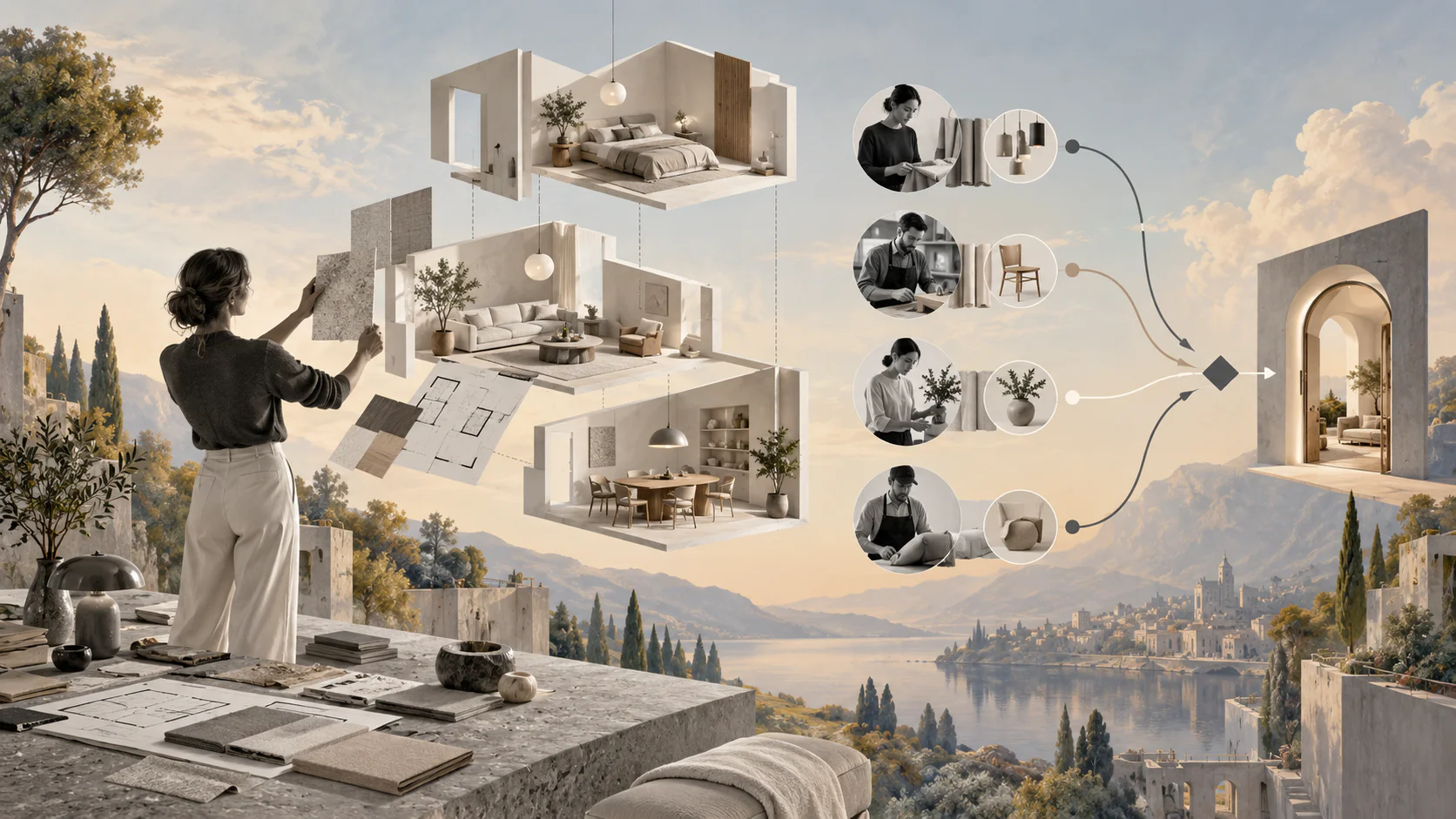
You can validate an interior design offer before paying for a studio, showroom, inventory, or a permanent team.
Quick Answer
To start an interior design business on a budget, choose one client niche, package one clear service, create a small proof portfolio, and recruit independent designers and specialist providers only as demand requires. Build the customer intake, proposal, approval, scheduling, payment, and provider-payout process before marketing. Validate the offer with paid consultations before adding overhead.
How to Start an Interior Design Business on a Budget
Starting an interior design business does not require a showroom full of samples or salaried designers. The lower-risk model begins with a branded service platform, a focused offer, and a private network of independent designers, renderers, photographers, installers, and tradespeople.
The founder’s first job is not buying furniture or leasing an office. It is proving that a specific customer will pay for a specific design outcome. This guide explains how to validate demand, price the work, coordinate providers, and deliver the first projects without building a traditional firm too early.
What’s in This Article?
- Why the business works
- What you need to launch
- How to price the service
- How to get the first customers
- How Workhint supports the launch
- A seven-day launch plan
Why This Business Works
Interior design solves an expensive customer problem: people want a better space but struggle to make dozens of connected decisions about layout, finishes, furniture, lighting, and contractors. A specialist who reduces uncertainty can sell advice before managing a full installation.
Begin with a paid virtual consultation, furnishing plan, or rental-property refresh. A defined entry offer is easier to sell and fulfill than open-ended full-service design, while creating a path to larger projects.
Independent providers may join because the platform brings qualified projects, clear scopes, organized approvals, and predictable payment. Customers buy because they receive one branded experience even when several specialists contribute behind the scenes.
What You Need to Launch
Choose a narrow first market: home-office redesigns, furnished rentals, small hospitality spaces, retail refreshes, or one-room residential projects. Define the deliverable, timeline, revision limit, and what the customer must supply. A clear scope protects margins.
Create three proof pieces from completed work, clearly labeled concepts, or approved collaborations. Never present speculative work as a client project.
| Launch item | Lean approach | Illustrative cost |
|---|---|---|
| Business registration | Register the appropriate local entity and permits | $50-$500 |
| Insurance | Professional and general liability based on the work | $300-$1,200 annually |
| Portfolio assets | Use three focused case studies and simple photography | $0-$500 |
| Samples and tools | Borrow, request, or buy only what supports the first offer | $100-$750 |
| Customer acquisition | Local outreach, partnerships, and a small test budget | $100-$600 |
These figures are planning examples, not universal quotes. Licensing and use of the title “interior designer” vary by jurisdiction, so check state and local requirements before selling regulated services. Use written independent-contractor agreements and confirm that each provider carries any credentials and insurance required for their scope.
Build the operating process before the audience
- Create a branded request form that captures room type, dimensions, style, budget, timeline, and photos.
- Define how discovery calls, site visits, proposals, deposits, approvals, and revisions work.
- Recruit two or three complementary independent providers for the first market.
- Set payment milestones and provider payout rules before accepting a project.
- Use customer-approved substitutes rather than buying inventory in advance.
How to Price It
Match pricing to scope certainty. Use a fixed fee for defined consultations, hourly pricing for changing scopes, and a project or percentage fee for procurement-heavy work. Document inclusions and exclusions.
| Example offer | Illustrative price | What is included |
|---|---|---|
| Virtual room consultation | $200-$500 | Brief, video session, and concise action plan |
| Room design package | $1,000-$3,500 | Concept, layout, selections, and set revision limit |
| Rental refresh | $2,500-$7,500 | Multi-room plan, sourcing guidance, and install coordination |
Four consultations at $300 plus two room packages at $1,800 would produce $4,800 in booked revenue. Subtract provider fees, payment costs, insurance, travel, and marketing before calculating profit.
How to Get Your First Customers
Contact real estate agents, property managers, short-term rental operators, builders, organizers, and furniture retailers with a narrow referral offer. Show the decision process, not just polished rooms.
Create one local landing page for the niche and publish answers to questions customers ask before hiring: price, timeline, revision policy, sourcing, and whether the service can be virtual. Ask the first paid clients for permission to document the problem, plan, and result.
Avoid broad advertising until fulfillment works. The goal is a paid signal, not an impressive follower count.
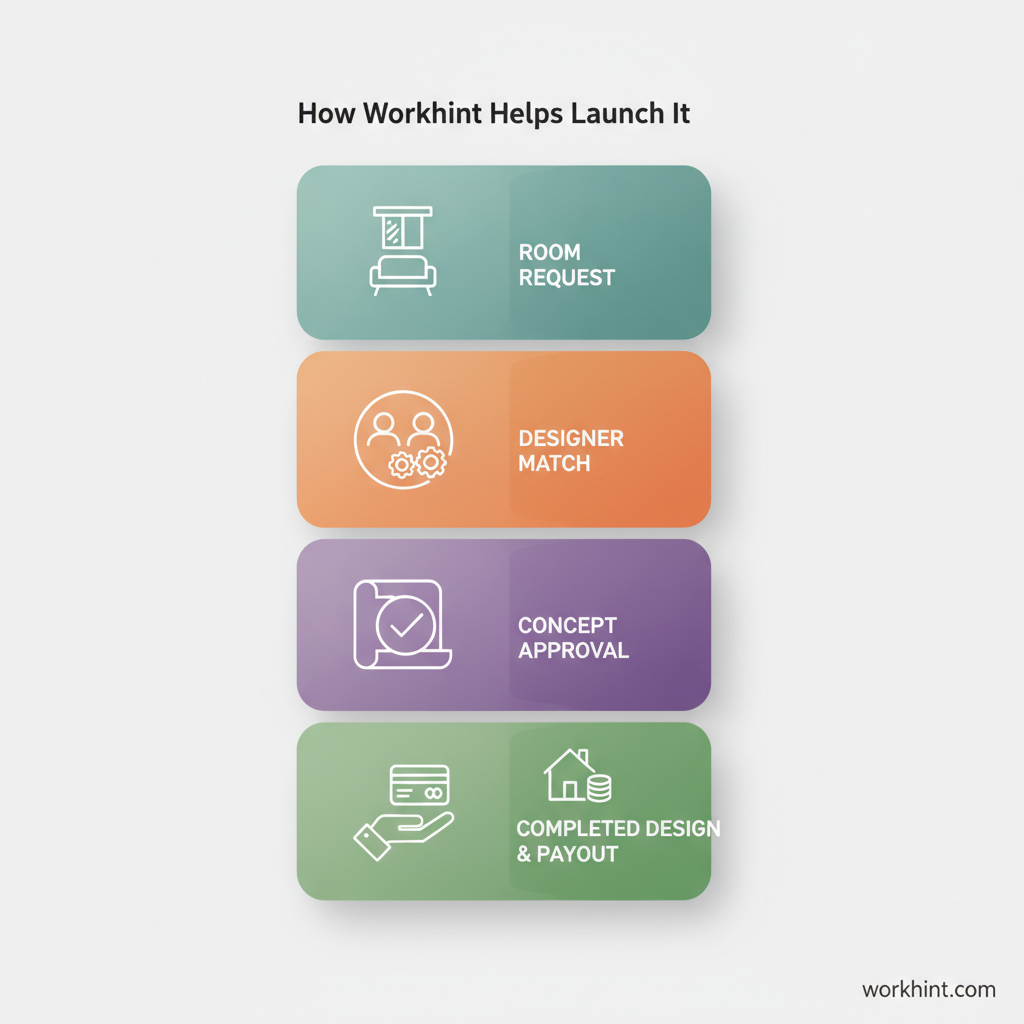
How Workhint Helps Launch It
Workhint can provide the branded operating foundation for this business before you build custom software. A customer submits room details and photos through your portal. The request enters an internal review queue, where you match the project to an independent designer based on specialty, location, availability, and budget.
The designer prepares a concept and quote; the customer reviews and approves it in the same branded experience. Once the deposit is paid, Workhint coordinates tasks, appointments, documents, selections, and approval checkpoints. After delivery, the platform can generate the invoice, record completion, collect feedback, and route the agreed payout to the provider.
This creates a consistent journey while the provider network stays flexible. Instead of stitching together forms, spreadsheets, calendars, invoicing, and contractor tracking, the founder can use a branded service marketplace platform and focus on demand and quality.
First 7-Day Launch Plan
- Day 1: Pick one customer, one room or project type, and one launch area.
- Day 2: Configure the brand, customer portal, request form, and basic roles in Workhint.
- Day 3: Set the package, price, proposal, approval, scheduling, payment, and payout steps.
- Day 4: Recruit two or three independent designers or specialist partners and verify fit.
- Day 5: Contact 20 relevant buyers or referral partners with the specific offer.
- Day 6: Route conversations and qualified requests through the platform; record objections.
- Day 7: Review demand, capacity, margins, and delivery risks before spending more.
Do not add a studio, inventory, employees, or expensive software during this week. The desired outcome is a working service process, provider readiness, and evidence that customers will pay.
Final Launch Checklist
- Choose a narrow customer niche and launch market.
- Define one paid entry offer and revision limit.
- Check business registration, title-use, permit, and insurance requirements.
- Build three honest proof pieces.
- Configure branded intake, proposal, approval, scheduling, payment, and payout flows.
- Recruit and vet the first independent providers.
- Prepare customer and provider agreements.
- Contact the first 20 prospects or referral partners.
- Validate paid demand before leasing space or buying inventory.
FAQ
How much does it cost to start an interior design business?
A lean service can often be tested with registration, insurance, a small portfolio, basic samples, a branded platform, and focused marketing. Costs vary widely by location and scope, so obtain local quotes before setting a budget.
Can I start an interior design business without a degree?
Rules vary. Some jurisdictions regulate the title, certain commercial work, permitting, or plan submission. Check local requirements and do not claim credentials you do not hold. You can also partner with properly qualified providers where needed.
Do I need an office or showroom?
No for many launch models. Virtual consultations, in-home meetings, sample libraries, and supplier showrooms can support early projects. Add dedicated space only when recurring demand justifies it.
What insurance does an interior design business need?
Professional liability and general liability are common starting points. Coverage should reflect whether you visit sites, specify products, manage procurement, or coordinate trades. Ask a licensed broker about your actual scope.
How should a new interior designer charge?
Start with a fixed fee for a tightly defined offer. Use hourly or project pricing when uncertainty is higher. State deposits, revisions, purchasing terms, travel, and third-party costs clearly.
Can independent designers deliver work under my brand?
Yes, when the relationship is structured lawfully and transparently. Use written agreements, define ownership and quality standards, verify credentials, and follow applicable worker-classification rules.
How do I find the first interior design clients?
Begin with referral partners near the buying moment, including agents, property managers, organizers, builders, and retailers. Pair direct outreach with niche case studies and one local landing page.
Conclusion
Sell a focused result before building a large firm. Launch the branded customer experience, organize a dependable provider network, and prove the model with paid projects. Invest further only when repeated demand reveals a real constraint.
Leave a Reply