

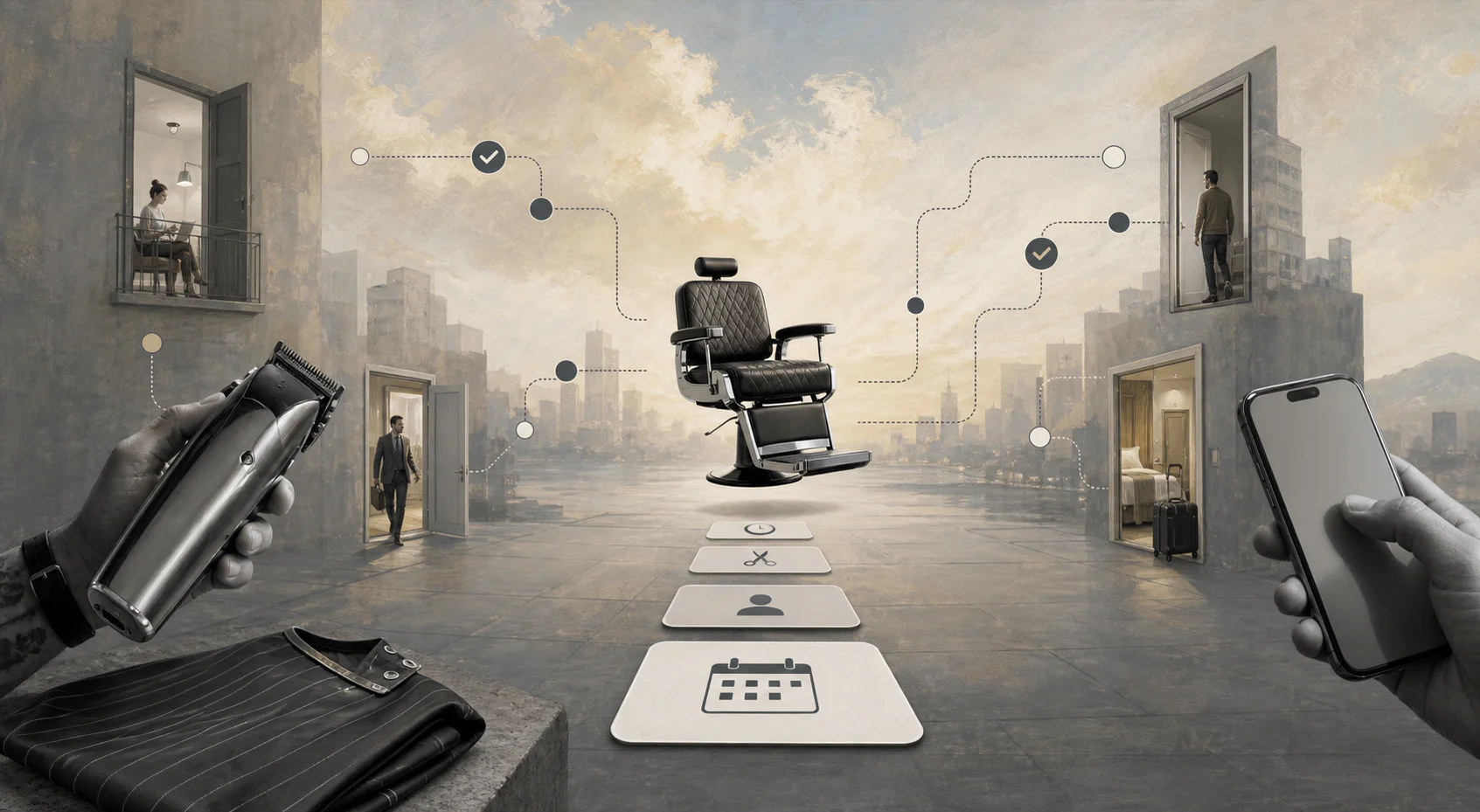
A mobile barber business can start as a booked service network before you ever lease chairs or build out a shop.
How to start a mobile barber business is a practical question for founders who see demand for convenient grooming but do not want to open a traditional barbershop first. A fixed shop can require rent, buildout, chairs, utilities, walk-in traffic, and staff before demand is proven. A mobile model lets you test a simpler offer: licensed barbers meet customers at homes, offices, hotels, events, campuses, or senior communities.
The lower-risk version is not to buy a custom barber van on day one. Start with a branded customer platform, a clear service menu, and a private network of licensed independent barbers who can accept jobs in defined areas. Use the first few weeks to validate demand, pricing, travel radius, and provider reliability before investing in heavier assets.
What’s in this article?
- Why mobile barbering works as a small-budget local service business
- What you need before accepting the first booking
- How to price haircuts, group bookings, and recurring services
- How to get first customers without opening a shop
- How Workhint can power the branded platform and daily operations
- A seven-day launch plan, checklist, and FAQ
Why a Mobile Barber Business Works
Mobile barbering works because the customer problem is obvious: people want a quality haircut without waiting, traveling, or fitting into a shop’s schedule. Busy professionals, wedding parties, offices, hotels, retirement communities, and parents with children can all value convenience enough to pay a premium.
The provider side can also work. Many licensed barbers want extra bookings, flexible hours, and a way to serve customers outside their chair schedule. Your job as the founder is to create demand, route bookings, standardize the customer experience, and make payment and payout easy.
Most online guides focus on opening a shop, buying chairs, building out a van, or becoming a solo mobile barber. The gap is the operating model. A platform-first model lets you launch as the organizer of the service, not the owner of every tool, vehicle, or shift. That makes the business easier to test city by city.
What You Need To Launch
Start with the minimum needed to accept, schedule, and fulfill paid bookings legally and professionally. Requirements vary by state and city, so check your local barber board, cosmetology board, health department, and business licensing rules before taking customers. Some states regulate mobile barber shops separately from individual barber licenses.
You need a brand, a booking platform, licensed providers, service standards, insurance, payment collection, payout rules, and a customer acquisition plan. A custom barber truck, retail inventory, leased shop, and employees can wait until job volume proves the investment.
| Launch item | Lean startup range | Notes |
|---|---|---|
| Business registration and local permits | $100-$800 | Depends on city and state requirements. |
| Mobile barber or provider licensing checks | $0-$1,000 | Confirm every barber is properly licensed before accepting jobs. |
| Insurance | $500-$2,500 | Ask about general liability, professional liability, and mobile operations. |
| Branded platform, intake, scheduling, and payment setup | $500-$2,000 | This is the core operating foundation before marketing begins. |
| Branding and basic website | $300-$1,500 | Keep it simple: offer, locations, booking, trust signals. |
| Local marketing test | $300-$1,500 | Use outreach, partnerships, local search, and referral offers. |
| Provider onboarding and supplies standards | $200-$1,000 | Providers may bring their own tools, but standards should be documented. |
A realistic lean launch can start around $1,900 to $10,300 before optional vehicles, custom interiors, or a physical shop. The most important early investment is not equipment. It is the operating system that lets customers book cleanly and lets providers deliver consistently.
How To Price It
Mobile barber pricing should account for haircut time, travel time, provider payout, payment fees, insurance, customer support, and no-show risk. You can charge a premium because the service comes to the customer, but the offer still needs to feel simple.
| Offer | Example price | Best use case |
|---|---|---|
| Standard mobile haircut | $55-$90 | Individual customers within a tight service radius. |
| Haircut and beard package | $80-$130 | Higher-value home or hotel bookings. |
| Office grooming block | $400-$900 | Half-day workplace or coworking visit. |
| Wedding or event grooming | $600-$1,500 | Group packages with scheduled appointment slots. |
| Monthly membership | $75-$150 per member | Recurring customers who want priority booking. |
Keep the first menu narrow. A basic haircut, haircut plus beard, group booking, and recurring membership are enough to test demand. Add color, grooming add-ons, or premium event packages only after the core operation is reliable.
How To Get First Customers
The fastest path is to sell where convenience is already valuable. Contact apartment communities, hotels, wedding planners, corporate offices, coworking spaces, senior communities, campuses, photographers, and event planners. Pitch the service as a scheduled grooming experience that arrives on-site.
For local search, build pages around specific service areas and use direct wording such as mobile barber in your city, home haircut service, office barber service, and wedding barber service. Ask every satisfied customer for a review and a referral. The first goal is not scale. It is proof that people will book, pay, and rebook through the platform.
How Workhint Helps Launch It
Workhint helps turn the mobile barber idea into a branded operating platform before you invest in a shop or fleet. Instead of stitching together forms, calendars, payments, spreadsheets, and messages, you can launch a branded customer portal where customers request a haircut, choose a service area, upload details, approve a quote, select a time window, and pay online.
Behind the scenes, Workhint can organize the provider network. Licensed barbers can be invited, onboarded, assigned roles, submit documents, set availability, receive job offers, accept appointments, complete mobile service checklists, upload completion notes, and receive payouts after the customer is charged. The owner can see requests, availability, bookings, customer history, provider performance, revenue, and payout status from one operations dashboard.
That changes the launch strategy. You do not need to look like a large barbershop chain on day one. You need a clean branded platform, a small group of vetted providers, a reliable booking process, and enough local demand to prove the model. Workhint becomes the foundation that lets the business operate from the first customer request through provider assignment, scheduling, payment, review, and contractor payout.
First 7-Day Launch Plan
- Day 1: Choose the launch market, service radius, first customer segment, and first two offers.
- Day 2: Set up the branded Workhint platform with customer request forms, provider roles, and basic dashboards.
- Day 3: Configure pricing, quote approval, scheduling, payment collection, cancellation rules, and provider payout logic.
- Day 4: Recruit five to ten licensed barbers or grooming partners and verify licensing, insurance expectations, availability, and service standards.
- Day 5: Contact local apartments, hotels, offices, planners, gyms, and community groups with a simple launch offer.
- Day 6: Route first booking requests through the platform, test provider assignment, and identify gaps before accepting more volume.
- Day 7: Review demand, pricing, travel time, provider reliability, customer feedback, and whether the next investment should be marketing or operations.
Avoid buying a custom van, signing a lease, or hiring staff during the first week. Your job is to validate demand and fulfillment, then invest into the constraints that actually appear.
Final Launch Checklist
- Choose the business name, launch city, and core customer segment.
- Check state and local barber, mobile service, health, tax, and business license rules.
- Confirm insurance requirements before accepting paid bookings.
- Create a simple service menu and pricing model.
- Configure the branded Workhint customer portal, booking form, provider onboarding, scheduling, payments, and payout workflow.
- Recruit and verify a small network of licensed independent barbers.
- Create service standards, cancellation rules, and customer communication templates.
- Launch outreach to apartments, hotels, offices, events, and local partners.
- Book the first paid jobs through the platform.
- Review demand before buying vehicles, leasing space, hiring employees, or expanding services.
FAQ
How much does it cost to start a mobile barber business?
A lean platform-first launch may start around $1,900 to $10,300, depending on licensing, insurance, branding, platform setup, and marketing. A custom barber van or full mobile shop can cost much more, so validate demand before buying one.
Do I need a barber license to start a mobile barber business?
The barbers performing services usually need valid barber or cosmetology licenses. Some states or cities may also require mobile shop permits, inspections, sanitation rules, or specific operating approvals. Check local rules before taking bookings.
Can I start a mobile barber business with independent contractors?
You may be able to build a provider network with independent licensed barbers, but worker classification rules matter. Use proper agreements, avoid controlling contractors like employees, and get legal advice before scaling the model.
Do I need a van to start?
Not always. Many founders can test demand with licensed barbers who bring portable tools to homes, offices, hotels, or events. A branded van can come later if volume, route density, and local rules justify the investment.
How should mobile barber services be priced?
Price high enough to cover service time, travel, provider payout, platform costs, insurance, support, and payment fees. Common models include individual appointments, haircut and beard packages, office blocks, event packages, and memberships.
Who are the best first customers?
Start with customers who value convenience: apartments, hotels, corporate offices, wedding parties, senior communities, campuses, and busy professionals. These groups are easier to reach with direct local outreach than broad consumer advertising.
Is a mobile barber business profitable?
It can be profitable if travel time is controlled, provider payouts leave enough margin, cancellations are managed, and customers rebook. The key is route density and recurring demand, not just charging premium prices.
Conclusion
A mobile barber business does not have to start with a shop, a van, or a payroll. The smarter path is to validate demand with a branded platform, a clear offer, and a small network of licensed providers. If customers book, providers deliver reliably, and the unit economics work, you can expand into vehicles, subscriptions, events, and new service areas with much more confidence.
Leave a Reply