

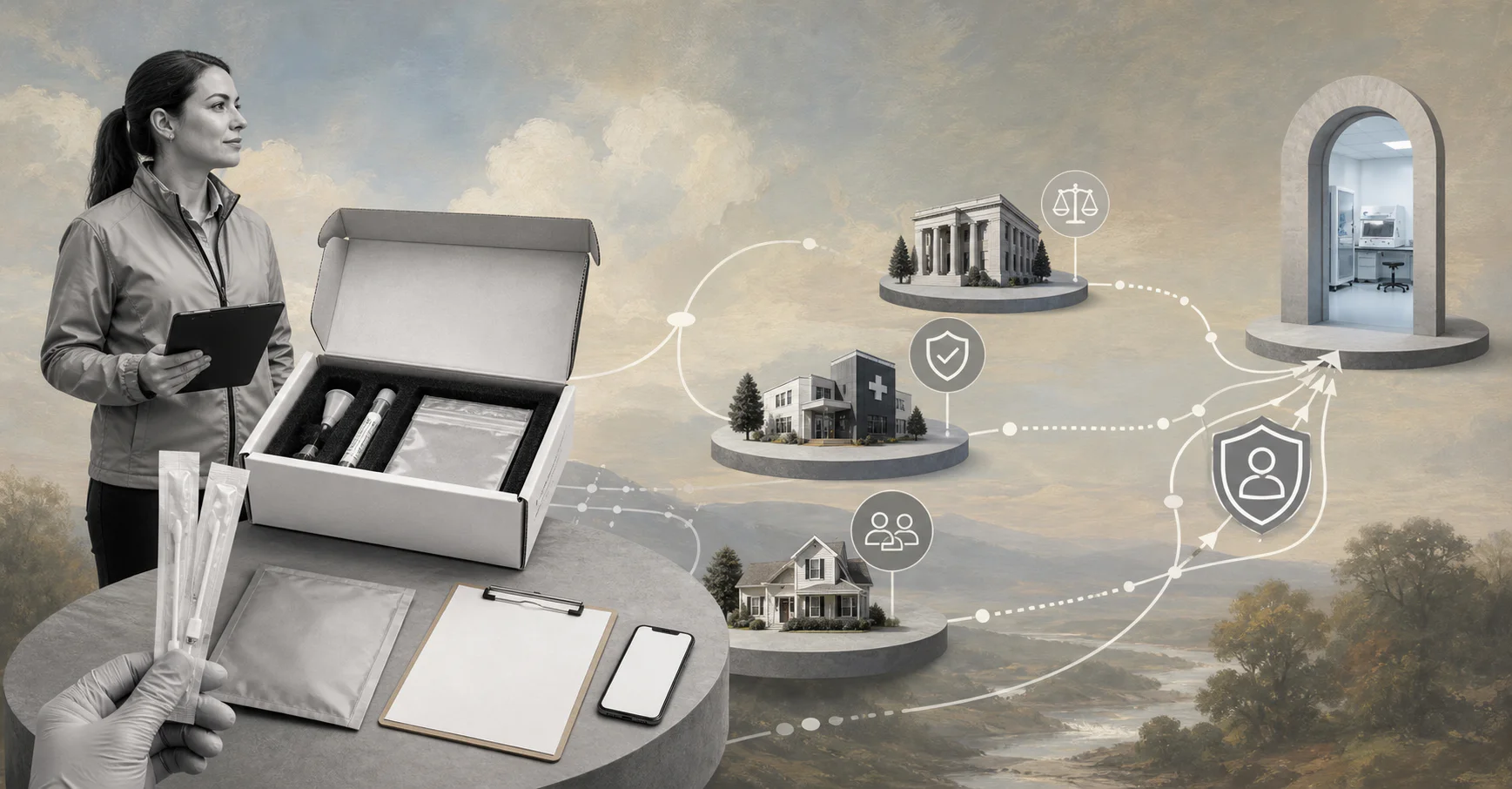
A mobile DNA testing business can start as a coordinated collection network before you build a lab or hire a team.
A mobile DNA testing business helps people collect samples for relationship, paternity, immigration, adoption, estate, and court-related testing without requiring every client to visit a fixed office. The lean version is not a laboratory. It is a branded local service platform that handles intake, scheduling, identity checks, collection appointments, chain-of-custody steps, payments, and lab partner coordination.
That model matters because the market has two different customer needs. Some people only want private, non-legal answers. Others need legally usable testing, which means stricter identification, documentation, and chain-of-custody handling through an accredited lab partner. The opportunity is in making the process easier, clearer, and more convenient while staying inside the rules.
What’s in this article?
- Why mobile DNA testing works as a low-overhead service business
- What you need before launching
- How to price collection, testing, and rush service
- How to get first customers and referral partners
- How Workhint can become the operating platform for the business
- A 7-day launch plan, checklist, and FAQ
Why This Business Works
Mobile DNA testing works because the service is urgent, personal, and often inconvenient. Customers may need testing for paternity, custody, immigration, birth certificate updates, inheritance questions, adoption paperwork, or peace-of-mind reasons. In legal situations, the customer is not just buying a test. They are buying a process they can trust.
The business can also launch without owning a lab. Many operators work with accredited DNA laboratories, collect samples locally, follow partner procedures, and send specimens for processing. That keeps startup costs lower and lets the founder focus on customer acquisition, appointment coordination, documentation quality, and referral relationships.
The provider-network version is especially practical. Instead of hiring full-time collectors first, you can build a small network of trained independent collectors in nearby areas, assign appointments through your platform, and expand coverage only after demand is proven.
What You Need To Launch
Start with the narrowest offer you can deliver reliably. For many founders, that means mobile legal paternity collection and non-legal relationship testing through a lab partner. Do not advertise complex immigration, prenatal, or forensic testing until your lab partner, documentation process, and collector training clearly support it.
Your first setup should cover the branded platform, lab partnership, intake workflow, identity verification, appointment scheduling, consent forms, chain-of-custody documentation, payment collection, and secure client communication. Legal and compliance requirements vary by state and test type, so confirm your obligations with the lab partner and qualified counsel before taking paid legal cases.
| Startup item | Lean launch range | Why it matters |
|---|---|---|
| Business registration and basic legal setup | $100 to $800 | Creates the business entity, bank account, and basic operating structure. |
| Insurance | $500 to $2,000 per year | Helps cover mobile service, professional liability, and general business risk. |
| Lab partner onboarding and training | $0 to $3,000 | Provides collection procedures, chain-of-custody rules, kits, and lab access. |
| Branded Workhint platform | Start lean | Runs intake, booking, assignments, forms, approvals, payments, and reporting. |
| Collection supplies and shipping materials | $200 to $1,000 | Covers swabs, envelopes, tamper-evident packaging, PPE, and labels. |
| Local marketing and referral outreach | $300 to $1,500 | Gets the first clients from attorneys, clinics, agencies, and search traffic. |
Avoid buying office space, lab equipment, or a large inventory of kits before demand is clear. Your first milestone is not looking like a national lab. It is proving that local customers and referral partners will book appointments through your branded service.
How To Price It
Pricing usually combines the lab test cost, your mobile collection fee, any rush or after-hours fee, and add-ons such as extra participants or separate collection locations. Public market examples show non-legal tests can be lower-cost, while legal paternity tests commonly command higher prices because they require identity checks and chain-of-custody documentation.
| Offer | Example customer price | Best use case |
|---|---|---|
| Non-legal at-home relationship test | $150 to $250 | Private peace-of-mind testing where results are not court-admissible. |
| Legal paternity collection | $300 to $500 | Custody, child support, birth certificate, adoption, or other legal use cases. |
| Mobile appointment fee | $50 to $150 | Convenience fee for collecting at a home, office, clinic, or neutral location. |
| Rush, weekend, or separate-location service | $40 to $300 add-on | Higher effort appointments or faster turnaround when the lab supports it. |
Keep the first pricing model simple. Publish a starting price, explain what changes the final quote, and collect payment before dispatching a provider. For legal tests, clarity matters more than discounting.
How To Get First Customers
The best early customers usually come from referral points, not broad advertising. Start with family law attorneys, immigration attorneys, adoption agencies, social service organizations, clinics, midwives, mobile notaries, drug testing operators, and local search pages for your city.
Your first outreach should be direct: explain your service area, appointment windows, lab partner standards, documentation process, and how quickly a client can book. Referral partners care about reliability. They want to know that a client will not get confused, miss paperwork, or receive unusable results because the collection process was sloppy.
Build a small set of pages around real search intent: mobile DNA testing near me, legal paternity test in your city, mobile paternity testing, and DNA testing for immigration or custody if your lab partner supports those services. Then validate demand by tracking calls, form submissions, booked appointments, and referral conversations before expanding into new service types.
How Workhint Helps Launch It
Workhint can help you launch the mobile DNA testing business as a branded operating platform instead of a pile of forms, calendars, payment links, spreadsheets, and text messages.
A customer starts through your branded portal, chooses the testing need, answers intake questions, uploads required information, and sees available appointment options. Workhint routes the request to the right workflow based on whether the test is non-legal, legal, multi-location, rush, or partner-referred.
On the operations side, Workhint can onboard independent collectors, store required documents, manage availability, assign appointments by location, and guide each collector through the right checklist. For a legal test, the job can require identity verification steps, consent forms, chain-of-custody fields, photo or document confirmation where appropriate, payment status, kit tracking, and handoff notes before the appointment can be marked complete.
That operating system lets you validate the business before hiring staff. You can recruit a few trained providers, book the first customers, monitor appointment quality, collect payments, pay collectors, and review performance from one place. As demand grows, you add more service areas and providers instead of rebuilding the business around disconnected tools.
First 7-Day Launch Plan
- Day 1: Choose the first market, the first offer, and the lab partner path. Keep the launch focused on one or two test types.
- Day 2: Create the branded Workhint portal with customer intake, service options, appointment windows, and referral source tracking.
- Day 3: Set up quote approval, payment collection, collector assignment, forms, chain-of-custody checklists, and payout rules.
- Day 4: Recruit the first independent collectors or partner providers and confirm training, availability, coverage area, and documentation standards.
- Day 5: Contact attorneys, clinics, social service organizations, mobile notaries, and local referral sources with a simple service summary.
- Day 6: Route early inquiries through the platform, test the full booking process, and fix any confusing intake or scheduling step.
- Day 7: Review demand, partner feedback, provider readiness, pricing, and fulfillment quality before expanding the offer.
Final Launch Checklist
- Choose the business name and service area.
- Register the business and open a dedicated bank account.
- Confirm insurance, privacy, consent, and state-specific requirements.
- Select an accredited lab partner for the test types you plan to offer.
- Create the branded customer portal, intake flow, scheduling, payment, and communication process.
- Build collector onboarding, availability, assignment, checklist, and payout workflows.
- Prepare service pages for your city and core test types.
- Contact the first referral partners and track every response.
- Book first appointments only when the documentation process is ready.
- Validate demand before renting office space, buying equipment, or hiring employees.
FAQ
How much does it cost to start a mobile DNA testing business?
A lean collection-focused launch can often start with a few thousand dollars for registration, insurance, lab partner onboarding, supplies, local marketing, and a branded operating platform. Costs rise if you add office space, employees, vehicles, or lab equipment before proving demand.
Do I need to own a lab?
No. Many mobile DNA testing businesses collect samples and coordinate with an accredited lab partner. If you plan to process specimens yourself, the regulatory, equipment, staffing, and quality-control requirements are much higher.
What is the difference between legal and non-legal DNA testing?
Non-legal tests are generally for private knowledge. Legal tests require stricter identity verification and chain-of-custody procedures so the results can be used for court, custody, immigration, adoption, or similar purposes.
Can I use independent contractors as collectors?
Yes, if the model is structured correctly and the collectors are trained, documented, and allowed under your lab partner’s procedures and local rules. Treat collector quality as a core business risk, not an afterthought.
How do I get my first customers?
Start with referral partners that already meet people who need testing: family law attorneys, immigration attorneys, clinics, adoption agencies, social service organizations, and mobile service providers. Pair that outreach with local SEO pages for your city.
What should I avoid buying at the beginning?
Avoid office leases, lab equipment, large kit inventory, owned vehicles, and full-time staff until you have enough booked appointments to justify them. The first goal is validated demand and a reliable process.
Conclusion
A mobile DNA testing business is not just a testing idea. It is an operations business built around trust, documentation, scheduling, and reliable local fulfillment. The fastest path is to start with a clear offer, a qualified lab partner, a branded platform, and a small network of trained collectors.
Workhint gives that launch a practical foundation. You can create the customer portal, intake process, collector network, appointment workflow, payment flow, and operating dashboard before investing heavily. That lets you test demand first, improve the process with real appointments, and expand only when the business is ready.
Leave a Reply