

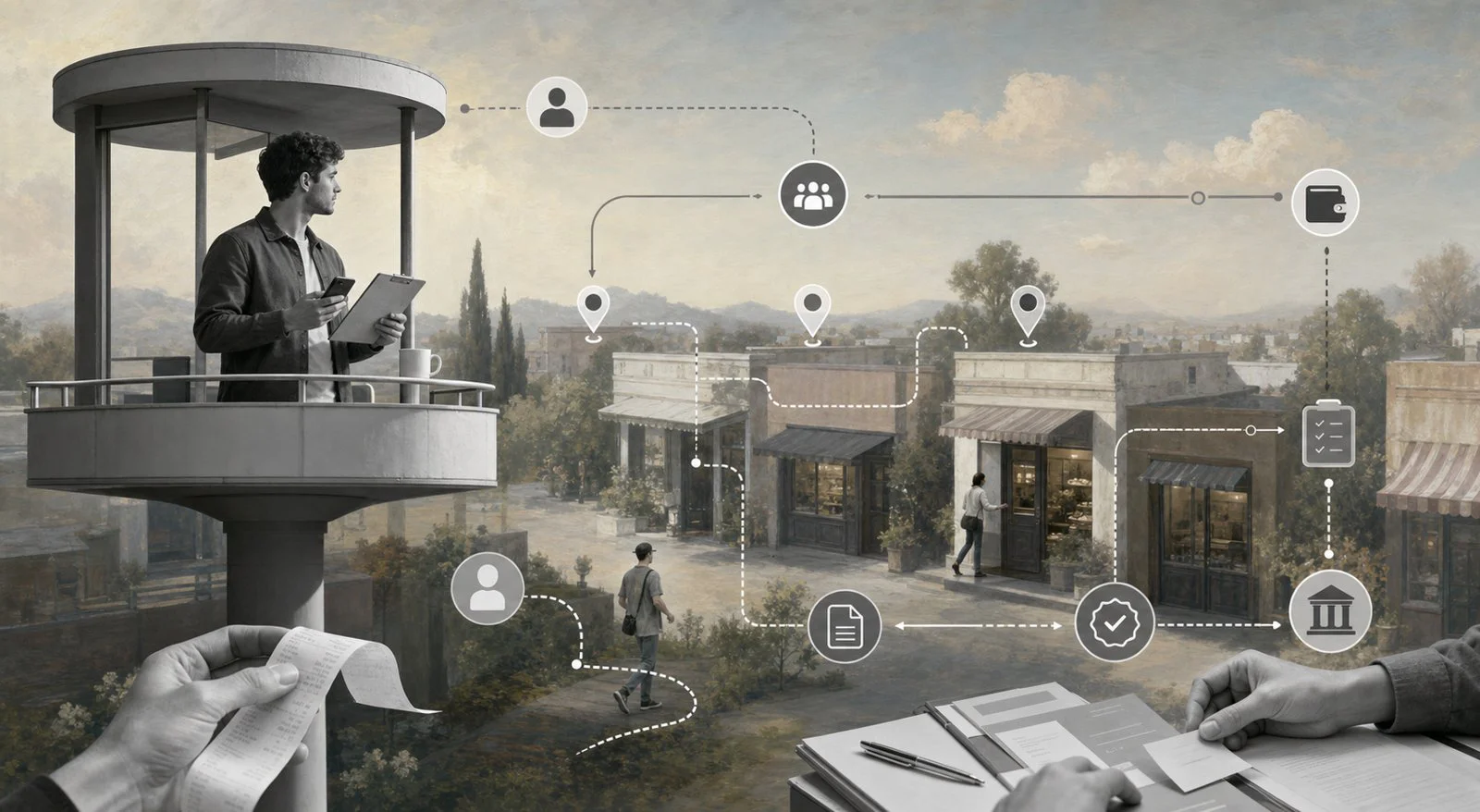
A mystery shopping business can start as a focused client offer, a vetted shopper network, and a simple operating platform.
If you want to start a mystery shopping business, the first goal is not to build a giant research company. The first goal is to prove that local businesses will pay for reliable, objective customer experience feedback.
Mystery shopping works because many companies cannot see what customers actually experience across locations, calls, online forms, appointments, or service visits. They need someone to test the experience, follow a scenario, document what happened, and report the findings clearly.
The fastest path is platform-first. Create a branded way for clients to request shops, recruit independent shoppers, assign evaluations, collect reports, review quality, invoice clients, and pay shoppers. Then validate one niche before investing in staff, offices, or complex research infrastructure.
What’s in this article?
- Why a mystery shopping business works
- What you need to launch with low upfront cost
- How to price mystery shopping programs
- How to find your first clients
- How Workhint helps launch the operating platform
- A 7-day launch plan, checklist, and FAQ
Why This Business Works
Mystery shopping sits between customer experience, operations, and market research. Retailers, restaurants, clinics, franchises, call centers, property managers, and service businesses all need to know whether their standards are being followed in real customer interactions.
The business is attractive because you can start narrow. Instead of selling every possible research service, choose one first offer such as restaurant visit audits, phone inquiry audits, apartment leasing shops, healthcare front-desk evaluations, or retail compliance checks.
The provider model also fits the category. Many mystery shopping companies use independent contractors who accept assignments, complete specific scenarios, and submit reports. That means a founder can build a private network of shoppers without hiring employees on day one.
Customers buy the service because it gives them field-level visibility. A strong report can show whether staff greeted customers, followed scripts, offered add-ons, handled objections, kept locations clean, or completed compliance steps.
What You Need to Launch
Start with a business name, a simple vertical, a sample evaluation form, a shopper recruitment process, and a way to manage assignments. You do not need a rented office, a large research team, or a national shopper panel before you have paying demand.
You will need basic business setup, general liability or professional liability guidance, client agreements, independent contractor agreements, privacy practices, and a clear rule that legitimate shopper opportunities should not require shoppers to pay upfront fees.
| Launch item | Lean startup approach | Estimated early budget |
|---|---|---|
| Business setup | Register the business, create basic contracts, and confirm local requirements | $100-$600 |
| Insurance and legal review | Get practical coverage and review shopper/client terms | $300-$1,500 |
| Branded platform | Create client intake, shopper onboarding, assignment, reporting, and payout flows | $0-$500 to start |
| Marketing | Build one landing page, outreach list, and sample report | $100-$700 |
| Shopper network | Recruit independent shoppers only after the first niche is defined | $0-$300 |
The most important early asset is a believable operating process. A client needs to trust that you can assign the right shopper, protect confidentiality, collect evidence, review the report, and deliver useful findings on time.
How to Price It
Mystery shopping can be priced per assignment, per location, per monthly program, or as a custom project. The right model depends on visit complexity, shopper compensation, report depth, quality review, travel, reimbursement, and how many locations the client wants checked.
For a first offer, keep pricing simple. Sell a small pilot before a complex annual program. A pilot might include five to ten evaluations, one report format, and a short findings summary.
| Offer | Best for | Example client price |
|---|---|---|
| Single location audit | One store, restaurant, clinic, or service office | $150-$500 per shop |
| Local pilot package | Testing demand with 5-10 assignments | $1,000-$4,000 per pilot |
| Monthly monitoring | Multi-location businesses that want recurring checks | $750-$5,000+ per month |
| Specialized evaluation | Regulated, high-touch, or detailed scenarios | Custom pricing |
Your margin comes from program design, client reporting, quality control, and efficient coordination. Do not underpay shoppers or treat reports as disposable. The quality of the shopper network determines the quality of the business.
How to Get First Customers
Start with businesses where experience consistency matters. Good first targets include small restaurant groups, med spas, fitness studios, urgent care groups, auto service chains, apartment operators, salons, retail boutiques, and local franchises.
Sell a concrete problem, not the abstract idea of mystery shopping. For example: “We can show whether every location answers the phone correctly, offers the membership, follows the intake script, and documents the customer experience in one week.”
Create a sample report for one niche. Then contact owners, operators, franchisees, and regional managers with a small pilot offer. The first sale should validate that the market wants the insight before you recruit a large shopper network.
How Workhint Helps Launch It
Workhint can become the branded operating platform behind the mystery shopping business before you invest in custom software or internal staff.
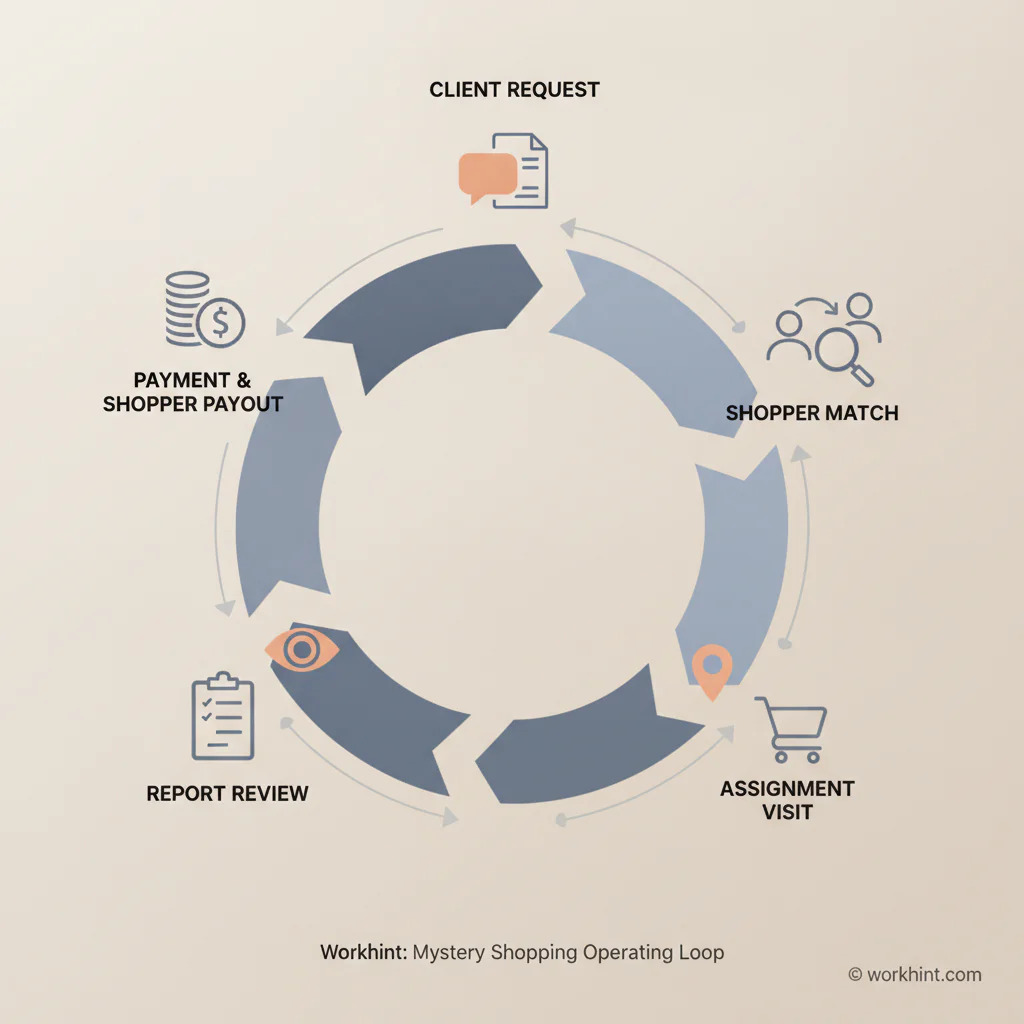
A client can request a mystery shopping program through your branded portal, choose the location type, describe the scenario, upload standards, approve the quote, and track the project. On the operations side, Workhint can route the request, match it to approved independent shoppers, assign deadlines, collect completed forms, request evidence, trigger review steps, generate invoices, accept online payments, and manage shopper payouts.
The shopper side can be just as structured. New shoppers can apply, submit basic documents, accept independent contractor terms, complete onboarding, receive assignments, follow checklists, upload receipts or photos when appropriate, and submit reports from a mobile-friendly workflow.
That gives the founder a real business system on day one: client intake, shopper onboarding, assignment management, quality review, approvals, invoicing, payment, payout, and reporting. The founder can focus on selling pilots and improving the offer instead of stitching together forms, spreadsheets, email, payment links, and manual reminders.
First 7-Day Launch Plan
Day 1: Choose one niche, one customer type, and one launch city. Pick a specific problem such as phone inquiry quality, retail compliance, or restaurant service consistency.
Day 2: Set up the branded Workhint platform basics: client intake, shopper application, assignment flow, and report submission.
Day 3: Build the pilot package, pricing, quote approval, client payment, report review, and shopper payout process.
Day 4: Recruit 5-10 potential independent shoppers who fit the first niche and geography. Vet writing quality, reliability, and availability.
Day 5: Contact 25-50 local prospects with a focused pilot offer and a sample report.
Day 6: Follow up, book discovery calls, and route any client requests through the platform instead of handling them manually.
Day 7: Review demand, pricing objections, shopper readiness, and fulfillment risk. Improve the offer before spending more.
Final Launch Checklist
- Choose one mystery shopping niche and launch market.
- Create one sample evaluation scenario and report format.
- Set up client intake, quotes, approvals, payments, and reporting.
- Recruit and vet the first independent shoppers.
- Prepare client and shopper agreements.
- Confirm insurance, privacy, and local business requirements.
- Build a small prospect list of operators with repeat locations or repeat customer interactions.
- Sell a paid pilot before expanding the shopper network.
- Use Workhint to manage requests, assignments, reviews, payments, and payouts from the start.
FAQ
How much does it cost to start a mystery shopping business?
A lean launch can often start with a small budget for business setup, insurance, a branded operating platform, contracts, and targeted outreach. Avoid building a large shopper database before you have a paid pilot.
Do mystery shoppers need to be employees?
Many mystery shopping businesses work with independent contractors, but classification rules matter. Use clear agreements, avoid treating shoppers like employees, and get legal guidance for your location and operating model.
How do mystery shopping companies make money?
They charge clients for evaluations, pilots, recurring monitoring, reporting, and program management. Profit depends on pricing discipline, shopper compensation, review time, travel costs, and report quality.
What should a mystery shopping report include?
A useful report includes the scenario, date, location or channel, objective observations, checklist responses, evidence when appropriate, customer experience notes, and clear recommendations for the client.
How do I find first clients?
Start with local businesses that depend on consistent service across locations or team members. Offer a small pilot tied to a specific problem, such as phone handling, upsell compliance, appointment booking, or location cleanliness.
Is mystery shopping still a good business?
It can be, if you sell actionable insight instead of generic reports. The best opportunity is helping businesses measure customer experience consistently and turn findings into operational improvements.
What mistakes should beginners avoid?
Do not recruit a huge shopper network before choosing a niche, underpay shoppers, overpromise coverage, use vague report forms, ignore privacy, or run every assignment manually in spreadsheets.
Conclusion
A mystery shopping business is easiest to launch when it starts as a focused operating system, not a traditional research company. Pick one niche, sell one pilot, recruit reliable independent shoppers, and prove that clients will pay for better visibility into customer experience.
With Workhint as the branded platform behind the business, you can manage the full loop from client request to shopper assignment, report review, payment, and payout before investing heavily. That is the low-risk path: validate demand first, then scale the network.
Leave a Reply