

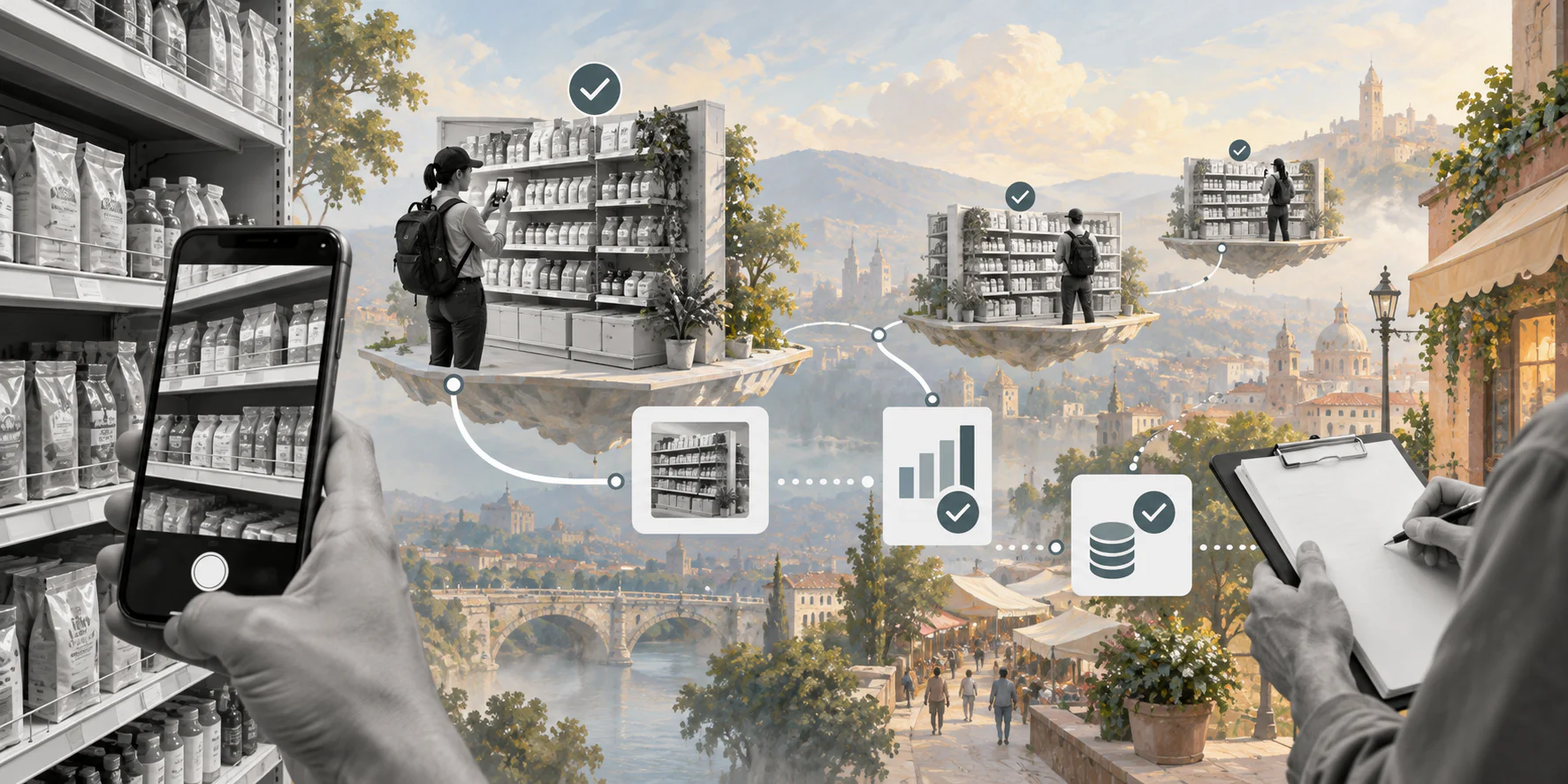
A planogram audit business can start with paid retail pilots before you build a large field team.
If you want to know how to start a planogram audit business, begin with one narrow retail compliance offer, a branded client portal, and a small network of independent field auditors. The goal is to prove brands and retailers will pay for clean store-level proof before you hire employees or build custom reporting software.
Planogram audits check whether products are placed correctly, shelf tags match, displays are set, out-of-stocks are visible, and promotions are executed in stores. The buyer is usually a CPG brand, broker, distributor, merchandising agency, or regional retailer that needs reliable evidence from the field.
What’s in this article?
- Why this business works
- What you need to launch
- How to price audits
- How to get first customers
- How Workhint helps run the operation
- A first 7-day launch plan and checklist
Quick answer
You can start a planogram audit business by defining one audit scope, recruiting trained independent field auditors, creating photo and checklist standards, selling paid pilots to brands or retailers, and using a branded platform to manage requests, assignments, proof, reports, payments, and auditor payouts. Keep the first geography small until audit quality is consistent.
Why this business works
Retail execution breaks down quietly. A product is on the wrong shelf, a tag is missing, a promotion is late, or a display never gets built. Headquarters may not know until sales drop or a store visit exposes the issue.
Search results around planogram compliance and inventory services show demand for audit scope, field auditors, mobile reporting, photo proof, client pipelines, paid pilots, and recurring contracts. The gap is execution: how to coordinate field visits, standardize evidence, review quality, deliver reports, and pay auditors without building a full agency first.
The lean version starts with one category, one store type, one city, and one audit output. For example: monthly shelf compliance checks for beverage brands in independent grocery stores, or promotional display proof for regional retailers.
What you need to launch
You do not need a large office or full-time field staff to validate this business. You need a clear audit method, customer intake, auditor onboarding, store visit rules, photo standards, report templates, insurance guidance, and a way to manage assignments.
Store access matters. Some audits require retailer permission, brand authorization, mystery-shopper style rules, or vendor badges. Confirm what is allowed before sending auditors into stores.
| Launch item | Lean starting range | Why it matters |
|---|---|---|
| Business setup and agreements | $300 to $1,200 | Supports client contracts and auditor terms. |
| Audit playbook and report template | $0 to $800 | Creates consistent field evidence. |
| Branded operating platform | Start lean | Runs intake, assignments, proof, reporting, and payouts. |
| Auditor recruiting and onboarding | $100 to $1,000 | Builds field coverage before selling larger routes. |
| Insurance and legal review | $500 to $2,000+ | Clarifies field, data, and client risk. |
| Customer acquisition tests | $200 to $1,500 | Funds paid pilot outreach and sample reports. |
How to price it
Planogram audit pricing should reflect store count, geography, visit time, photo requirements, SKU depth, reporting turnaround, travel, auditor payout, and review work. Do not price only by the photo count. Clients are paying for reliable proof and usable findings.
| Offer | Example price | Best use |
|---|---|---|
| Paid pilot audit | $750 to $2,500 | Small route proving method and report value. |
| Per-store visit | $50 to $200 per store | Simple recurring checks in a tight geography. |
| Monthly compliance route | $1,500 to $7,500+ | Brands needing repeat coverage and reports. |
| Rush display verification | Premium per route | Time-sensitive promotions or launches. |
| Custom retail program | Quoted project | Multi-market audits with heavier QA. |
Track margin per route, missed visits, photo rework, report turnaround, and auditor reliability. Those metrics tell you when to expand coverage.
How to get first customers
Start with buyers who already care about store execution: emerging CPG brands, beverage companies, brokers, distributors, retail category managers, franchise operators, merchandising agencies, and regional chains.
Sell a paid pilot, not a vague service. A strong first offer might be: “Ten-store shelf compliance audit with photo proof and a next-day exception report.” Keep the geography tight so the first route runs cleanly.
How Workhint helps launch it
Workhint can become the branded operating platform for the planogram audit business before you build custom software or hire dispatchers. A client can request an audit, upload planogram instructions, choose store locations, approve the scope, and pay through your branded portal.
Inside the operation, Workhint routes each store visit to an approved independent auditor. The auditor receives the checklist, store instructions, photo requirements, due time, exception rules, and payout terms. After the visit, Workhint can collect photos, notes, status, QA review, client approval, invoice status, and auditor payout records.
This is a natural field service software use case: mobile assignments, location-based work, evidence capture, approvals, payments, and reporting stay connected in one system while you validate demand.
First 7-day launch plan
- Day 1: Choose one retail category, one geography, and one audit output.
- Day 2: Create the audit checklist, photo rules, exception definitions, and sample report.
- Day 3: Set up the branded Workhint intake, assignment, proof, QA, payment, and payout flow.
- Day 4: Recruit three to five independent auditors and test the checklist on a sample store visit.
- Day 5: Contact 25 brands, brokers, distributors, and retailers with a paid pilot offer.
- Day 6: Route interested buyers through the platform and confirm scope.
- Day 7: Review demand, audit consistency, pricing, route coverage, and report quality before expanding.
Final launch checklist
- Choose one audit niche and launch geography.
- Create a clear audit scope and sample report.
- Confirm store access, permissions, insurance, and legal requirements.
- Set up branded intake, assignments, proof, QA, payment, and payout workflows.
- Recruit and train independent field auditors.
- Define photo standards, exception rules, and rework policies.
- Build a buyer list of brands, brokers, distributors, and retailers.
- Sell paid pilots before hiring employees or expanding cities.
FAQ
How much does it cost to start a planogram audit business?
A lean launch can often start with a few thousand dollars for business setup, insurance review, audit templates, a branded platform, auditor recruiting, and customer outreach.
Do I need employees to start?
No. You can start with trained independent auditors where local rules and client terms allow. Use clear standards, agreements, QA, and payout rules.
Who buys planogram audits?
Buyers can include CPG brands, distributors, brokers, merchandising agencies, category managers, retail chains, and franchise operators.
How should I price retail audits?
Price by store count, geography, visit depth, SKU checks, photo requirements, report speed, travel time, and auditor payout. Paid pilots are usually the cleanest first offer.
What is the biggest early mistake?
The biggest mistake is selling broad coverage before the audit method is consistent. Start with a tight route and prove the checklist, photos, QA, and report quality first.
Conclusion
A planogram audit business is practical because brands and retailers need proof of what is happening in stores. Start with one audit scope, one geography, a small auditor network, and a branded operating platform. Let paid pilots tell you when to add more categories, cities, auditors, and reporting depth.
Leave a Reply