

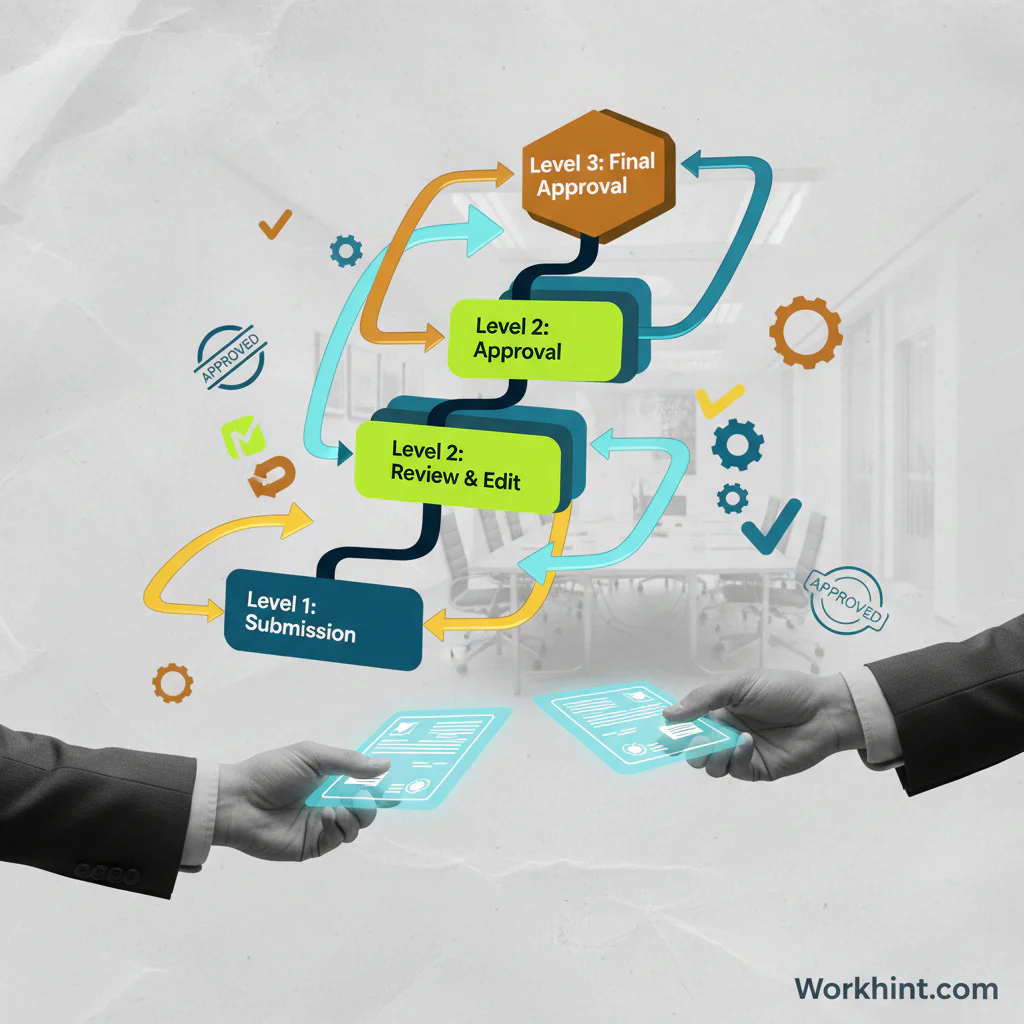
Stuck in endless back‑and‑forth approvals? Learn why a tiered system can finally bring clarity.
Imagine a team that spends more time chasing signatures than delivering value. The rhythm of work stalls when each decision is caught in a loop of “who must approve next.” It feels like you are watching a relay race where the baton never leaves the hand of the previous runner. This is the hidden friction that keeps many growing companies from moving at the speed their market demands. The problem is not a lack of talent or ambition; it is the invisible architecture of handoffs that treats ownership as a checklist instead of a shared promise. When the map of responsibility is vague, people fill the gaps with emails, meetings and endless clarification. Recognizing this pattern is the first step toward a system where authority flows naturally and progress becomes visible. Let us explore how a tiered approach can transform that chaos into a clear path forward.
Why a tiered flow beats a flat chain
In a flat chain every request climbs the same hill. The higher the hill the slower the climb and the more likely a bottleneck appears. A tiered flow spreads the climb across several gentle slopes. The first level handles routine items, the second level steps in for strategic decisions and the top level reserves its time for rare, high impact choices. This separation mirrors how a well tuned orchestra assigns sections to play their part while the conductor focuses on the overall harmony. Companies such as Sprinklr illustrate this by routing simple content approvals to local managers and reserving brand guardians for brand wide campaigns. The result is fewer stalled items, clearer ownership and a rhythm that matches the speed of the market.
What happens when the first tier is overloaded
When the first tier receives more requests than it can process, the whole system backs up. Teams start to bypass the process, sending emails directly to senior leaders, which defeats the purpose of the tiered design. The hidden cost shows up as duplicated work, missed deadlines and frustrated people who feel their time is wasted on unnecessary sign offs. A study of social media teams using Hootsuite found that overload at the initial level increased approval time by forty percent. The lesson is simple: the capacity of each tier must be measured and adjusted before the overload spreads like a ripple across the organization.
How to decide the right number of layers for your team
The sweet spot for layers depends on three factors: the variety of content, the risk associated with each piece and the size of the team. Small teams with a narrow focus often thrive with two layers – a peer review and a final sign off. Larger enterprises handling diverse audiences may need three or four layers to match the complexity of their decisions. A practical way to choose is to map each type of work to a decision impact score and then group scores that fall within a similar range. If the group contains more than twenty daily items, consider adding a layer to keep each decision manageable. This approach turns guesswork into a data driven design.
Measuring success and iterating the ladder
A tiered system is not a set in stone sculpture; it is a living framework that must be tuned. Key metrics include average approval time, number of escalations to a higher tier and stakeholder satisfaction scores. When the average time climbs beyond a target, investigate whether a tier is receiving too many items or whether the criteria for escalation are too vague. Companies like Storyteq use a quarterly review cadence to adjust thresholds and reassign approvers. The habit of measuring, reflecting and refining keeps the ladder sturdy and the work flowing.
Why the bottleneck repeats
In many organizations the approval chain becomes a series of ad‑hoc handoffs that rely on email threads and personal follow‑up. When ownership is defined only by who happens to receive a request, responsibility slips, visibility fades and work stalls. Informal coordination cannot guarantee that every step is recorded, that the right skill set is matched, or that progress is observable across the whole process. A centralized work system provides a shared ledger for requests, approvals and status updates, turning scattered interactions into a single source of truth. By anchoring each handoff to a defined object, the system restores clear ownership, makes delays visible and aligns execution with the intended workflow. Workhint, linked as a concrete example of such a system, illustrates how a common infrastructure can hold the pieces together without requiring each participant to manage the coordination themselves.
Remember the feeling of watching a relay where the baton never moves. The journey through the article shows that when authority is shaped as a flowing river rather than a static list, work finds its own current. A tiered approach does not add bureaucracy; it carves gentle channels that let decisions travel at the speed the market demands. The real shift happens when each person sees their role as a promise to keep the water moving, not a gate to close. Carry that picture into your own teams and watch the fog of uncertainty lift. In the end the only lasting tool you need is the willingness to redesign the path so progress can flow unhindered.
Leave a Reply