


Vendor problems rarely start with bad intent; they start when no one knows which update, decision, or exception belongs where.
A vendor communication plan is a simple operating agreement for how your company and outside vendors share updates, decisions, risks, approvals, and records. For operations leaders, the goal is not more meetings. The goal is fewer missed handoffs, fewer unclear owners, and fewer surprises when work, invoices, or delivery issues reach the wrong person too late.
This matters for companies that rely on suppliers, agencies, staffing firms, consultants, service providers, partners, and contractors. These vendors often sit outside your internal systems but still affect customer delivery, compliance, budgets, schedules, and team capacity.
What’s in this article?
- What a vendor communication plan should include.
- How to build the workflow from kickoff through review.
- A practical table for assigning channels, owners, and escalation paths.
- Common mistakes that create vendor confusion.
- Where Workhint fits when vendor communication needs to become a live operating system.
Why vendor communication plans matter
Vendor communication is not only a relationship-management habit. It is a control system. Government procurement teams publish formal vendor communication plans because structured communication can reduce barriers and improve engagement with outside organizations. Acquisition.gov maintains agency vendor communication plans, and the U.S. Department of Labor vendor communication plan frames the work around reducing barriers and encouraging useful engagement.
Private companies need the same discipline, even when the process is lighter. A vendor can be excellent and still fail if your internal team sends scattered requests, changes priorities without documenting them, or lets invoices arrive before delivery evidence is reviewed.
What a vendor communication plan should include
A strong plan answers seven practical questions:
- Who owns the relationship? Name the internal vendor owner, backup owner, vendor lead, and executive sponsor if the relationship is high value.
- What work is in scope? Tie communication to the contract, statement of work, purchase order, service level, or approved request.
- Which channels are official? Decide where status updates, approvals, files, urgent issues, and informal questions belong.
- How often do updates happen? Set the cadence for routine work, active projects, critical incidents, and quarterly reviews.
- What requires approval? Define which changes, costs, deliverables, access requests, substitutions, and timeline shifts need written approval.
- How do issues escalate? Show the path from working-level issue to manager decision to executive or legal review.
- What records must be kept? Keep decisions, approvals, deliverables, exceptions, invoice support, and performance notes in a shared record.
PMI’s guidance on communications planning in a vendor project environment makes a useful point for business teams: contractual communication requirements should be considered before the communication plan is finalized. If the contract already requires reports, notice periods, change-request procedures, or approval windows, the plan should reflect those obligations instead of creating a parallel process.
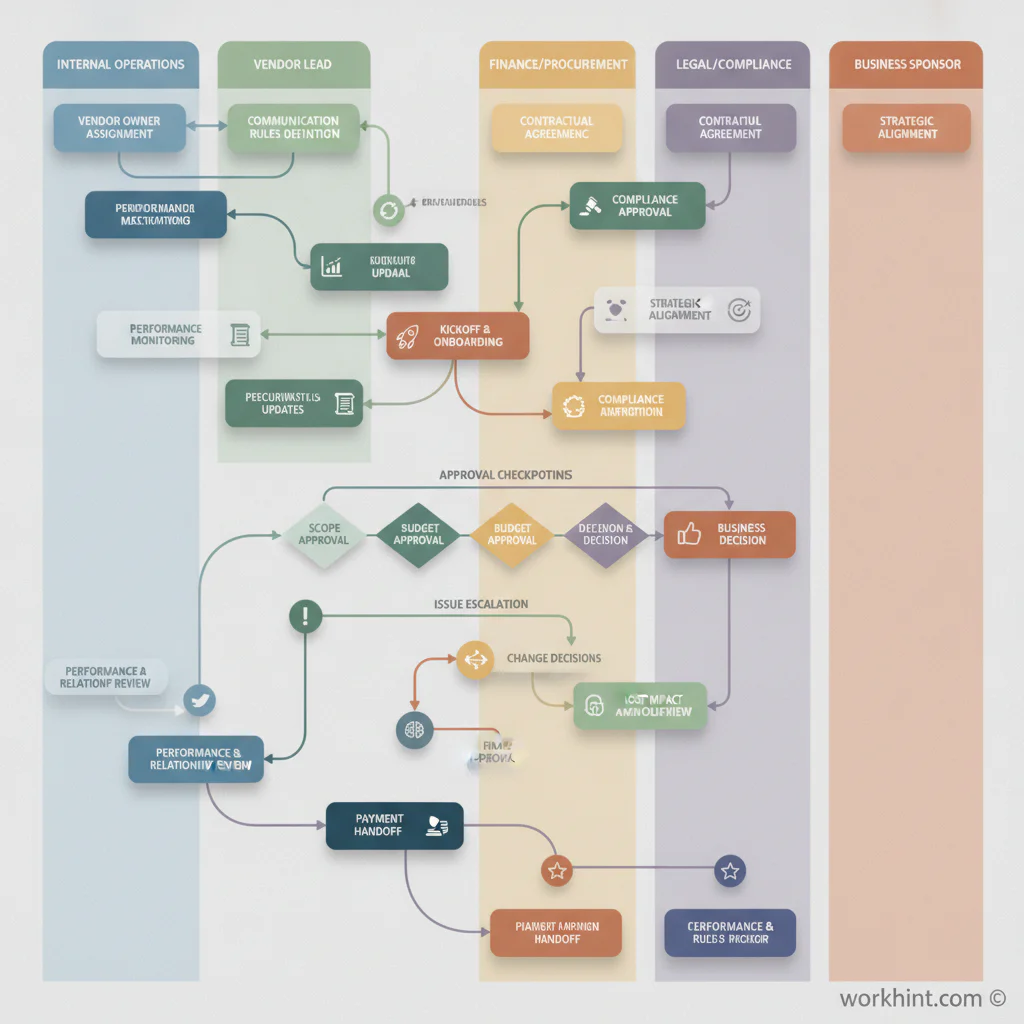
Vendor communication plan workflow
Use this workflow when a new vendor relationship starts or when an existing relationship has become too dependent on email and memory.
- Assign ownership. Choose one internal owner who is accountable for the relationship. Other teams can approve specific items, but one person should know the full status.
- Map stakeholders. List the vendor lead, internal business sponsor, finance contact, procurement owner, legal or compliance contact, and anyone who approves deliverables.
- Define communication types. Separate routine updates, delivery evidence, approval requests, issues, urgent incidents, contract changes, and invoice questions.
- Choose channels. Use one official place for each communication type. For example, delivery status may live in a shared workspace, approvals in a workflow, urgent issues in a dedicated channel, and contract notices in email.
- Set cadence and response expectations. Decide what is weekly, monthly, project-based, or exception-based. Include response times for approvals and urgent issues.
- Create escalation rules. Define what happens when a vendor misses an update, delivery evidence is incomplete, a deadline is at risk, or the vendor requests extra budget.
- Connect communication to payment. Finance should know which approved work, evidence, or milestone makes an invoice ready for review.
- Review and tune. After the first month or first project milestone, review what created friction and adjust the plan.
Vendor communication plan table
| Communication type | Owner | Channel | Timing | Record to keep |
|---|---|---|---|---|
| Kickoff decisions | Internal vendor owner | Kickoff meeting plus shared record | Before work starts | Scope, owners, dates, and approval rules |
| Status updates | Vendor lead | Shared workspace or status form | Weekly or milestone-based | Progress, blockers, next steps, due dates |
| Deliverable approval | Business sponsor | Approval workflow | Before invoice or next phase | Accepted deliverable, reviewer, date, comments |
| Issues and risks | Vendor owner | Issue log and escalation channel | Same day for material risk | Issue, impact, owner, decision, resolution |
| Contract or budget change | Procurement or finance | Change request workflow | Before work changes | Request, approval, cost impact, revised scope |
| Invoice questions | Finance contact | Finance workflow | During invoice review | Invoice, supporting evidence, approval status |
Common mistakes in vendor communication
The first mistake is treating every vendor update as a meeting. Meetings are useful for alignment, but they are weak as the system of record. Decisions should move into a shared record that shows who approved what and when.
The second mistake is letting every department communicate separately. Procurement may discuss contract terms, operations may discuss delivery, finance may discuss invoices, and legal may discuss risk. That is normal, but the vendor owner still needs one full view of the relationship.
The third mistake is hiding escalation until the relationship is already tense. A healthy escalation path is not a threat. It tells both sides what to do when the working-level conversation cannot solve the issue.
The fourth mistake is separating communication from payment. If a vendor invoice depends on accepted work, the plan should make acceptance visible before finance reviews the invoice.
Where Workhint fits
Workhint fits when a vendor communication plan needs to become an operating workflow instead of a static document. A company can use Workhint to structure vendor intake, assign relationship owners, define approval rules, collect required documents, route updates, track issues, connect deliverables to acceptance, and show finance which invoices are ready for review.
That is useful when vendors touch multiple teams. The operating problem is the chain of work around communication: who requested the vendor, what the vendor is allowed to do, which approvals are pending, what evidence has been submitted, whether payment is blocked, and which issues need escalation.
FAQ
What is a vendor communication plan?
A vendor communication plan defines how a business and its vendors share updates, approvals, issues, records, and escalation decisions. It should name owners, channels, cadence, response expectations, approval rules, and the records that must be kept.
Who should own vendor communication?
One internal vendor owner should be accountable for the full relationship. Procurement, finance, legal, operations, and business teams may own specific steps, but one person or role should maintain the overall communication plan and relationship record.
How often should vendors provide updates?
The cadence should match risk and activity level. Active delivery work may need weekly updates. Strategic suppliers may need monthly or quarterly reviews. Critical incidents, missed milestones, cost changes, and compliance issues should be communicated immediately through the escalation path.
Should vendor communication be managed in email?
Email can be useful for formal notices, but it should not be the only system. Approvals, delivery evidence, issue status, and payment readiness are easier to manage when they live in a shared workflow or record that the right teams can review.
Conclusion
A vendor communication plan helps operations leaders turn external relationships into manageable work. Start with ownership, scope, channels, cadence, approvals, escalation, and records. Then connect the plan to delivery and payment.
The best version is practical and visible. Vendors know what to send. Internal teams know who decides. Finance knows what is approved. Leaders know where issues are stuck. That is what keeps vendor relationships moving when work becomes complex.
Leave a Reply