
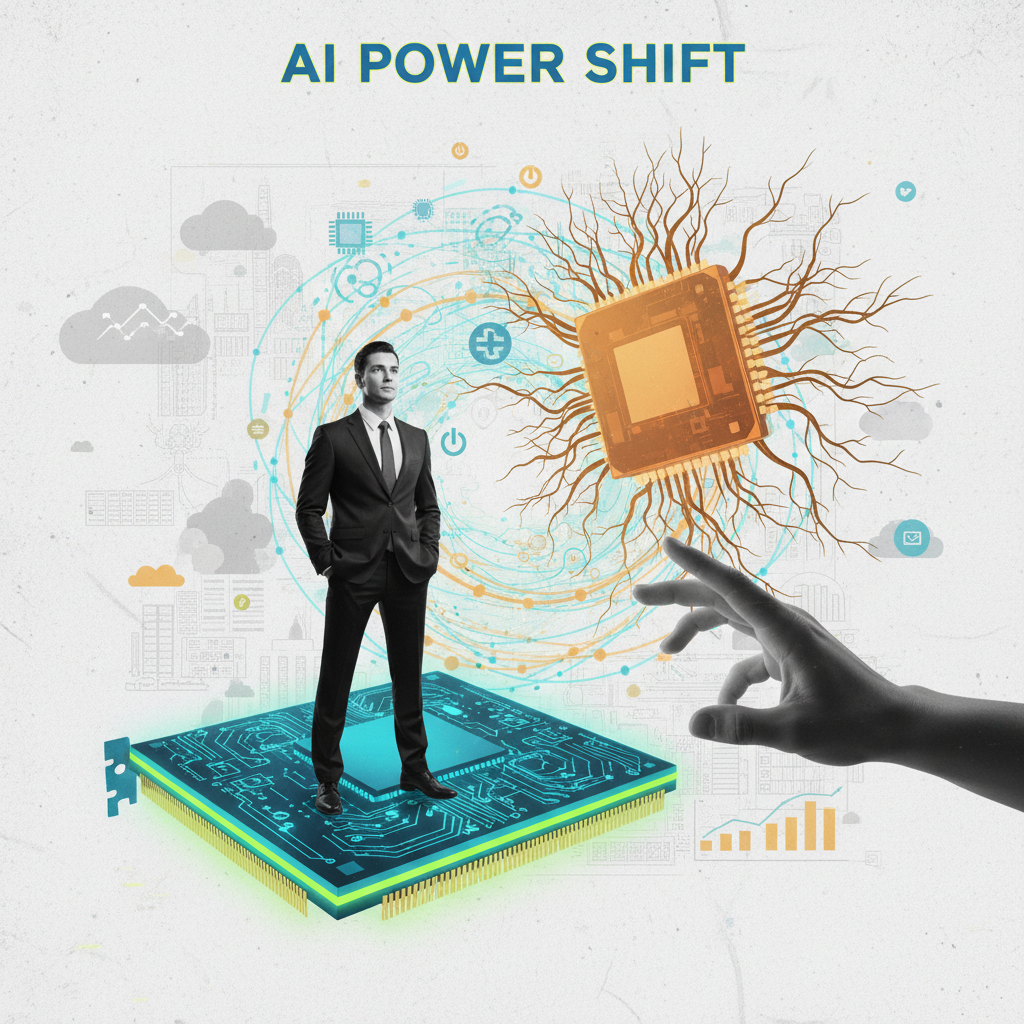
Learn how a $5 billion Nvidia investment reshapes Intel’s AI roadmap and what it means for your tech future
When Nvidia announced a $5 billion stake in Intel, the headlines read like a headline‑grabbing power play. But beneath the flash of dollars lies a quieter, more consequential question: what does this partnership really mean for the AI engines that are starting to run the modern economy?
Most of us have been told that AI breakthroughs are the result of isolated breakthroughs—one company’s chip, another’s software, a third’s data. The reality is messier. The two giants have long been on opposite sides of the same silicon battlefield, each claiming the other’s approach is flawed. That rivalry has left a gap in the roadmap for developers who need a seamless, scalable path from edge devices to the cloud. The $5 billion infusion isn’t just a financial footnote; it’s a signal that the old narrative of “Nvidia versus Intel” is breaking down, and a new, collaborative architecture is emerging.
I’ve spent years watching the AI hardware space evolve, watching boardrooms argue over who controls the next generation of compute. What I’ve learned is that the most valuable insight often comes not from the press releases, but from the subtle shifts in strategy that reveal where the real value will be created. This stake is a clue that both companies recognize a shared bottleneck—how to make AI workloads both powerful and affordable at scale. It’s a reminder that the future isn’t built by a single champion, but by the bridges we build between them.
So, what does this mean for you, the engineer, the investor, or the curious technologist? It means a re‑balanced playing field, new opportunities for integration, and a roadmap that finally acknowledges the interdependence of compute, memory, and software. Let’s unpack this.
The hidden advantage of a joint roadmap
When Nvidia and Intel combine their silicon strategies the most immediate impact is on the speed at which AI models can be trained and deployed. The two companies have historically excelled at different parts of the compute stack – one with graphics processing units that excel at parallel workloads, the other with central processing units that dominate general purpose tasks. By aligning their product timelines they close the gap that has forced engineers to stitch together mismatched components, a process that often adds latency and cost. This partnership also signals a move toward a more predictable supply chain, reducing the uncertainty that has plagued data centers during recent component shortages. For anyone watching the AI landscape the takeaway is simple: a unified roadmap reduces technical friction, allowing breakthroughs to surface faster and with fewer budget surprises.
Building on a shared silicon foundation
Developers who have spent years juggling separate SDKs will find a new, smoother path as the two giants converge their software ecosystems. The first wave of collaboration promises a common set of libraries that translate code written for graphics processing units into instructions that run efficiently on central processing units, and vice versa. Imagine writing a model once and seeing it scale from a laptop edge device to a massive cloud cluster without rewriting critical sections. Early adopters report shorter integration cycles and fewer performance surprises because the hardware abstractions are now designed to speak the same language. For teams focused on rapid iteration this means more time spent on model innovation and less time on low level debugging. The practical result is a tighter feedback loop that accelerates learning and product delivery.
Signals that indicate where value will flow
Investors should keep an eye on three concrete indicators as the collaboration matures. First, joint product announcements that bundle both companies’ chips into a single solution often precede spikes in market confidence. Second, revenue guidance that references co‑engineered platforms can reveal how quickly customers are adopting the new architecture. Third, patent filings that describe combined hardware features give a glimpse of the long term strategic direction. Together these data points paint a picture of a market moving away from isolated silos toward integrated ecosystems. The broader implication is that companies able to offer end to end performance at scale will capture a larger share of the AI spend, making the partnership a bellwether for future investment decisions.
The $5 billion stake isn’t a headline stunt; it’s a bridge that finally lets the two halves of the AI engine speak the same language. When Nvidia’s parallel firepower and Intel’s general‑purpose muscle align, the friction that once slowed every model—from a laptop prototype to a data‑center behemoth—dissolves. The real takeaway is simple: if you can write your code once and trust the hardware to carry it forward, you reclaim the time and budget that were once lost in translation. So, let the partnership be your cue to stop hunting for a single “winner” chip and start designing for a collaborative stack. Build your roadmap on the assumption that the best AI future will be built on shared silicon, not isolated silos. In the end, the question isn’t who leads the race, but how quickly you can cross the finish line together.
Leave a Reply