


A home organizing business can launch fast when you sell outcomes first and build the operating system before buying supplies.
If you are researching how to start a home organizing business, the attractive part is not just the low barrier to entry. The service solves a visible problem for busy households, moving clients, parents, remote workers, and people who need their homes to function again.
The mistake is starting like a traditional local service company: buying bins, stocking inventory, hiring employees, and hoping customers arrive. A leaner model is to validate demand first, create a branded customer platform, recruit organizers, and use Workhint to coordinate requests, estimates, scheduling, payments, and payouts.
What’s in this article?
- Why a home organizing business works
- What you need to launch without overinvesting
- How to price organizing services
- How to get first customers
- How Workhint helps launch the business
- A first 7-day launch plan
- A final checklist and FAQ
How to Start a Home Organizing Business: Why It Works
Home organizing is useful because the customer already feels the pain. A cluttered garage, pantry, closet, nursery, office, or storage room creates daily friction. The customer is buying time, calm, a reset, and a space they can maintain.
The business also fits a provider-network model. You can start as the lead organizer, then invite vetted independent organizers, movers, donation runners, estate cleanout partners, or staging assistants as demand grows.
That makes the first version simple: choose a market, sell packages, route inquiries through intake, match jobs to providers, and validate demand before investing in inventory, vehicles, office, or team.
What You Need To Launch
The first version needs trust, a clear offer, a repeatable process, and a way to manage work. It does not need a warehouse full of products.
Start with one or two services: closet reset, pantry organization, garage declutter, move-in setup, home office reset, or whole-room organizing. Define what is included, how supplies work, and whether donation drop-off or sourcing costs extra.
| Startup item | Lean launch approach | Estimated range |
|---|---|---|
| Business registration and local permits | Register simply and check city or county requirements | $100-$500 |
| Insurance | General liability first, then expand coverage as projects grow | $400-$900 annually |
| Branded platform and website | Use Workhint for intake, scheduling, payments, provider coordination, and customer communication | $200-$1,000 to launch |
| Basic supplies | Label maker, measuring tape, bags, tags, gloves, and starter tools | $100-$300 |
| Marketing | Local landing page, photos, neighborhood groups, referral cards, and partner outreach | $100-$700 |
| Provider onboarding | Recruit a small bench of independent organizers or helpers after the service process is defined | $0-$300 |
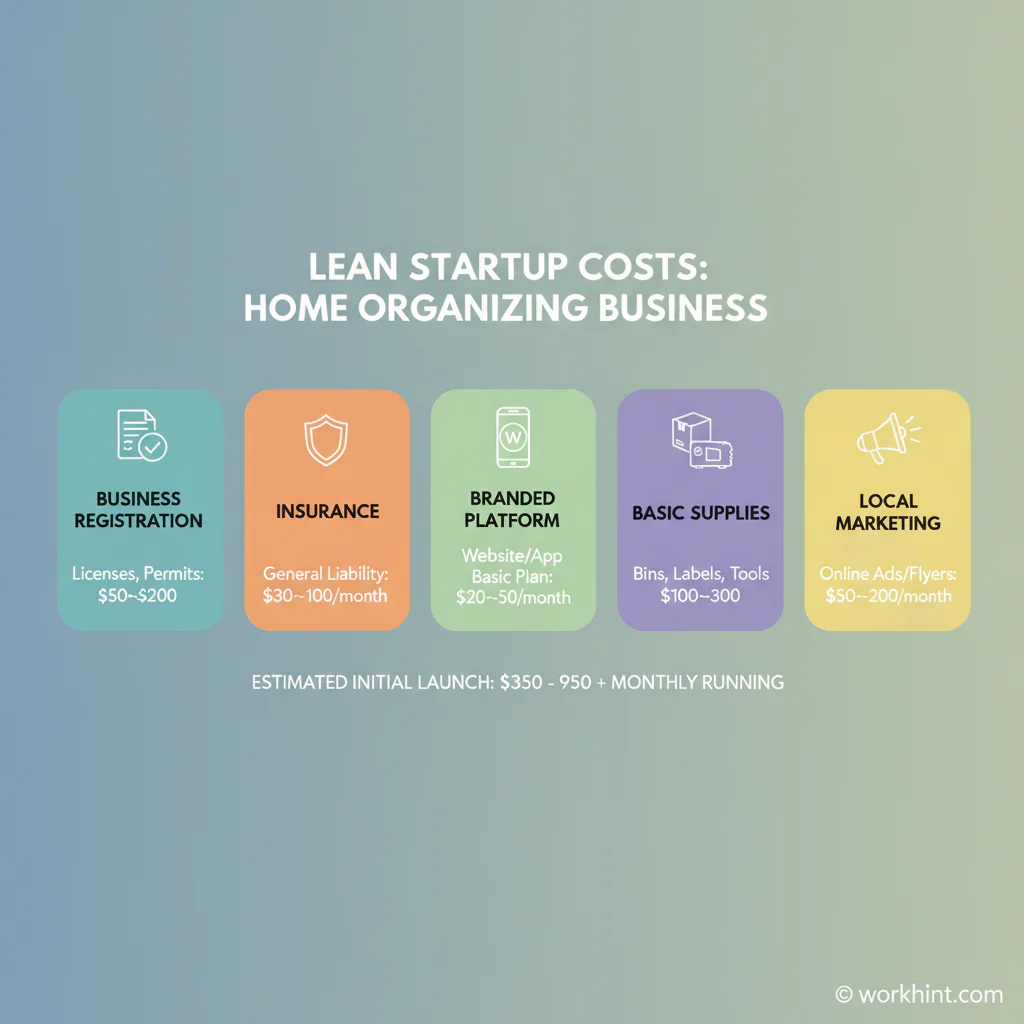
Many guides cite startup costs from a few hundred dollars to several thousand dollars. Keep the first launch controlled, prove demand, then invest in owned inventory or a larger team after volume justifies it.
How To Price It
Most new organizers price by the hour because it is easy to explain. Better operators move toward packages because customers want confidence before they book. Packages also simplify provider matching and payouts.
| Offer | Best use case | Example price |
|---|---|---|
| Two-hour consult | Assessment, plan, measurements, and quote | $99-$199 |
| Half-day reset | Closet, pantry, entryway, or small office | $300-$600 |
| Full-day room project | Garage zone, playroom, kitchen, or home office | $700-$1,400 |
| Move-in setup | Unpack, sort, label, and set up priority rooms | $1,200-$3,000 |
| Monthly maintenance | Recurring reset for busy households | $250-$800 per month |
If you use hourly pricing, many markets support roughly $50 to $150 per hour depending on experience, city, and complexity. If you use packages, include planning, travel, sourcing, disposal, admin, and payouts.
How To Get First Customers
The first customers usually come from trust channels, not broad advertising. Start with homeowners who already have a trigger: moving, listing a house, preparing for a baby, managing an estate, downsizing, or reclaiming a garage or closet.
Good early channels include neighborhood groups, real estate agents, interior designers, moving companies, senior move managers, home stagers, parenting groups, apartment communities, and referral offers.
Do not wait until the brand looks huge. Once your intake form, packages, quote process, availability, and payment flow are ready, start selling. Test whether people will book a paid organizing outcome.
How Workhint Helps Launch It
Workhint helps turn the business into a branded service platform before you spend heavily on operations. Instead of stitching together forms, calendars, spreadsheets, payment links, contractor messages, and customer emails, you can launch with a customer-facing system from day one.
A customer visits your branded portal, chooses a closet reset or move-in setup, uploads photos, answers intake questions, selects times, and receives a quote. Inside Workhint, you review the request, assign it to yourself or an independent organizer, send the approval, collect payment, schedule the visit, and give the provider the checklist.
After the project, the provider can upload notes, photos, receipts, donation details, and follow-up tasks. The customer sees the update, pays the balance, and leaves a review. Workhint keeps the payout, customer record, project history, and reporting connected.
This matters because the business can start as a small branded platform with a few trusted providers, not as an employee-heavy operation. You can validate which packages sell, which neighborhoods respond, and which projects deserve deeper investment.
First 7-Day Launch Plan
- Day 1: Choose the launch market, customer type, and one core offer such as closet reset, garage declutter, or move-in setup.
- Day 2: Set up the branded Workhint platform basics: logo, domain, customer portal, intake form, and service request flow.
- Day 3: Create pricing, quote approval, scheduling, payment, and provider payout steps for the first offer.
- Day 4: Recruit two or three independent organizers, assistants, donation partners, or moving partners who can help fulfill jobs.
- Day 5: Contact first demand sources: real estate agents, movers, parent groups, neighborhood communities, and past personal contacts.
- Day 6: Route every inquiry through the platform, send quotes quickly, and book the first paid consults or projects.
- Day 7: Review demand, pricing, provider readiness, customer questions, and fulfillment risks before buying more supplies or expanding offers.
Final Launch Checklist
- Choose the business name, city, and first organizing niche.
- Register the business and check local license requirements.
- Buy appropriate insurance before entering client homes.
- Create one simple service package and one premium package.
- Configure the branded Workhint customer portal, intake, quote, scheduling, payment, and payout flows.
- Recruit a small bench of independent providers or helpers.
- Prepare a basic supplies kit without overbuying products.
- Create before-and-after photo guidelines and job checklists.
- Launch local outreach and track every inquiry.
- Validate demand before buying inventory, leasing space, or hiring employees.
FAQ
How much does it cost to start a home organizing business?
A lean launch can often start with a few hundred to a few thousand dollars for registration, insurance, branding, basic supplies, and marketing. Keep costs low until customers prove demand.
Do I need a license to start a home organizing business?
Many locations do not require a special professional organizer license, but you may need a general business license, local permit, sales tax setup, or DBA depending on your city and state.
Do home organizers need insurance?
Yes. You will work inside homes and handle personal belongings, so general liability insurance is a practical early requirement. Add other coverage as services, providers, and project sizes grow.
How should I price home organizing services?
Start with hourly rates or simple packages. Packages are often easier for customers because they know the expected outcome and price before booking.
Can I use independent contractors instead of employees?
You can build a provider network, but classification rules matter. Use clear agreements, follow local labor rules, and avoid managing contractors like employees without proper advice.
What supplies do I need at the beginning?
Start with basic tools such as labels, bags, measuring tape, gloves, and planning materials. Let customers approve bins, shelves, and specialty products after the project scope is clear.
How do I get my first home organizing customers?
Use trust-based channels: referrals, neighborhood groups, real estate agents, movers, home stagers, designers, and local partnerships. Focus on people with urgent life transitions.
Conclusion
A home organizing business can start with low capital, clear customer pain, and simple first offers. The better path is to build the branded platform, recruit a small provider network, sell a specific outcome, and validate demand before expanding.
With Workhint as the operating foundation, you can launch the customer experience, provider coordination, scheduling, approvals, payments, and payouts first. That lets you focus on finding customers, proving the offer, and earning referrals.
Leave a Reply